|
"Nearly all the original upland vegetation of the Congaree Swamp Uplands was in some
way structured by fire. About 65% of rare native plants and animals in the South are in
some way dependent upon fire to create or maintain their habitat."
Cecil Frost, 2001
The landscape of Congaree National Park’s upland bluff areas
features second growth Loblolly pine forest with remnants of
the original Longleaf pine scattered within. Fire has always
been a part of the natural ecosystem in South Carolina.
Lightning periodically would ignite the forest, sending rows of
flame burning through the underbrush and leaf litter layer. The
fire would burn across the landscape until it reached a stream,
floodplain, or other natural barrier. On average, these fires
would occur every three to seven years keeping the forest floor
clear of excess branches, leaf and needle debris.
Fire suppression, timbering, farming and hunting have resulted
in an altered ecosystem. These activities have effected a
reduction in the Longleaf pine community and an increase in
fuel loadings. In turn, the fire danger to adjacent lands and
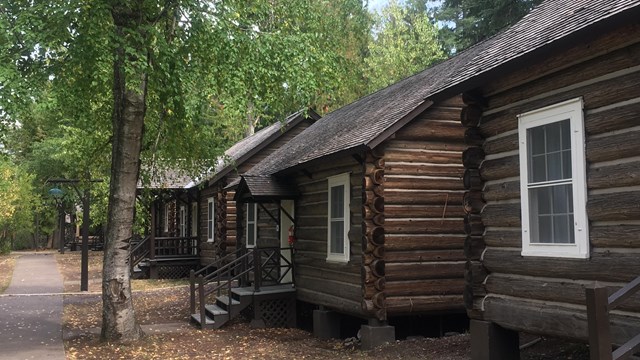
park structures has also increased. Additionally, the
endangered Red-cockaded woodpecker has been known to
inhabit the area as recently as six to seven years ago, (1999 -
2000). Red Cockaded Woodpeckers prefer nesting in Longleaf
pine trees, due to the softer heartwood and the continuous
emission of sap around the nesting cavities to protect the birds
from intruders. Restoration of the Congaree longleaf habitat
will serve to expand the potential range and stability of nearby
populations.
On March 3, 2006, Congaree National Park completed a 575 acre burn that included the primary
entrance to the park and was adjacent to numerous private residences near the town of Gadsden,
South Carolina. Initially the project was planned for two days of ignition however weather
forecasts indicated that favorable conditions would not continue into the next day so the decision
was made to attempt to cover all of the project acres in one day if holding and safety concerns
could be met. Project ignition began at 10 a.m. and continued until 5 p.m. when firing was
complete.

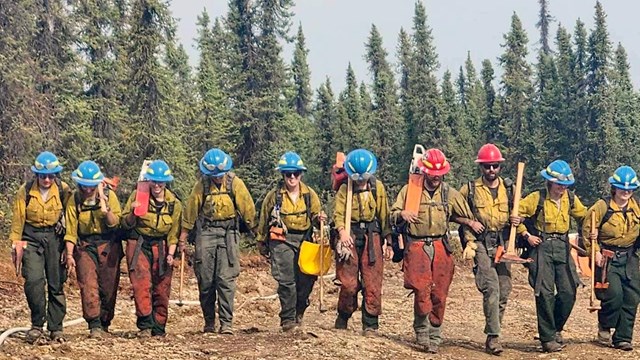
In addition to Congaree National Park employees, assistance came from Cumberland Gap and
the Great Smoky Mountain Fire Use Modules (FUMs). The FUMs provided the Burn Boss and
other key personnel required to execute the burn. The park also received engine and firefighter
support from Kings Mountain National Military Park and Great Smoky Mountains National
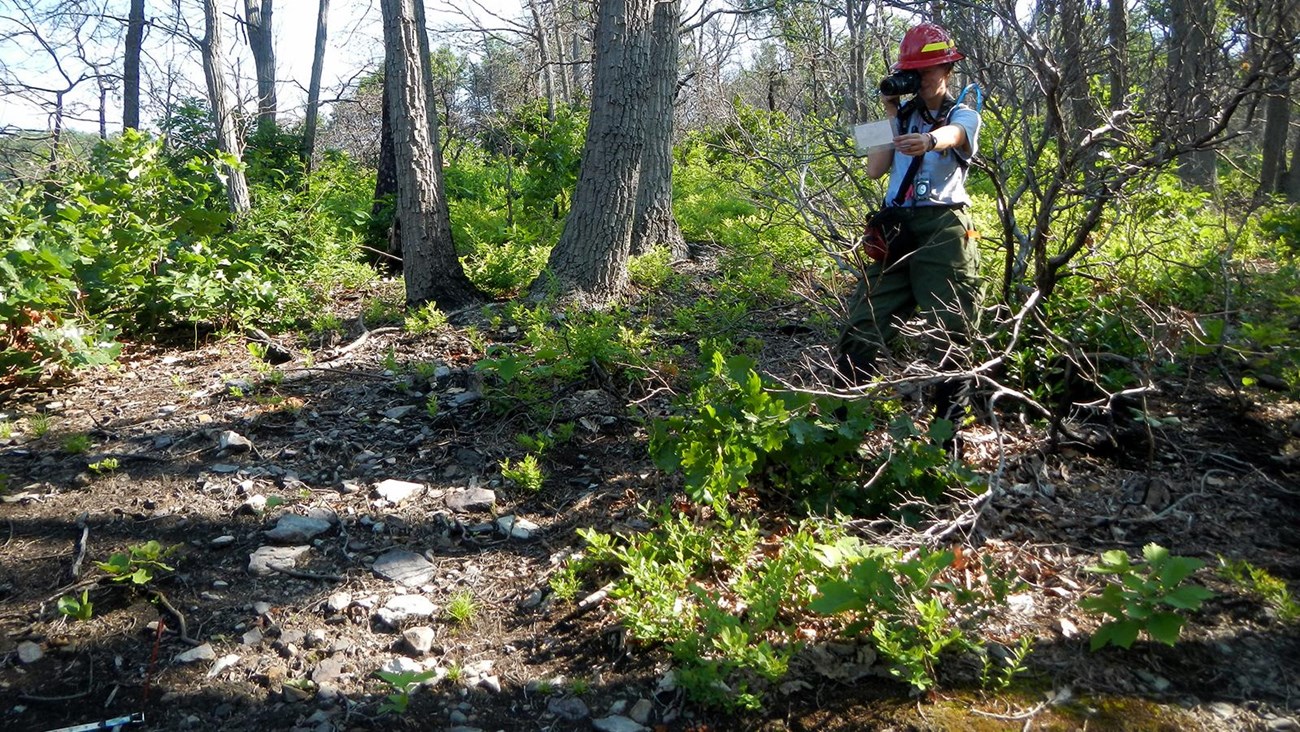
Park. Monitoring of the fire was provided by the Great Smoky Mountains Fire Effects Team.
Locally the Columbia-Richland Fire Service’s nearby volunteer station provided a structure
engine for standby protection of adjacent homes.
For portions of the total burn unit this was the eighth prescribed burn, and for other areas this
was the third. Although success of the project can be ac curately judged only with the passing of
time, as you walk from east to west through the burn area it is remarkable to see the progress
made in just those few burns. However, as Fire Manager Patrick Dege points out, "Restoration
of these upland areas is likely to take upwards of a hundred years or more. We’ve only just
begun."
The Congaree National Park Fuel Reduction / Fire Restoration Project should enable visitors to
experience the park in an unimpaired condition preserving:
"
… the natural and cultural resources and values of the national park system for the
enjoyment, education, and inspiration of this and future generations."
NPS Mission Statement
Contact: Patrick Dege, Fire Manager
Phone: (803) 776-4396 x 17 |