|
In summer 2005, a Student Conservation Association
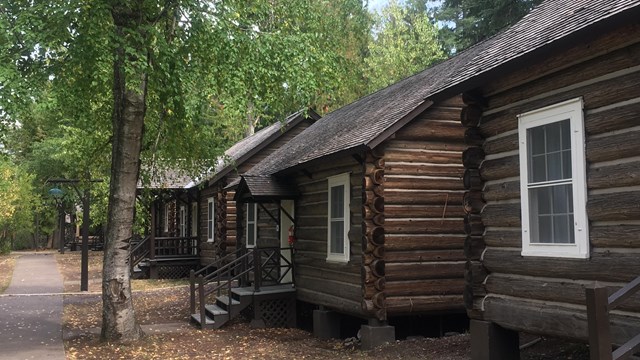
(SCA) Fire Education Corps Team assessed private structures
along the boundary of Great Smoky Mountains National Park.
The last similar assessment was conducted in the mid-1990s.
Since that time, development along the Park boundary has progressed
exponentially.
Since the extent of housing development
for the previous ten years was unknown, a target of 300 structures
was set as the goal for the summer. By the end of the summer,
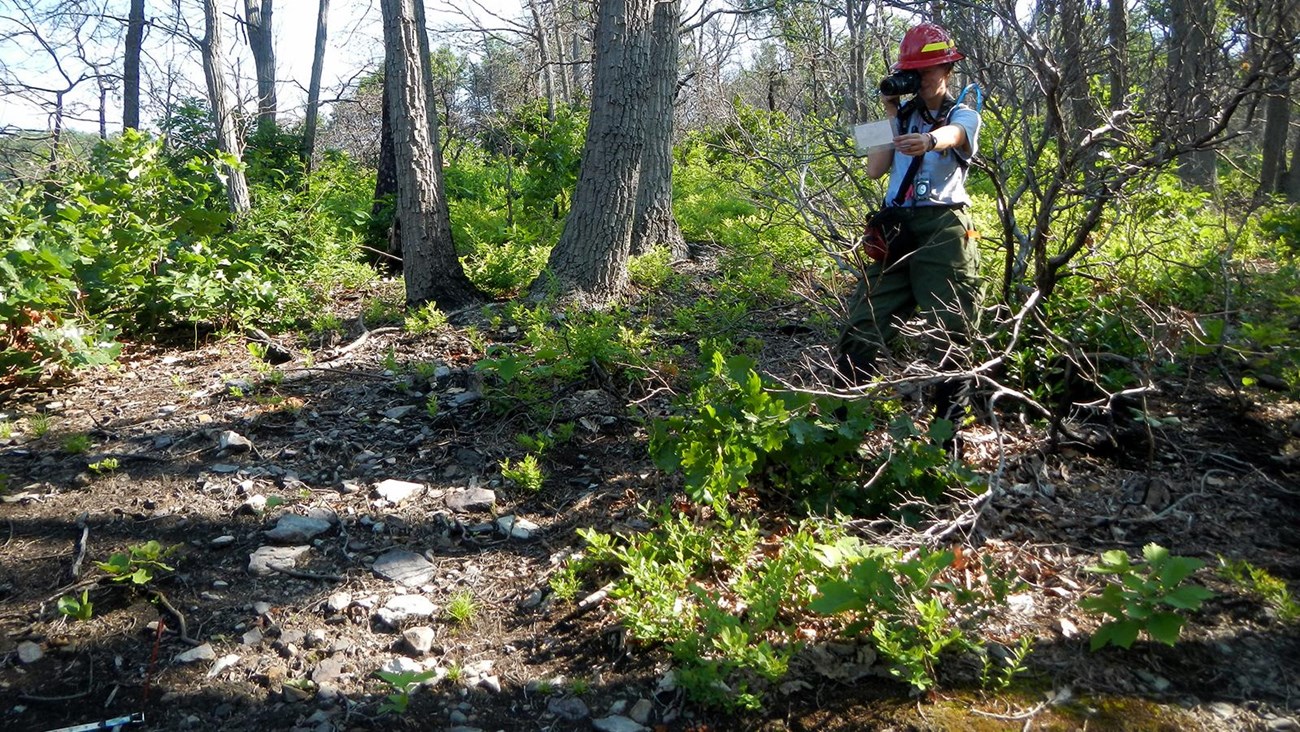
a total of 1,000 structures had been mapped, photographed,
and given a hazard rating. Homeowners were provided with copies
of their assessment. The SCAs also distributed FIREWISE information
packets provided by the Tennessee Division of Forestry.
The Fire Education Corps utilized the Wildland
Hazard Assessment Methodology (WHAM) while performing assessment
on structures along the park boundary. Developed by Shenandoah
National Park, WHAM is a computer program that derives a hazard
rating for each structure based upon inputs including topography,
fuel types and their proximity to the structure, and the type
of construction and materials used in the construction.
A GIS layer showing the locations and hazard
rating for each structure was then developed using ArcGIS
software. Dovetailed into this GIS layer was the descriptive
and photographic data derived through WHAM. This provided
Park managers with a visual of areas that may be at risk from
a wildfire. Future fuel reduction projects in these areas
will help lessen the chance of those wildfires threatening
lives and private property.
The crew leader, Nell Blodgett, came on
board earlier than the full crew. She found housing for the
crew, made contacts with local utility companies and municipalities
to determine what GIS data they could provide to assist with
the project, and set up the team’s office space and
computers. The full crew of four additional SCA students arrived
in early June and hit the ground running after a short orientation
to the Smokies.
The team was very effective in obtaining
information for the Park and sharing FIREWISE information
with the public in a professional manner. Products created
by the team will be invaluable for targeting fuels treatments
to protect the park and its neighbors.
Contact: Mark Taylor, Fire Management
Officer
Phone: (865) 436-1247 |