NPS Fire Management Program
Fire Program Education Public and Media Career Development Employment
Public and Media, Fire Stories Fire Stories Public and Media
Home
About the Fire & Aviation Program
Contact Us
Search NPS Fire
2009
2008
2007
2006
2005
2004
2003
2002

2005

Great Smoky Mountains National Park
Park Conducts Largest Ever Prescribed Burn

Great Smoky Mountains National Park conducted a 2,300 acre prescribed fire on April 10 and 11, 2005, the largest burn in the park’s history. In the interest of safety and efficiency, most of the burn area was ignited by air using a helicopter which dropped incendiary spheres. Approximately 30 firefighters were on hand to assist with ground ignition and monitoring of the fire. In addition to fire staff from the park, firefighters included personnel from Kings Mountain National Military Park, the Bureau of Indian Affairs in Cherokee, North Carolina, and the Cherokee National Forest.

The central purpose of the use of fire in the interior regions of the Smokies is to replicate as nearly as possible the role that naturally-occurring fires played in shaping and maintaining the park’s biologically diverse ecosystem. The Hatcher Mountain burn was conducted to help perpetuate yellow pine and oak communities. Historically, the Hatcher Mountain area was predominantly a yellow pine forest, a condition that was maintained in pre-settlement days by periodic fire. Over the past 70 years or more, the pines have been gradually crowded out by maples and other hardwoods, which can sprout in the shady understory that has been a result of total suppression of fire. Another factor in the decline of pines in the Smokies has been a large infestation with southern pine beetles. The Hatcher Mountain fire is expected to create a variety of sunny openings and enhance pine regeneration.

The Hatcher Mountain prescribed fire was located about 3 miles west of the Cades Cove Loop Road and a half-mile from the park’s western boundary in Blount County, Tennessee. The fire boundaries were made up almost entirely of natural and pre-existing human-made boundaries: Cooper Road to the north, Wilson Branch to the east, Abrams Creek to the south, and Kingfisher Creek and Cooper Road Trail to the west.

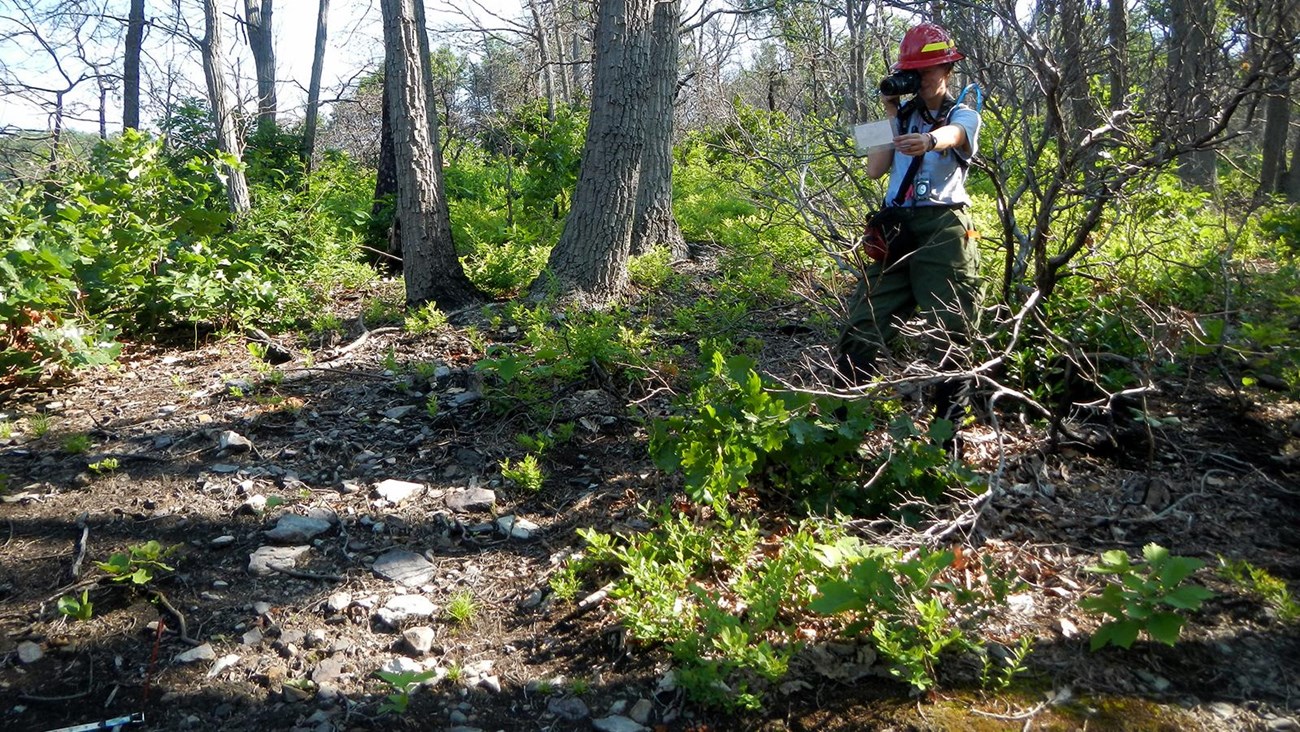
Surface fire beneath trees.

Contact: Nancy Gray, Public Affairs Officer
Phone: (865) 436-1208

Bluff Wildland Fire Use at Lassen Volcanic National Park.

Lassen Volcanic NP by Mike Lewelling

Great Smoky Mountains National Park
Park profile pages
visit website

utility links
Home page. National Park Service Fire ResourcesInformation TechnologyNational Interagency Fire CenterPrivacy PolicyDisclaimer USA.govInsideNPS Fire