|
The Lateral Fire, which started within
Fort Baker, less than half a mile south of a residential area
in Sausalito California, was successfully suppressed at 7
acres in August, 2004. Among the values threatened by the
fire were historic buildings, a cultural landscape, and some
of the last remaining habitat of the endangered Mission blue
butterfly.

The Lateral Fire occurred within a 17-acre
habitat restoration project and burned over six patches of
the butterfly’s host plant, Lupinus
albifrons, a perennial lupine, where Mission blues
lay their eggs each year. Approximately three-hundred lupine
plants were affected by the fire. Although, prescribed fire
has been suggested as a recovery strategy for the Mission
blue butterfly, the effects of fire on the host plants and
on the butterfly has been unknown.
Weed control in the burned area was a critical
measure to protect the host plants, which were potentially
threatened by post-fire invasions of non-native French broom
and Italian thistle in both coastal scrub and grassland areas.
French broom in the coastal scrub areas
required the most intensive treatment. Three types of treatment
were used on the French broom seedlings –1) mulching
with weed free rice straw; 2) flaming with a hand-held propane
torch; and 3) dislodging or cutting with a hula hoe. Flaming
proved to be the most effective treatment for French broom,
and demonstrated 90% success when applied to seedlings within
two months of germination. Due to the extensive French broom
seed bank, multiple treatments were required. A new wave of
French broom seedlings followed each of three flaming applications.
A massive hand-pulling effort was done as a follow-up in June.
Flaming proved less successful in treating Italian thistle,
which was more effectively controlled by the combination of
herbicide and hand pulling.
Emergency rehabilitation of the burned area
also included installation of weed-free burlap straw wattles
and weed-free straw mulch for erosion control, as well as
hazard tree removal of burned trees overhanging Alexander
Avenue.
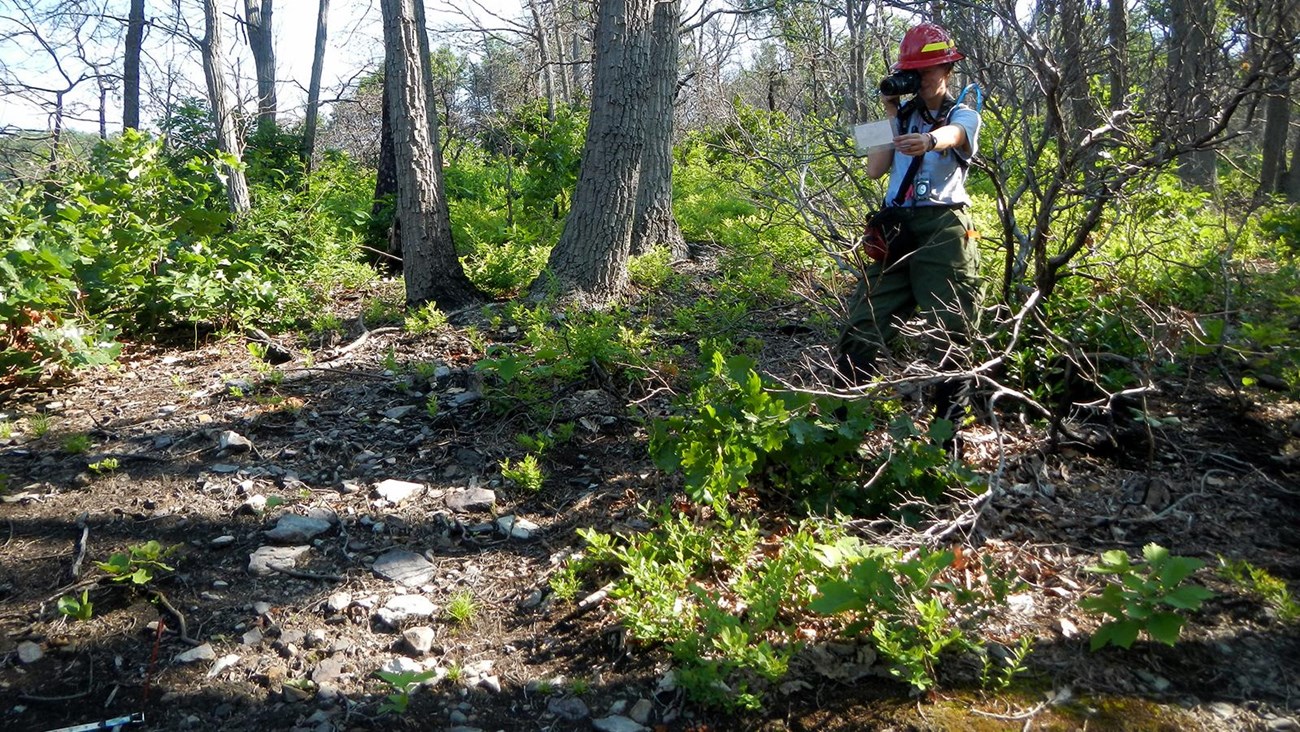
Post-fire monitoring conducted during rehabilitation
has revealed three especially significant observations regarding
the effects of fire on Mission blue butterflies: 1) about
half of the lupine plants which host the butterfly larvae
survived the fire; 2) an increased number of lupine plants
germinated following the fire; 3) caterpillars were found
on the burned host plants. Based on what is known about the
lifecycle of the Mission blue butterfly, the eggs which the
caterpillars developed from would have been laid before the
fire, indicating the butterflies themselves, in their earliest
larval stages, survived the Lateral Fire.
The Lateral Fire occurred under Red Flag
conditions, involving especially hot, dry weather, with sustained
winds. These conditions represent the highest potential for
a fire to spread rapidly, and typically occur several days
each year in the San Francisco Bay Area.
Contact: Alex Naar, Fire Management
Officer
Phone: (415) 331-6374
Contact: Daphne Hatch, Chief of
Resource Management
Phone: (415) 331-0734
|