Canaveral
National Seashore Community at Risk and Scrub Jays Benefit from
Interagency Efforts
Canaveral National Seashore used prescribed
fire to successfully treated 556 acres of imperiled Florida
coastal scrub in early 2005. The Bill’s Hill Prescribed
Fire was the National Park Service’s first large scale
attempt to reduce the threat of fire in this area. Oak Hill,
a community at risk from wildland fire, benefited from this
successful fuels reduction project. The residential area has
been repeatedly threatened by wildfires, most notably in 1998.
Prior to the prescribed fire, National Park Service staff
contacted each local resident and provided information on
this fire management project. This public relations effort
was well received and the community supported this cooperative
effort.
The Bill’s Hills area is a fire-dependent
ecosystem and home to several federal and state listed species.
With an altered fire regime, the understory of the slash pine
flatwoods has become dense with saw palmetto and scrub oak.
The reduction in fuels will also improve habitat for resident
populations of bald eagle, scrub jay, gopher tortoise and
indigo snake. In addition, restoration of rare plants is expected
and plant diversity will increase throughout the system.
Merritt Island National Wildlife Refuge
provided staff and equipment and worked closely with Canaveral
National Seashore in the planning and implementation stages
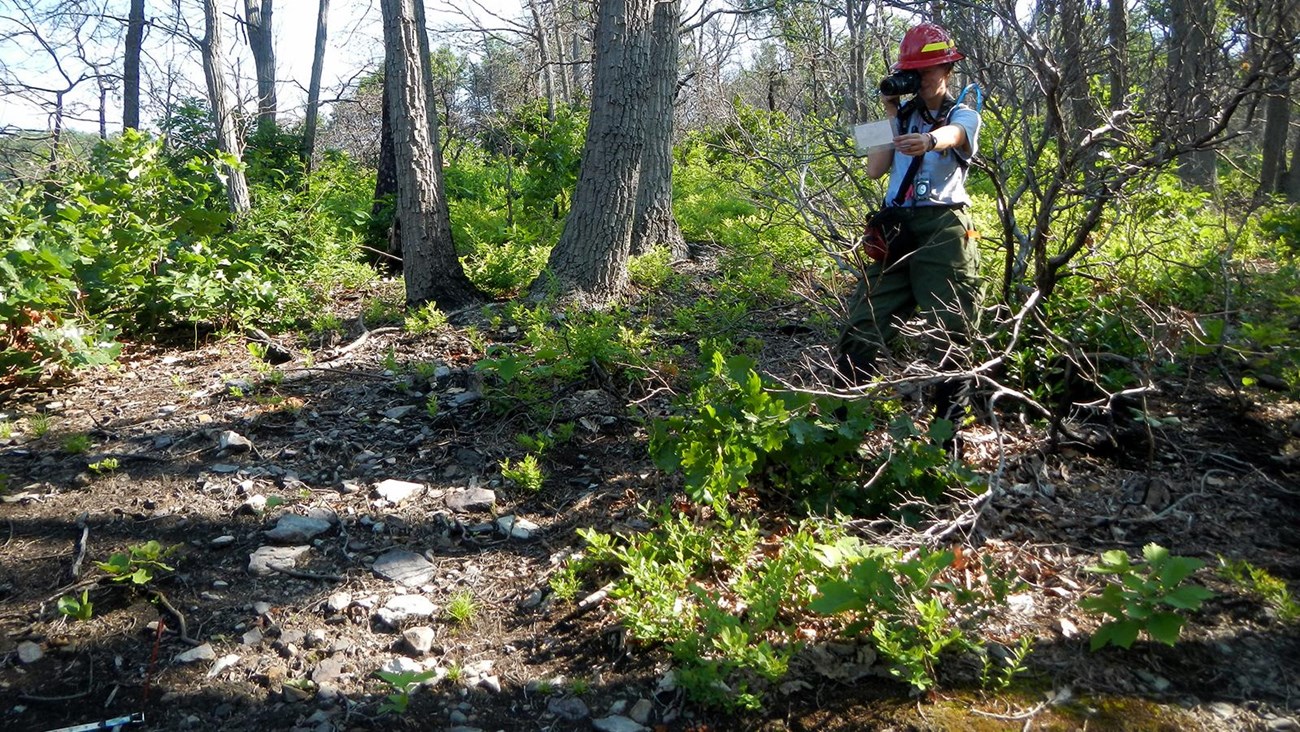
of the Bill’s Hill Prescribed Fire. The fire effects
team from Everglades National Park established a long-term
fire effects monitoring plan and will continue to sample permanent
plots. An additional 532 acres in Bill’s Hill are scheduled
to be treated in 2006, and more fire effects plots will be
installed prior to the upcoming burn season. Interagency cooperation
in planning and conducting this fuels treatment was exceptional
and will continue for future projects.
Contact: John Stiner, Resource Management
Specialist
Phone: (321) 267-1110