|
|
 |
 |
 |
 |
 |
|
2003
|
 |
|
Lake Meredith National Recreation Area
Salt Cedar Eradication Program Succeeding in Texas
|
 |
|
The Southern Plains Park Group was awarded funding through the Natural Resources Protection Program (NRPP) in FY 2000 to begin a long-term salt cedar eradication program. The primary goal was to remove approximately 6,000 acres of salt cedar around Lake Meredith NRA (LAMR) to improve water quality an quantity, allow native species to return, improve the threatened Arkansas River Shiner habitat by increasing stream flow, and provide for additional recreational usage and protection of visitor health and safety. Two primary objectives were to chemically treat and monitor salt cedar along streambeds, riverbanks, and the lake shoreline following the introduction of prescribed fire, and to perform chemical and mechanical treatments along streambeds, riverbanks, and the lake shoreline where salt cedar is not dominant. During FY00 to FY02 seasons, a 4-person Salt Cedar Reduction Crew treated a total of 832 acres of post-prescribed fire lands and 1,444 acres of mechanically treated lands, totaling 2,286 acres combined. Additionally, 1,500 acres of salt cedar is scheduled for burning and chemical treatment from FY03 to FY05.
|
 |
|

|
 |
|
In April 2000, a prescribed fire burned 500 acres of salt cedar in the South Canyon. The salt cedar was ignited by a terra-torch mounted on a boat that burned the salt cedar along the lakes shoreline. The treated areas were mapped with GPS field units and a data theme created on the parks base GIS map. The crew also chemically treated two exotic Kochia plant stands totaling 11.5 acres within the boundaries of Washita Battlefield NHS (WABA). Due to the timing of the funds being released in FY00 and the crew working in extreme temperatures, the crew did not meet its entire goal in treating 500 acres of prescribed fire salt cedar and 500 acres of mechanical and chemical treated salt cedar acres. A total of 65 gallons of 3:1 JLB oil (48.75 gallons) and Garlon4 (16.25 gallons) chemical mix were used in FY00.
The Salt Cedar Reduction Crew treated a total of 630 acres of salt cedar in FY00.
|
 |
|

|
 |
|
In November 2000, the Regional Resource Program Manager was able to release FY01 funds to the park earlier in the year, allowing the crew to work during cooler months. The National Wild Turkey Foundation gave the park an additional $5,000 in funding to contribute to the salt cedar eradication program to treat sensitive streambeds that are being invaded by salt cedar and to improve wild turkey habitat. In February/March 2001 the crew began treating approximately 330 acres of prescribed burned salt cedar and retreating re-sprouts with approximately 170 acres of the salt cedar that was treated in FY00 in South Canyon. Follow-up chemical treatments were completed on the 11 acres of Kochia at WABA. Before and after photographs were taken in and around the treated areas to monitor current progress and to establish points for future monitoring. A total of 216.25 gallons of 3:1 JLB oil (162.19 gallons) and Garlon4 (54.6 gallons) chemical mix were used in FY01.
The Salt Cedar Reduction Crew treated a total of 945 acres of salt cedar in FY01.
|
 |
|

|
 |
|
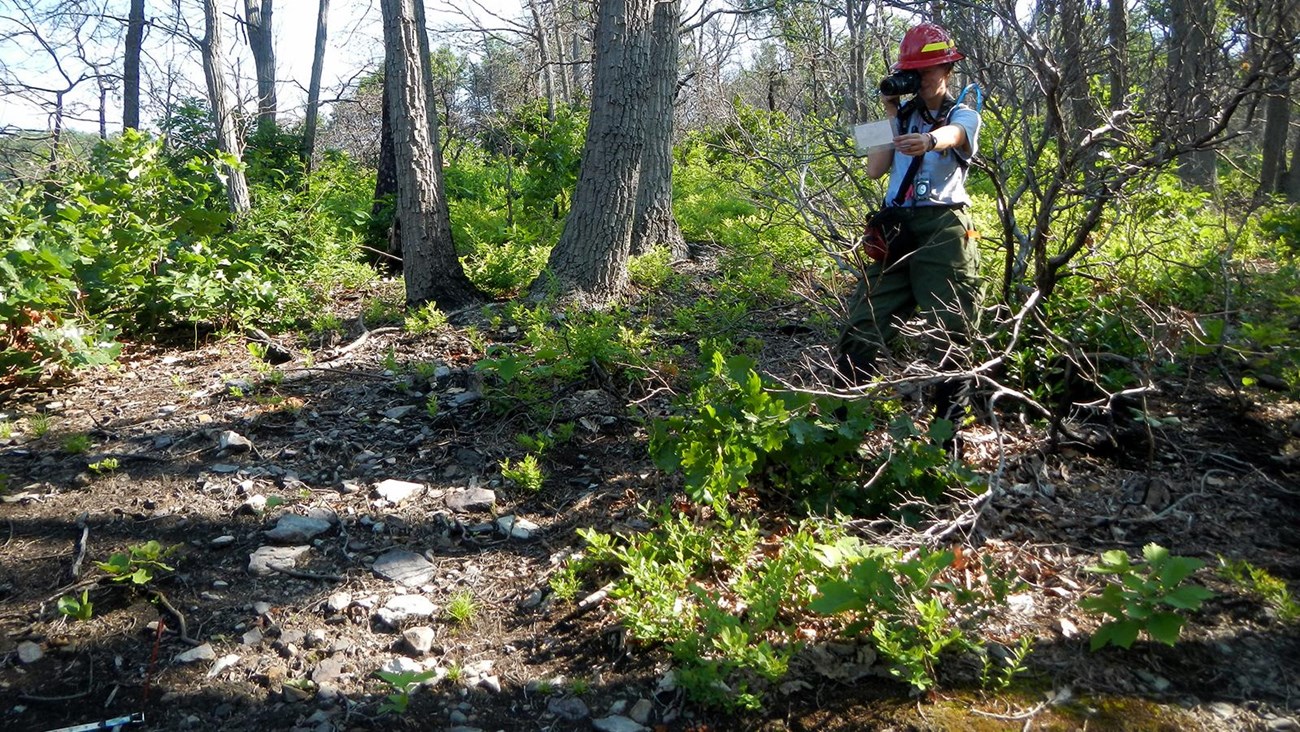
Fire-effects monitors from Bandelier NM (BAND) installed monitoring plots in the salt cedar colonies within the South Turkey Creek/Short Creek burn units at LAMR. The National Wild Turkey Foundation gave the park additional $11,500 in funding to contribute to the salt-cedar eradication program to treat sensitive streambeds that are being invaded by salt cedar and to improve wild turkey habitat.
|
 |
|

|
 |
|
In April 2002, prescribed burns were performed on the Lake Meredith Harbor and Short Creek Units of LAMR, burning salt cedar colonies. During the burn, over 300-foot flame lengths from the salt-cedar were seen and caused a spot fire 1&Mac218;4 mile away. In May 2002, Texas Tech University rented a dozer to knock down approximately 120 acres of burnt salt-cedar in the Alibates Unit of LAMR. In the future a prescribed burn will be incorporated to burn the down salt cedar and treat re-sprouts. The park experimented with a wet-blade operation in treating 10 acres in four days in the Alibates Unit. The wet-blade could not treat tree diameters larger than two inches and re-sprouting occurred. If the park chooses to use the wet-blade operations in the future, it will choose tree stumps with a diameter of two inches or less and have crews follow behind with chemical treatment.
In July 2002, the park experimented with a shredder that was mounted on a dozer and treated approximately 15 acres in 4 days. The shredder was able to handle any size tree. The shredder demonstrated that it could treat salt-cedar at a high production rate and will be used again in the future. From July to September 2002, the crew began chemical re-treatments in South Canyon, Plum Creek, Lake Meredith Harbor, and Short-Creek at LAMR. The crew walked the shoreline and sprayed re-sprouts with backpack sprayers using Garlon/JBL mix. Production was slow mechanically due to the heavy infestation of salt-cedar in S. Turkey Creek. A total of 176 gallons of 3:1 JLB oil (132 gallons) and Garlon4 (44 gallons) chemical mix were used through the FY02 for the treatment of salt cedar.
The Salt Cedar Reduction Crew treated a total of 711 acres of salt cedar in FY02.
|
 |
|

|
 |
|

|
 |
|
 |
 |
 |
 |
|
|