|
While Sequoia and Kings Canyon National Parks are known for their long-standing prescribed fire and fire use programs, the parks also utilize mechanical fuel reduction techniques to meet goals of protecting local communities and restoring ecosystems.
In 2002, the parks completed two mechanical projects in and around private communities in the wildland urban interface. Nestled in heavily wooded mixed conifer forest completely surrounded by national parklands, Wilsonia and Silver City are perfect examples of wildland urban interface communities. Each project had a key to success: for Wilsonia it was a local partnership with the Tulare County FireSafe Council, and for Silver City it was the use of a private contractor.
The projects have two long-term objectives:
Wilsonia Fuel Reduction Demonstration Project
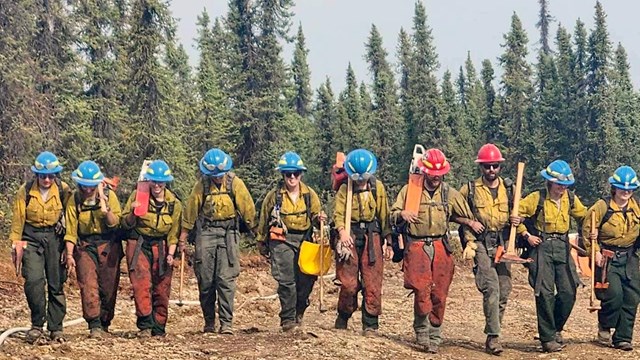
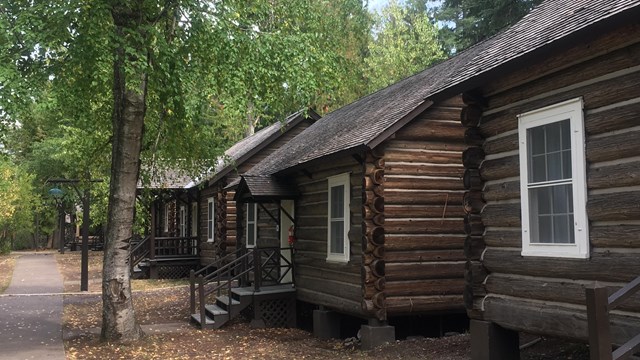
Wilsonia is a 100-acre area inside Kings Canyon National Park that was developed for summer cabins beginning in 1919 with approximately 200 structures. In preparation for a large fuel reduction project surrounding the community beginning in 2003, the park hosted a "demonstration project" with the Tulare County FireSafe Council. Fire crews cut and piled debris on a 2-acre lot in Wilsonia. After the fieldwork was complete, residents were invited to two educational workshops led by the Chairman of the FireSafe Council, park fire managers, and fire staff from other state and federal agencies. Residents learned about various fuel reduction techniques (like chipping and piling) and how to apply those techniques on their own property.
Silver City Mechanical Fuel Reduction Project
Silver City is a private cabin community (approx. 50 cabins) within Sequoia National Park's Mineral King area. The parks hired a contractor, Firestorm out of Chico, California, to complete a 20-acre thinning project around the community. The work involved the mechanical removal of dead and down material, as well as the thinning of small trees and dense shrubs, in a 200-ft. barrier around the community. Most of the excess material was piled for burning later. Ten acres were finished in FY2002 and the rest was completed in the first two weeks of FY2003.
|