
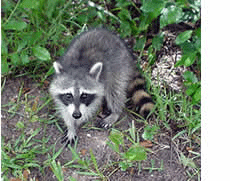
Phylum: Chordata Characteristics: Raccoons have a whitish gray coat, sometimes yellowish with black patches of fur. It is often recognized by its black mask and tail covered by white rings. Adult raccoons may be up to three feet long and weigh up to 30 pounds, although some male raccoons can weigh up to 40 pounds. Their fur is long and dense, a grizzled brown and black color that has often been described as "salt and pepper." The tail can grow to be fifteen inches. A tail can have five to seven black rings on it. Raccoons look like they have a bandit mask on their face. Raccoons are omnivores and eat plants and animals Although raccoons are flesh eaters and have long canine teeth, their molar teeth are adapted for a varied diet which includes more than just meat. They have sharp claws so they can climb trees and open shellfish like clams and oysters. Raccoons are also nocturnal animals. The name "raccoon" come from the Indian word "arakum" which means "he scratches with his hands." Habitat: The raccoon lives in wooded areas near water. It is very adaptable, though, and is also found in suburbs and cities. Their unusual use of their thumbs makes foraging in city trashcans a way to find foods when dwelling in urban areas. It usually makes its den in a tree, but it can make its home in an abandoned woodchuck burrow, a cave, barn, sewer, or even a house! |
Last updated: April 10, 2015