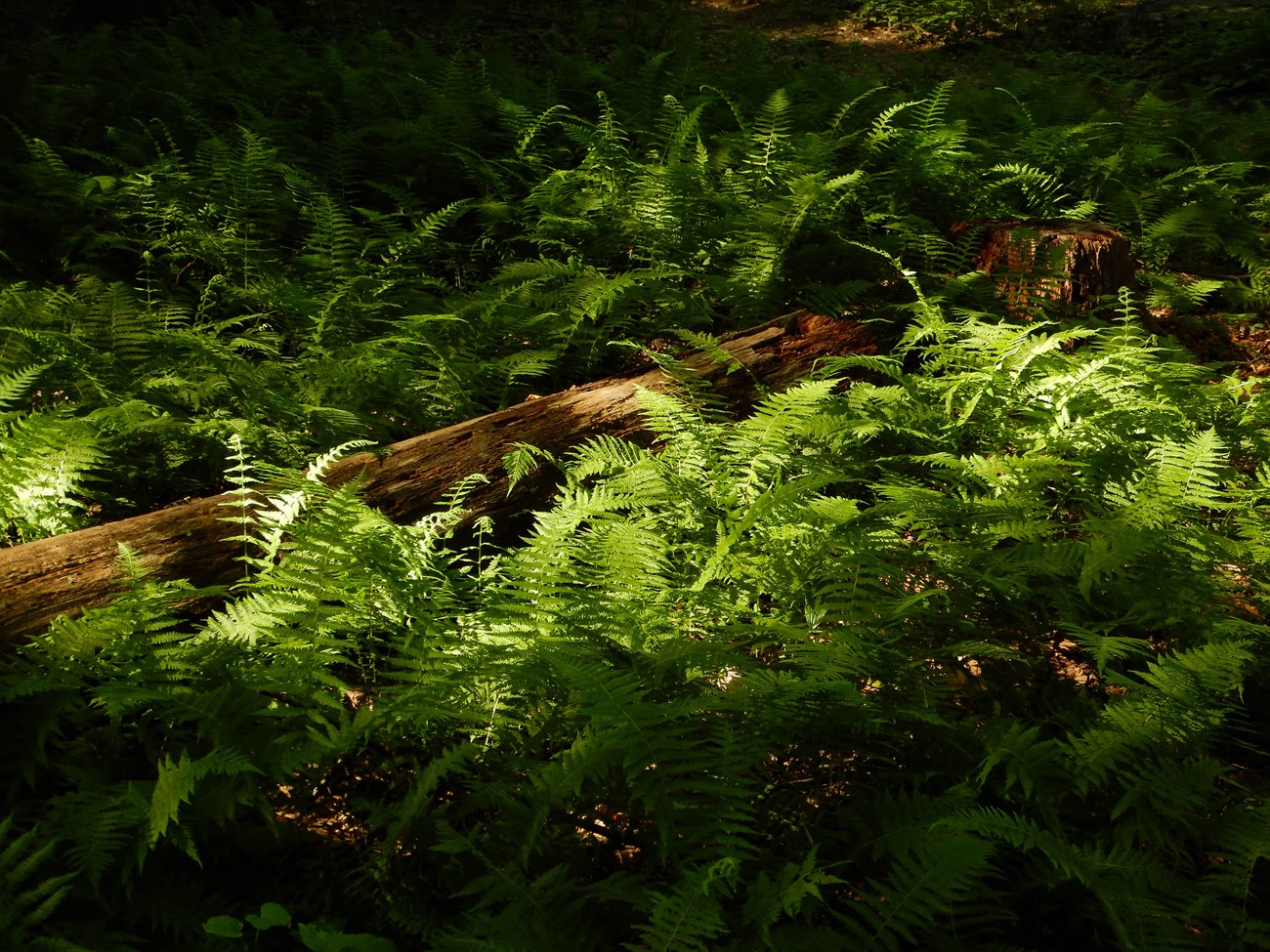
Multiple ferns covering forest floor and surrounding decayed log
Volunteer John Zuke
Fern Frond
Photo by Volunteer John Zuke
Ferns are vascular plants that reproduce in a very unique way. Reproduction is achieved using spores rather than seeds. Spores are usually produced on the underside of leaves in tiny capsules called sporangia. If a fern spore lands on moist soil or another suitable moist place, it germinates. The spore sends out a short tube that divides and grows small, green, flat, heart-shaped gametophyte. This gametophye is the fern's sexual stage and it lacks any true roots, stems, or leaves. Either male (sperm) or female (eggs) sex organs will develop on its underside. The sperm will then swim through a thin film of water to fertilize the egg. This fertilized egg will eventually form leaves and roots, becoming a new plant. This new plant is called the sporophyte and is the stage most commonly seen. Allies of ferns, which include horsetails and club mosses, reproduce in a similar manner.
Over 33 different species of fern have been reported to exist in Catoctin Mountain Park. Types of ferns in the park include northern maidenhair fern, ebony spleenwort, maidenhair spleenwort, lady fern, northeastern lady fern, silvery athyrium, cutleaf grape fern, matricary grape fern, rattlesnake fern, walking fern, common bladder fern, hay-scented fern, crested shield fern, Goldie's fern, marginal shield fern, spinulose fern, sensitive fern, southern adders tounge, cinnamon fern, interrupted fern, royal fern, rock cap fern, christmas fern, bracken fern, broad beech fern, New York fern, blunt-lobed woodsia, and chain fern. Please remember that it is illegal to collect ferns in the park.