Captain John Smith Trail Legislation
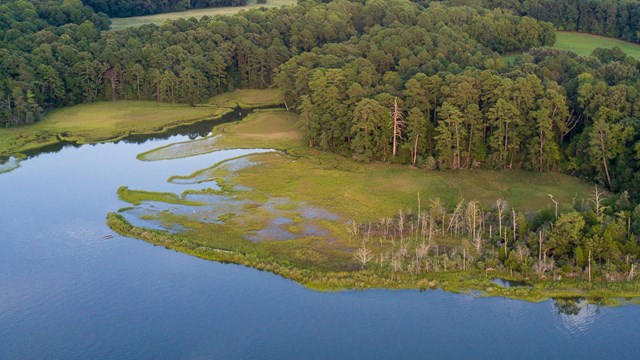
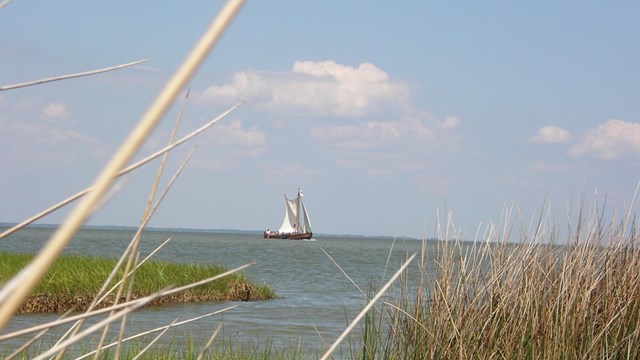
On December 19, 2006, President George W. Bush signed legislation establishing the Captain John Smith Chesapeake National Historic Trail as an amendment to the National Trails System Act. The first national water trail in the United States follows the historic routes of Smith’s exploratory voyages on the Chesapeake Bay and tributaries in 1607-1609.
The trail traverses nearly 3,000 miles of Virginia, Maryland, Delaware, and the District of Columbia. Its purpose is three-fold: commemorate Smith’s voyages, share knowledge about the Native American societies and cultures of the period, and interpret the natural history of the Chesapeake Bay.
The trail is administered by the National Park Service in coordination with the Chesapeake Bay Gateways and Watertrails Network and the federal-state Chesapeake Bay Program that is leading efforts to restore America’s largest estuary. The trail involves many other partners and provides significant opportunities for education, recreation, and heritage tourism in the Bay region.
Comprehensive Management Plan
The National Park Service is currently developing the comprehensive management plan and environmental assessment (CMP/EA) for the trail. The CMP/EA
- Establishes how the trail will be developed and managed over 10-15 years
- Assesses potential impacts on natural and cultural resources
- Identifies the trail’s significant places and stories and how to protect resources critical to the trail
- Crafts meaningful visitor experiences on land and water
- Defines management objectives and alternatives to meet those objectives
- Recommends a preferred alternative for managing the trail.
Throughout the planning process, the National Park Service consults with other federal agencies, state and local governments, nonprofit organizations, American Indian groups, businesses, various other entities and trail partners, and the general public in order to develop the most thorough and inclusive management framework. The NPS expects to have the final CMP/EA in 2010.
Public Involvement
Wide public participation is essential to the trail planning process. Input from the public will help guide the National Park Service in finding the best methods to manage, interpret, and access the trail. Through workshops, consultations, and the public comment process, the National Park Service invites individuals to help shape the framework for long-term management and use of the trail.
A series of public meetings will be held around the Bay in 2009 when the National Park Service will present several alternative trail management proposals for public consideration.
Based on public input, the National Park Service will develop a preferred management alternative and a draft comprehensive management plan and environmental assessment. This draft plan will be available for a 30-day public comment period in early 2010. The CMP/EA will then be revised for approval by NPS officials. The approved plan will guide decisions about the trail for the next 10 to 15 years.
To be sure you have a voice in the trail planning process:
The primary place for public comment and official information throughout the planning process is the National Park Service Planning, Environment and Public Comment (PEPC) website. This site provides access to current plans, environmental impact analyses, and related documents. You can submit comments for documents available for public review at the PEPC website.
2009 Public Workshops
The National Park Service will present alternative concepts for the future management of the Captain John Smith Chesapeake National Historic Trail in a series of eight public workshops in October 2009. NPS staff will be on hand to take your comments and suggestions.
Your involvement is essential to the success of this nationally significant trail. You are invited to participate in the following 2009 workshops. All meetings are 6:00 p.m. to 8:00 p.m.
October 12, 2009
The Watermen's Museum
309 Water Street
Yorktown, VA 23690
6 p.m – 8 p.m.
October 13, 2009
Deltaville Community Center
17147 General Puller Highway
Deltaville, VA 23403
6 p.m – 8 p.m.
October 14, 2009
Annapolis Maritime Museum
723 Second Street
Annapolis, MD 21403
6 p.m – 8 p.m.
October 15, 2009
Charles Sumner School
1201 17th Street, NW
Washington, DC 20036
6 p.m – 8 p.m.
Via MetroRail: Farragut North (Red Line)
October 19, 2009
Barrier Islands Center
7295 Young Street
Machipongo, VA 23405
6 p.m – 8 p.m.
October 20, 2009
Seaford City Hall
414 High Street
Seaford, DE 19973
6 p.m – 8 p.m.
October 21, 2009
Chesapeake Bay Maritime Museum
Steamboat Building
213 North Talbot Street
St. Michaels, MD 21663
6 p.m – 8 p.m.
October 22, 2009
Havre de Grace Maritime Museum
100 Lafayette Street
Havre de Grace, MD 21078
6 p.m – 8 p.m.
Interpretive Plan
As part of the trail planning process the National Park Service has prepared an interpretive plan for the Captain John Smith Chesapeake National Historic Trail. The interpretive plan provides a vision for interpretive, educational, and recreational opportunities related to the trail, and defines short- and long-term goals for making meaningful connections between visitors and Chesapeake Bay resources.
A product of collaboration with Chesapeake Bay Gateways, agencies, tribes, community organizations, and others, the interpretive plan is a guiding document with reference information for trail partners to use to develop visitor experiences along the trail.