
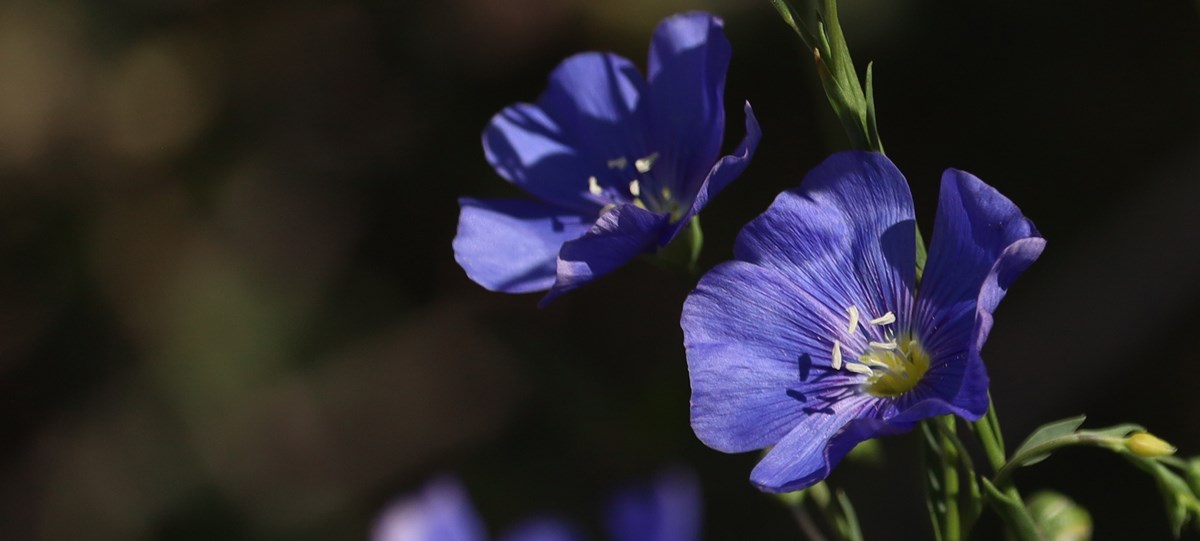
NPS Photo/Tiffany Zadi Blue FlaxLinum lewisii General DescriptionThe Blue Flax plant has few to many white to deep blue flowers with five petals each. The leaves are arranged in an alternating pattern and are very narrow and very short. Communities consist of separate small clumps of plants. This is a member of the flax family. HabitatBlue Flax grows in well drained prairies, meadows and the breaks. You can find them in Bryce Canyon along most trails, in open fields and among short shrubs. Plant LoreNative Americans consumed the seeds for their flavor and nutrients. A tea made from the stems and leaves was used to treat various medical problems such as eye infections, stomach disorders, and swellings. Livestock exhibits a state of drowsiness when feeding on Blue Flax. Blue Flax was used by many Native American tribes in making strong rope. Today a cultivated flax is still grown for its "linen" fiber and "linseed oil". Further ReadingBuchanan, Hayle 1992. Wildflowers of Southwestern Utah. Bryce Canyon Natural History Association. Bryce Canyon, Utah. Craighead, Craighead and Davis, Peterson Field Guide, Rocky Mountain Wildflowers. Fagan, Damian. 1998. Canyon Country Wildflowers. Falcon Press. Helena, Montana.
|
Last updated: April 30, 2023