
|
Park visitors have can contribute to bird conservation science and management in two significant ways: submitting observations through eBird or joining the annual Coastal Breeding Bird Monitoring project. eBirdThe Park needs your help to discover more about the birds that inhabit the Boston Harbor Islands. The collaborative and interactive database eBird provides birdwatchers with the tools to track and learn more about birds in one's community. You can help with data collection anytime you visit the park. Your records, when combined with those of other observers, become a powerful tool for bird conservation by supplying scientifically useful data on species distribution and movement patterns in Massachusetts and across the continent. Use the resources below to record your sightings, enter them into eBird, or learn more about birds at the Boston Harbor Islands.
Coastal Breeding Bird MonitoringBoston Harbor Islands National and State Park was designated a Massachusetts Important Bird Area (IBA) because the park provides habitat for a significant number of colonial-nesting waterbirds. The National Park Service identified these birds as indicator species of the overall health or condition of the park. The National Park Service, in conjunction with University of Rhode Island, developed a long-term volunteer-based monitoring protocol to improve our understanding of these breeding waterbirds, the effects of habitat changes, and management actions. Volunteers work with a researcher and park staff to implement this protocol, which focuses on obtaining information on the relative abundance of thirteen coastal breeding species by estimating or directly counting nests, incubating adults, or territorial nesting pairs. Visit the link below to learn more about these efforts, and check out the 2021 summary report "Long-term Coastal Breeding Bird Monitoring in the Boston Harbor Islands, 2007–2019" by Trocki, Weed, Kozlowski, and Broms, published in Northeastern Naturalist 25 (Special Issue 9): 235-257. 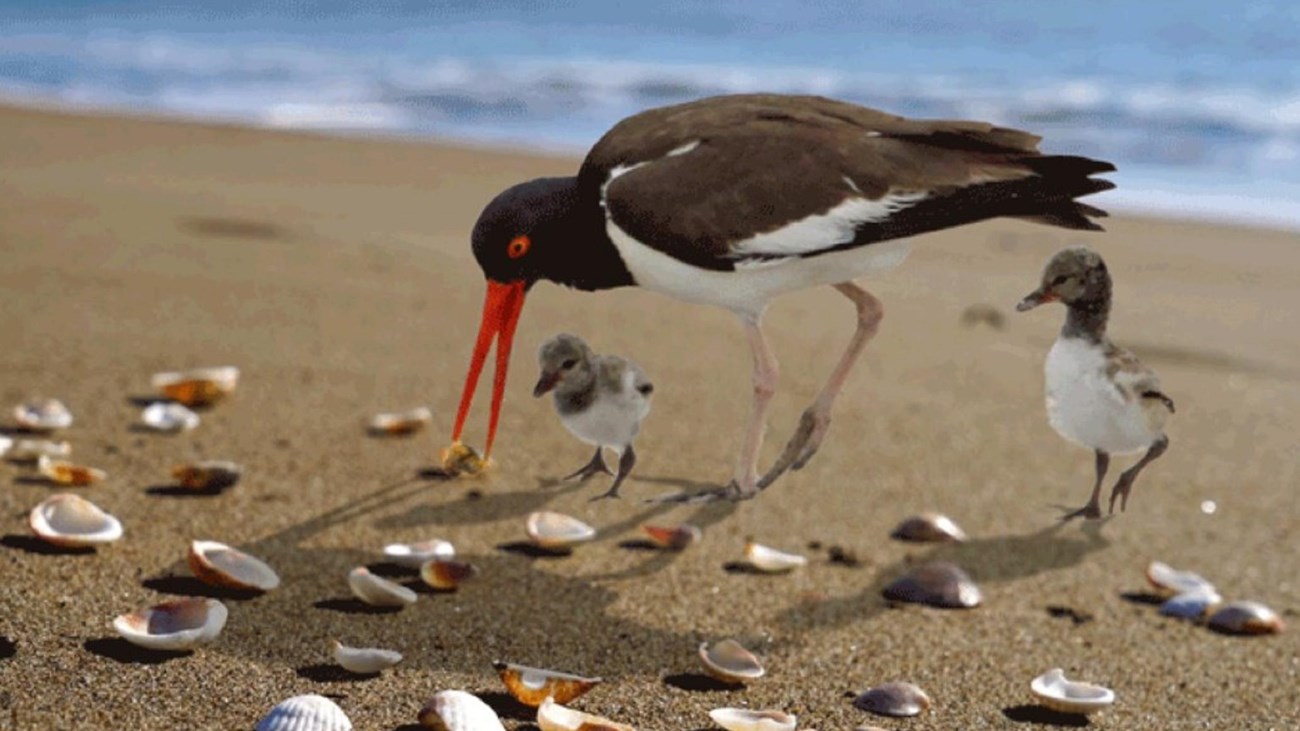
Coastal Bird Monitoring
Learn more about the Coastal Bird Monitoring in Northeast Temperate Network Parks program. Interested in Volunteering?Please check out Boston Harbor Island Volunteer Opportunities, or email volunteers@bostonharbornow.org |
Last updated: September 27, 2021