
|
The following is a letter sent by the Heritage Corridor Commission to the U.S. EPA regarding the permit for the Upper Blackstone Water Pollition Abatement District.
May 18, 2007
Mr. Roger Janson, Chief of Municipal Permits
U.S. EPA
NPDES Permits Unit-CPE
One Congress Street Suite 1100
Boston, MA 02114-2023
RE: NPDES Permit No. MA 0102369 for the Upper Blackstone Water Pollution Abatement District (UBWPAD)
Dear Mr. Janson:
On behalf of the John H. Chafee Blackstone River Valley National Heritage Corridor Commission, I would like to thank you and the US Environmental Protection Agency (EPA) for honoring the Commission’s request to extend the public comment period on the draft National Pollution Discharge Elimination System Permit to discharge to waters of the United States (NPDES Permit No.: MA0102369) being sought by the Upper Blackstone Water Pollution Abatement District (UBWPAD).
The Corridor Commission met on Friday, May18th to review and discuss the draft permit and voted unanimously to support the requirements of the permit. Further, the Commission would like to express its strong support and desire for the EPA to negotiate an aggressive implementation schedule for the UBWPAD to upgrade its treatment plant to meet the requirements of the permit. The draft permit’s phosphorous and nitrogen requirements will serve as yet another important step forward in the Commission’s legislative mandate to promote and achieve a healthy Blackstone River.
P.L. 99-647 established the Blackstone Corridor Commission to assist the states of Massachusetts and Rhode Island and the Blackstone River Valley communities in protecting and preserving the cultural, historic and natural resources that define the character of this nationally significant area. The Commission’s support for the requirements of the draft permit are based on its purpose, its management plans, and its twenty-year partnership work in promoting a clean and healthy Blackstone River.
Historically, the Blackstone River has been a vital resource for life in the region, providing the native peoples and early colonists with a healthy food source and fertile land and water for agricultural development. By 1790 the Blackstone River proved to be a valuable power source that fueled the birth of the American Industrial Revolution with the development of Slater Mill and other mills up and down the Blackstone Valley. However, by the early 20th century, the “hardest working river in America” also became one of the most polluted -- a legacy that our generation is still dealing with today.
The Blackstone Corridor’s management plan, the Cultural Heritage and Land Management Plan for the BlackstoneRiverValley National Heritage Corridor (1989) stated that “the most important natural resource of the valley is the BlackstoneRiver itself, and upgrading the quality and maintaining its flow are priority actions.” The amendment to that plan, The Next Ten Years (1998), identified “Promoting River Recovery” as one of the Commission’s “Core Commitments” or core programmatic goals. The River Recovery Core Commitment’s specific goal is to “work collaboratively with government agencies and organizations on river recovery programs that support improvements in water quality and quantity, habitat restoration, reintroduction of migratory fish and local efforts in environmental education, stream monitoring and land protection along the river.” The Blackstone River is also one of the largest contributors of fresh water to the Narragansett Bay which contains valuable and fragile estuaries and shellfish habitat that are negatively impacted by high nutrient levels.
In 1999, the Blackstone River was selected as one of 14 American Heritage Rivers across America – an honor that the Commission and its partners, including the New England Federal Partners, consider to be a further mandate to protect and restore its health. In 2002, the U.S. Army Corps of Engineers designated the Blackstone as one of four Urban Rivers across America, thus furthering the federal commitment to restoring its health.
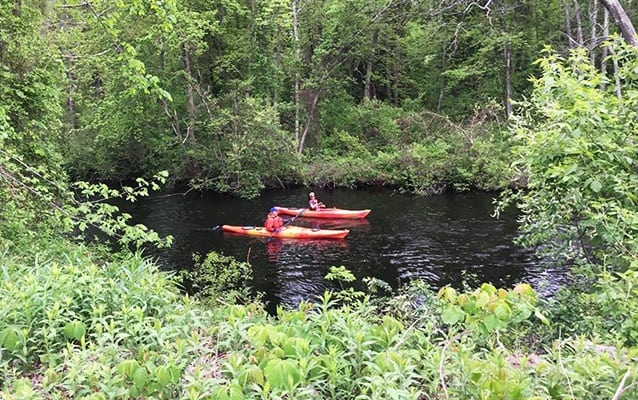
In support of our management plans and the federal designations designed to restore and protect the health of the Blackstone River, the Commission has partnered with a diverse array of stakeholders in and outside the valley including watershed and environmental groups, federal, state and local agencies, community leaders and the general public to promote and enhance the water quality and recreational opportunities of the Blackstone River. A number of downstream communities are strenuously working to achieve higher water quality standards, and it is critical that the Upper Blackstone Water Pollution Abatement District also achieves improved water quality discharge. The Commission and its partners have embarked on an exciting big-vision goal to achieve a swimmable and fishable Blackstone River by 2015. By issuing this permit as drafted, the largest point source pollution discharger to the Blackstone River will be restricted from discharging harmful nutrients that retard our collective efforts to achieve this worthy goal.
Again, thank you for extending the public comment period and affording the Corridor Commission an opportunity to comment on the draft permit. If you have any questions please feel free to contact the Commission’s Acting Executive Director Thomas E. Ross at 401-762-0250 x-11.
Sincerely,
Edward Sanderson
Chairman
|