
NPS 
NPS
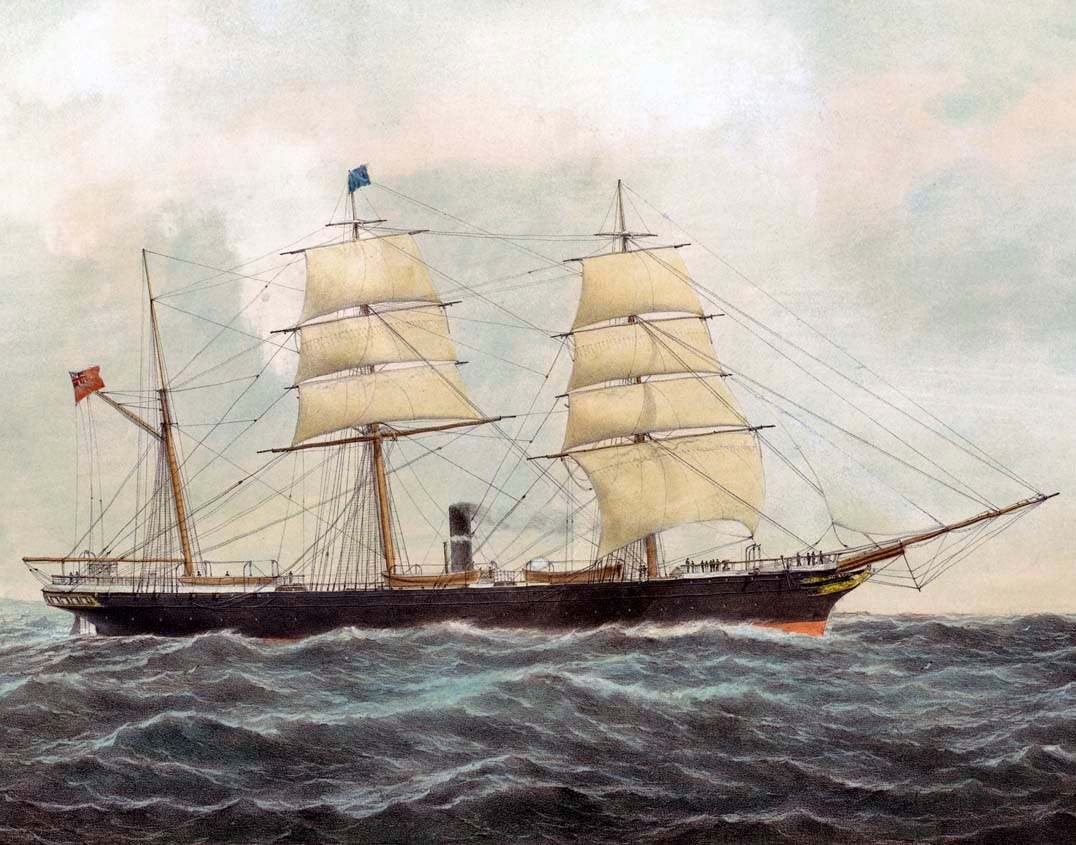
Erl King was a 306 foot iron-hulled three-masted steamer built by A. and J. Inglis Shipbuilders and Engineers of Glasgow, Scotland in 1865. This barkentine-rigged steamship had a 34 foot beam and displaced 2178 tons. The ship’s name is an English translation of the German Erlkonig, which was a mythical mischief-making elf in German literature. Erl King was primarily a cargo ship, but also had first-class accommodations for 50 passengers. Robertson and Company of London were the first owners, but Erl King sailed for several other firms under charter, and was captained by John Pinel while trading between China and Australia for the first few years of service. Erl King ran aground at Tennessee Reef on January 18, 1881, but was removed, repaired, and returned to service. On December 16, 1891, she ran aground on Long Reef while on the way to New Orleans from Swansea, England. The steamer Feliciana noted that she was “afloat with two anchors out,” apparently while the crew was attempting to conduct repairs. Insurers from Key West reported that cargo was being salvaged, but the ship itself was doomed. Some of her machinery, as well as 200 tons of cargo were saved. Hull plates were reportedly used as scrap metal during World War II. The outline of Erl King’s hull and remains of its cargo can now be seen in 18 feet of water on Long Reef. All that remains of its cargo are barrel-shaped concrete objects that were once wooden barrels filled with dry concrete mix. The wooden barrels have long since been consumed by shipworms, leaving the concrete casts we can see today. |
Last updated: April 28, 2021