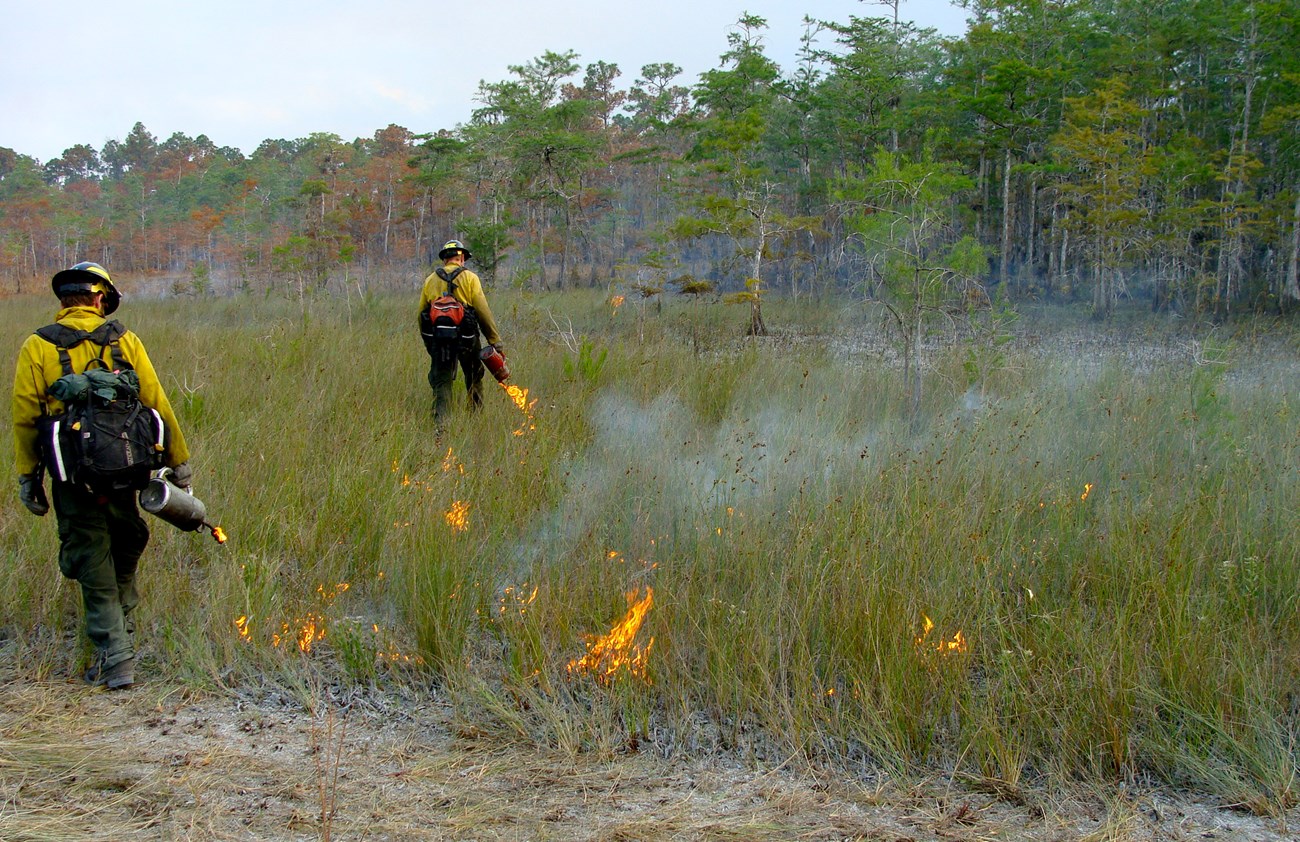
Big Cypress National Preserve is an area born of fire. During the transition between winter's dry season and the summer's rainy season frequent lighting strikes would often start natural fires. These fires have encouraged growth, over time, of many plant communities adapted to fire.
Recognizing the value of fire in the ecosystem, Preserve managers now use prescribed burning to maintain fire dependent communities. Please use this link to read more about our plan to prioritize and treat hazardous fuels within the Preserve.
PRESCRIBED FIRES- FREQUENTLY ASKED QUESTIONS
What is prescribed burning?
It is the process of using lightning started fire, or a fire ignited on purpose, as a tool for vegetation management. When humidity levels, air temperatures, and fuel conditions are ideal, fire managers set a slow burning, low to moderate intensity fire to remove selected vegetation. Likewise, if a lightning fire starts and specific conditions exist, the fire will be monitored but may not be aggressively fought. Big Cypress National Preserve has one of the largest prescribed burning program in the National Park System, typically burning more than 60,000 acres annually.
Why do prescribed burning?
Natural lightning fires were a regular feature of the land before development of roads and human settlements. Now, when lightning fires start, they can threaten human life and homes. Prescribed fire allows us to manage the natural process under a more controlled situation than a wild fire would permit. Vegetation has evolved with fire. If allowed to accumulate, excessive fuel buildup results in extremely hot, catastrophic fire that may damage soil and prevent native plants from regenerating. Prescribed fire reduces fuel buildup. Its effects are selective and predictable, releasing nutrients back into the ecosystem.
What habitats benefit from prescribed burning?
Sawgrass prairies/marshes and pinelands benefit from burning. Many pine, flower and grass seeds flourish best just after a relatively moderate fire has swept through, releasing nutrients that allow these fire adapted plants to grow. Many plant species flower prolifically after fire. Additionally, many animals benefit from areas that have burned. Some species, such as the red-cockaded woodpecker, thrive in forests that depend on fire.