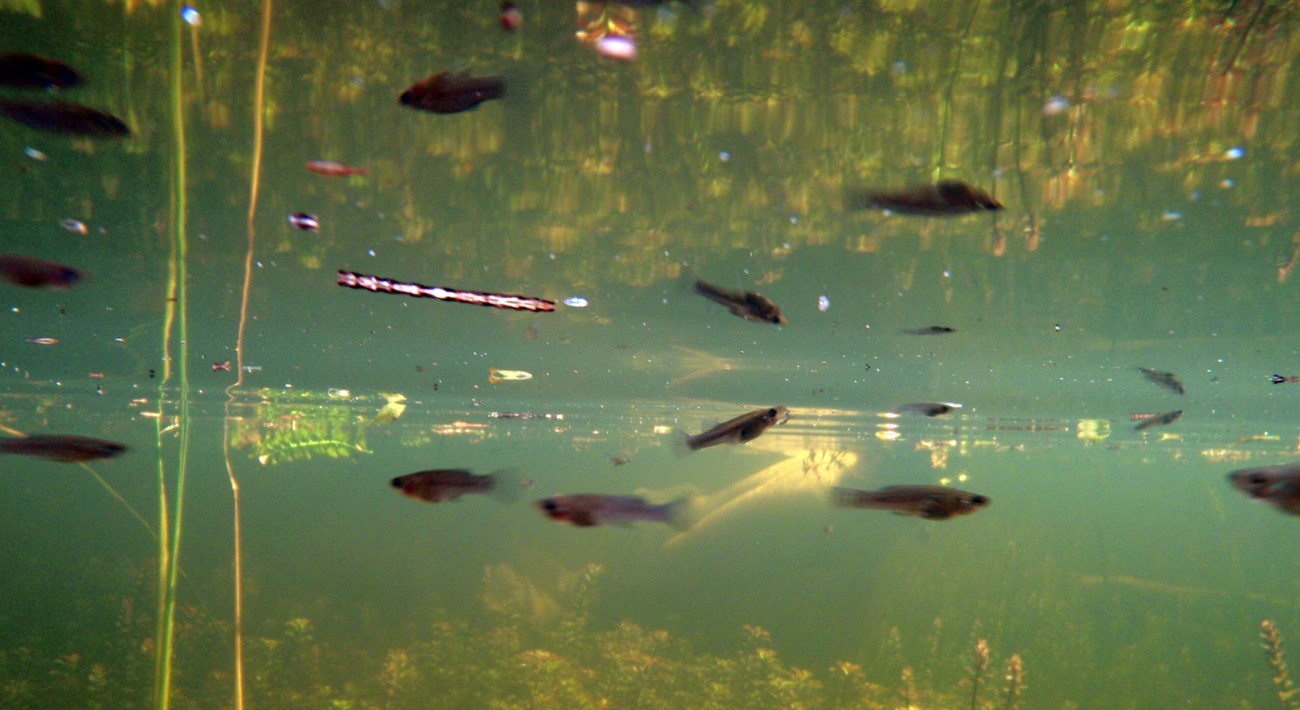
Within Big Cypress National Preserve, the water of the cypress swamp is clear enough that that the small fish can easily be seen from above by recreating hikers and kayakers, who are grateful for the mosquito-less adventure!
What do they look like?
Silver to gray in color, mosquitofish sometimes display a flash of yellow or blue iridescence that can really capture your eye. Even though they only grow up to two or three inches long, the fish are easily recognizable by one to three rows of black spots on both their dorsal and caudal fins, and a black "teardrop" under their eyes. In Florida, black-blotched individuals are also common.
What do they eat?
In addition to other aquatic insects and young fish, they consume very large quantities of mosquito larvae. And they have big appetites; one individual fish can consume more than 100 young mosquitoes in a day! Thanks to their choice of prey, our time in the swamps of Big Cypress can be spent enjoying the environment and not swatting buzzing blood-suckers.
Where can I see them?
In the southeastern United States, G. holbrooki take cover in the roots of aquatic plants to avoid becoming prey themselves. Because mosquitofish give birth to live young in the summer, they don't need a particular habitat to deposit eggs. An incredibly adaptable fish, they are tolerant of a wide range of water quality in the shallow, still waters where they live.