
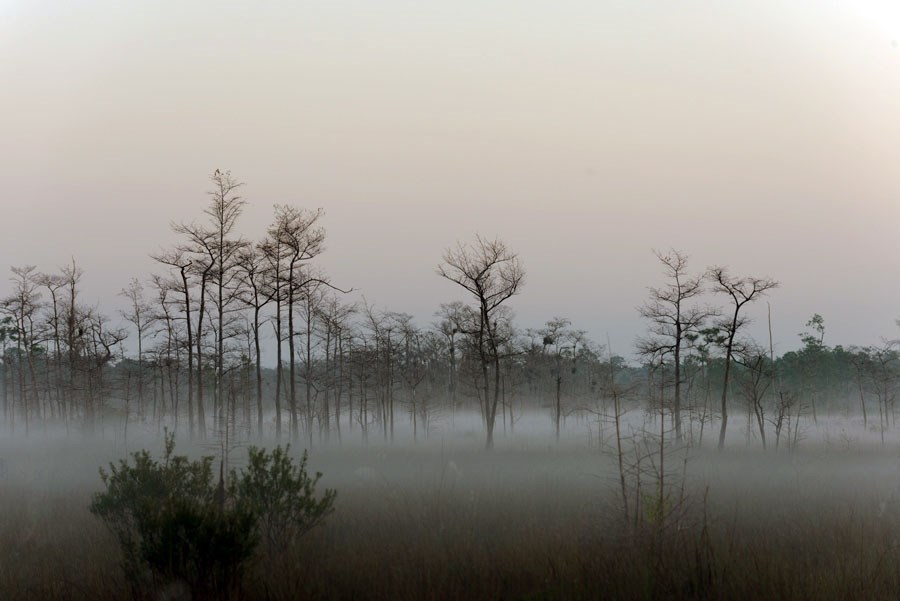
Richard Eskin For countless centuries, the landscape and associated plant and animal life of Big Cypress and the Greater Everglades Ecosystem have been shaped and altered by the forces of nature. Flood, drought, hurricanes, fire, frost, have had their influence. Those same environmental factors continue their molding and sculpting today, though often on a time scale that seems to make change invisible. In more recent times, the interactions of people and the landscape have influenced the landscape and the life that depends on it. Swampland has been drained, cleared and cultivated, roads have been constructed, and homesteads established. Wildfires were stopped and non-native vegetation was introduced. Pollutants have also degraded water quality. Non-native plants and animals, which have arrived in this country from distant parts of the world, threaten to have substantial impacts on the Preserve's swamp ecosystem. National Preserve staff and cooperating scientists are working to better understand these environmental factors and to find ways to manage those that are adversely impacting the condition of preserve resources. |
Last updated: May 5, 2020