
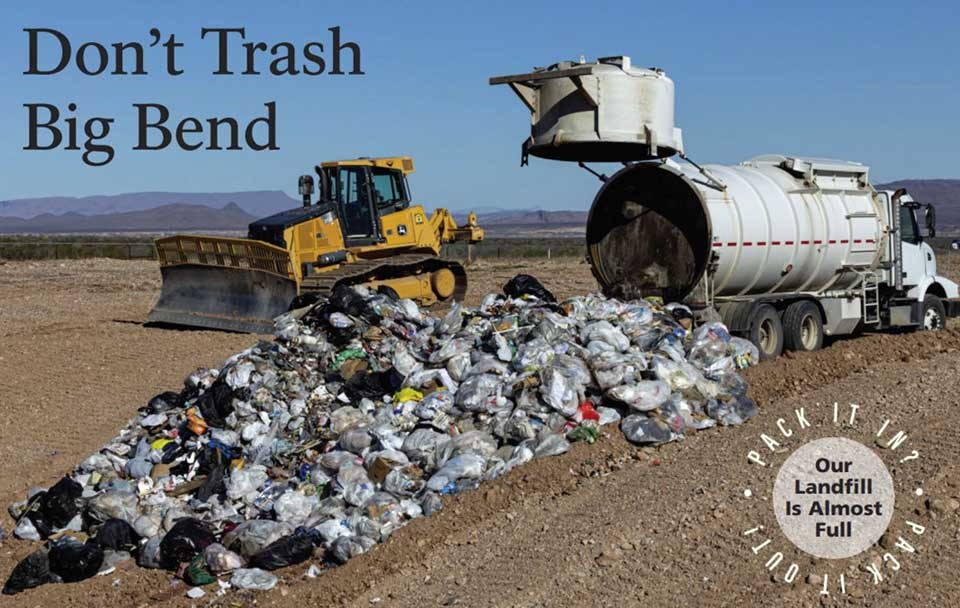
NPS / C. Hoyt Quick, We Need A Diversion!Did you know that Big Bend National Park is one of only two national parks that has an active landfill? Given that a big part of the National Park Service mission is to protect and preserve natural, cultural and historic resources, a landfill within a park seems counter-intuitive. The remote nature of Big Bend means that options for dealing with waste are few and far between. The closest landfills are currently 2-3 hours drive each way. Currently, the only waste hauled out of the park is construction and demolition waste and, of course, all the recyclables. The NPS filed for the original landfill permit in 1974. It is operated under strict regulations according to both Texas and NPS regulations. The landfill is surrounded with an electric fence to keep out wildlife, well-hidden from the scenic views in the park, and the Big Bend team takes great care to make sure all dumped trash is covered completely as quickly as possible to prevent debris blowing out across the landscape. 
YOU CAN HELP:
|
Last updated: April 13, 2023