

Photo by Sally King Wingspan 9.5" Relatively common throughout the park especially in the spring. Have been known to nest in the park. 
photo by sally king CASSIN'S FINCH (Carpodacus cassinii) 
photo by sally king PURPLE FINCH (Carpodacus purpureus) 
Photo by Sally King Wingspan 21" Somewhat common on the brushy mesatops like along Burnt Mesa Trail. 
photo by sally king ACORN WOODPECKER (Melanerpes formicivorous) 
Photo by Sally King BLACK-BILLED MAGPIE (Pica hudsonia) 
Photo by Sally King Wingspan 20" Common throughout the park all year long. Often can be heard calling from treetops. Shy and hard to get close to. 
Photo by Sally King Wingspan 9" Sporadic in their appearance in the park. Can be common during certain years. This major seed eater can be seen along the Main Pueblo Loop Trail, Rio Grande, and at the visitor center. 
Photo by Sally King Wingspan 9" Uncommon but have been seen in Frijoles Canyon in the winter. 
Photo by Sally King Wingspan 6" Relatively common in the park. Always seen in groups. Often heard before seen. 
PHOTO BY SALLY KING GREAT HORNED OWL (Bubo virginianus) 
PHOTO BY SALLY KING BLUE GROUSE (DUSKY) (Dendragapus obscurus) 
Photo by Sally King Wingspan 11" Uncommon, usually found in the higher elevations of the park but has been seen in Frijoles Canyon and at Juniper Campground. Very distinct bill. Very common in the winter/spring 2010 and 2011. 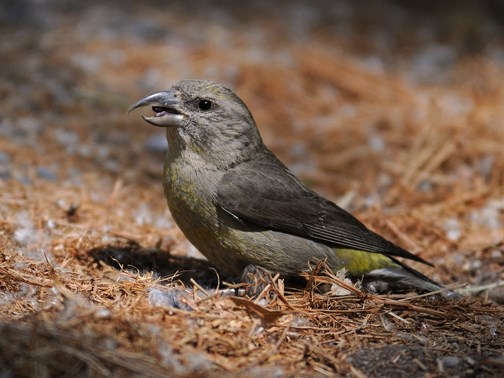
photo by sally king 
Photo by Sally King MOURNING DOVE (Zenaida macroura) 
photo by sally king Three-toed Woodpecker (Picoides tridactylus) 
photo by sally king Uncommon but has been seen in Frijoles Canyon during migration. 
photo by sally king Common, especially in the Pinon-Juniper Woodland and sometimes in the riparian areas. 
photo by sally king Very uncommon but has been seen along Frijoles Creek. 
photo by sally king Common within the park. Nests in the riparian areas. 
photo by sally king Very common. Often seen sitting in dead trees or on telephone posts along Hwy 4 and the park entrance road. 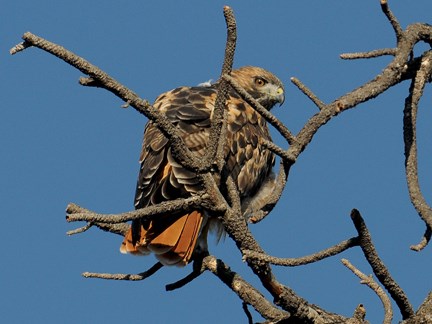
photo by sally king 
photo by sally king Somewhat common on the mesatops and in the higher elevations of the park. 
photo by sally king Common along the Rio Grande wetlands and somewhat common along other riparian areas within the park. 
photo by sally king MERLIN (Falco columbarius) 
photo by sally king Sharp-shinned Hawk (Accipiter striatus) |
Last updated: January 30, 2022