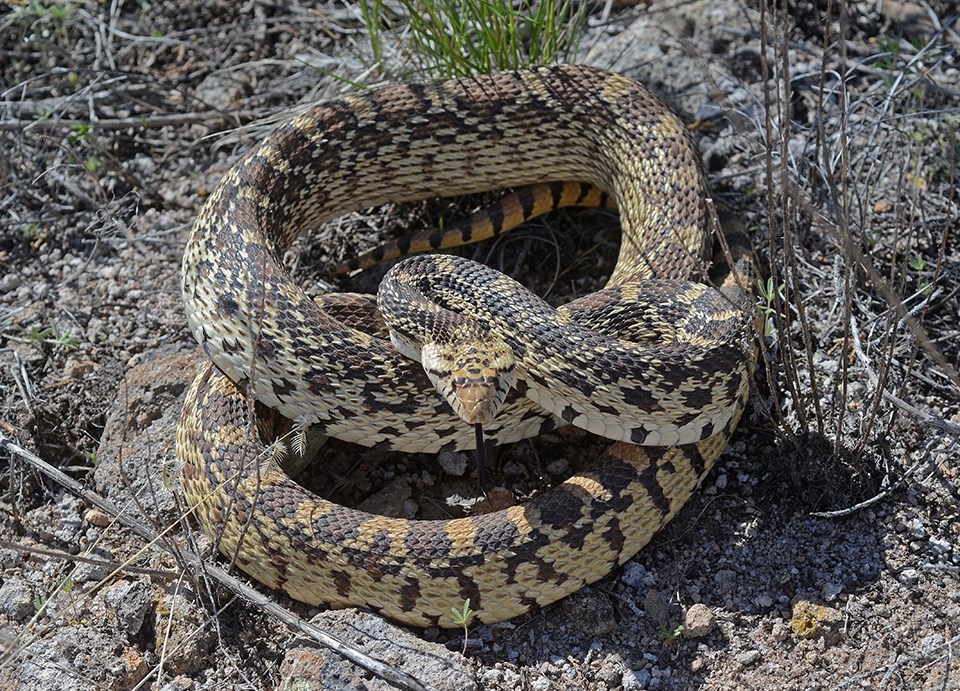
Rattlesnakes use the rattles on their tails to warn you if you are too close.
Photo by Sally King
Are you afraid of snakes? It seems that most people are. However, the majority of snakes are not even venomous and would be no more likely to bite you than any other wildlife. Snakes, even the venomous ones, are only likely to strike out if they feel threatened. Some snakes, like rattlesnakes, have a unique way of letting you know if they are feeling a little defensive - they shake the rattles on the ends of their tails. They don't do this just for people but for any creature that may pose a danger. Other snakes take advantage of the rattlesnakes defensive strategy. How? They pretend that they are rattlesnakes by coiling and rattling their tails too.
Bullsnakes can mimic rattlesnakes by coiling and rattling their tails but they have no venom to back up their threat. They can also fill themselves with air and let it out in a very rattlesnake sounding hiss. REMEMBER, ALL SNAKES CAN BITE IF THEY FEEL THREATENED.
Photo by Sally King
Last updated: May 11, 2019
Park footer
Contact Info
Mailing Address:
Bandelier National Monument
15 Entrance Road
Los Alamos,
NM
87544