
National Park Service LogoU.S. Department of the InteriorNational Park ServiceNational Park Service
National Park Service:  U.S. Department of the InteriorNational Park Service Arrowhead
Bandelier National MonumentHermit Thrush
view map
text size:largestlargernormal
printer friendly
Bandelier National Monument
Mixed Conifer Forest
Wild Iris

Photo by Sally King

Wild iris grow in large fields within the open spaces of the Mixed Conifer Forest.

Like a mountain oasis in an arid land, mixed conifer forests of Douglas fir, white fir, and spruce generally thrive at higher elevations where it is cooler and wetter. Compared with the ponderosa pine forests, these communities are more diverse and lush. A rich undergrowth of forbs, grasses, and shrubs makes this a popular zone for foraging by wildlife. Black bears and elk are common.
 
mountain lion

Photo by Sally King

Large mammals such as mountain lion, black bears, elk, and mule deer are common in the Mixed Conifer Forests.

Although the higher, cooler elevations of Bandelier were not practical for farming, the Ancestral Pueblo people hunted and gathered seasonal foods here.  More than 100 years of fire suppression in these mixed conifer forests has resulted in over-dense forests at risk for large crown fires (fires that spread into the tree canopy, often killing the trees).
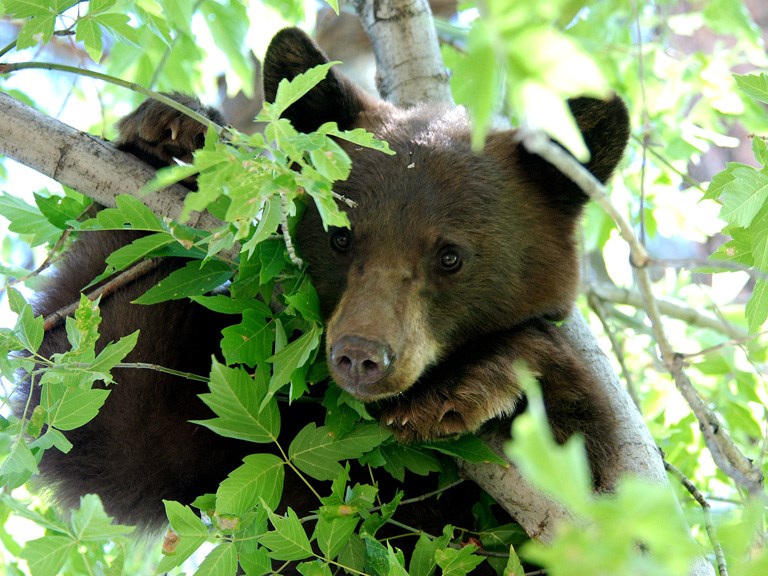
 
blonde black bear
Photo by Sally King
Although black bears are large mammals, their main foods include fruits and insects.
Mule Deer Fawn  

Did You Know?
Mule deer fawns only keep their spots for the first several months of life. These spots provide camouflage for the young animals when their mothers must leave them to feed.

Last Updated: November 27, 2007 at 11:59 EST