-
Access by Shuttle Bus Only
Starting May 24, 2013 all access to the most visited part of the park, Frijoles Canyon, will be via a mandatory shuttle bus from the nearby community of White Rock from 9 AM - 3 PM daily. Private cars may drive in before 9 AM or after 3 PM. More »
-
Alcove House Closed
Alcove House, with its 140 ft climb on stairs and ladders, is closed to all visitor access from June 10 to August 22, 2013 while important stabalization work is done on the Alcove House kiva. More »
-
Fire Restrictions in Place
Due to high fire danger, starting June 5, 2013, smoking will be allowed only in designated areas. No open fires will be allowed anywhere in the park. Self-contained stoves only at the campground or backcountry camping. No fireworks.
Elk
In the 1960's elk were reintroduced into the Jemez Mountains and Bandelier to replace Merriam's elk which had been hunted to elimination. photo by sally king Once Gone
Elk are large mammals that eat great volumes of plant material. photo by sally king A bull elk can weigh more than 1000 pounds. With heavy hooves they can tear up the landscape and the archeological sites that are found there. With large stomachs, elk can eat great volumes of low quality vegetative material such as aspen, choke cherry, and oak. Elk, like people, have favorite foods which they will eat until they are unavailable. Aspen bark and shoots are a favorite elk food. Hard to digest and lower in nutrition, aspen is rarely consumed by mule deer. In areas where elk populations are high, aspen shoots are not surviving but are consumed over and over by browsing elk until they can not regenerate. If elk populations remain high, there may be areas where aspen will be eliminated.
Elk moms with their calves are much more likely to be seen in the higher elevations. photo by sally king Although elk may be seen any time of the year in Bandelier, you are far more likely to see them in the lower elevations, such as along the entrance road, in the winter. Elk tend to migrate through the park with the seasons, moving from the higher cooler elevations in the summer to the lower less snowy elevations in the winter. Bugling elk in the fall and young spotted elk calves in the summer are much more likely to be seen at the higher elevations within the park or in the nearby Valles Caldera National Preserve.
Bull elks sport a large set of antlers and have a unique call or bugle to attract mates and assert their territories. photo by sally king Elk Courtship
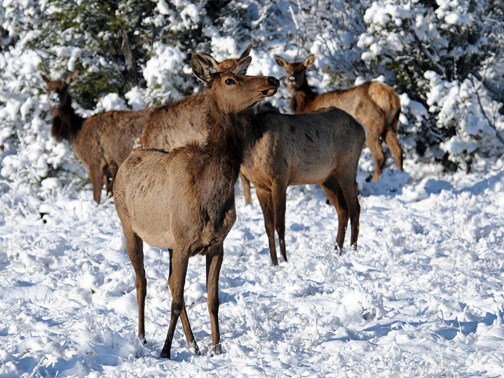
You are far more likely to see elk in Bandelier during winter than any other season.
photo by sally king
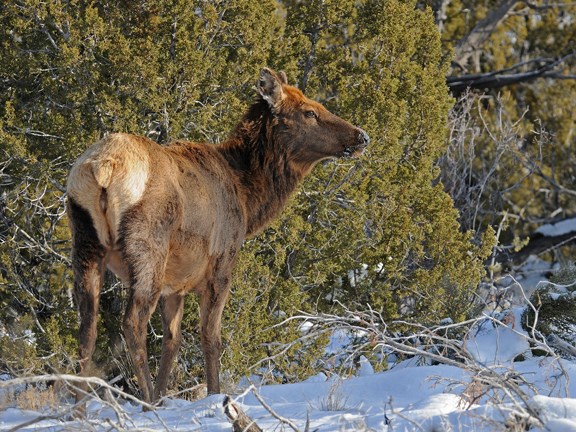
Female elk, such as this one, are often seen along the park entrance road in the winter when heavy snow makes browsing in the high country difficult.
photo by sally king
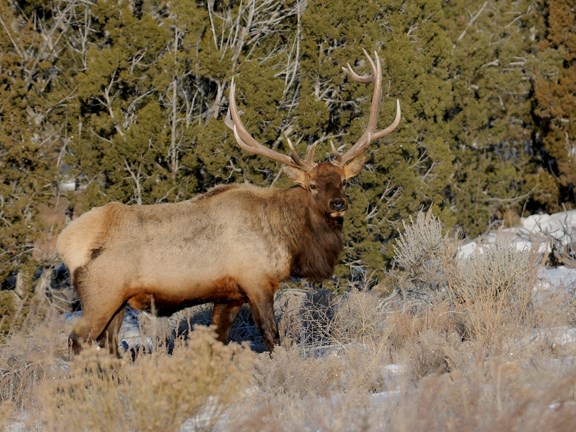
Although less common, sometimes large bull elk can be see along the roadway as well.
photo by sally king
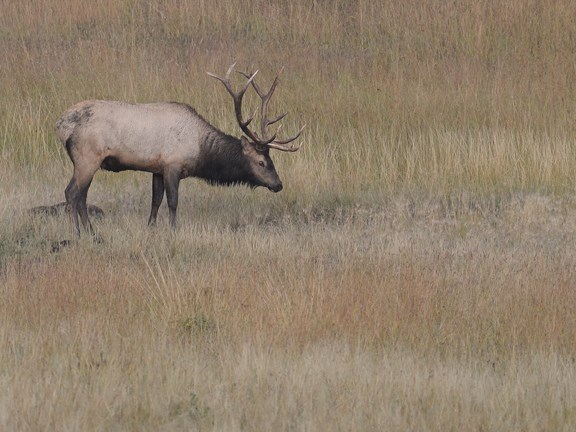
Bull elk are far more often seen in the park's high country or the nearby Valles Caldera National Preserve.
photo by sally king
|
Did You Know?
The Ancestral Pueblo people carved petroglyphs into the soft tuff rock above many of the dwellings built along the cliffs.