|
|||||||||||
|
|
|||||||
| |
|||||||
|
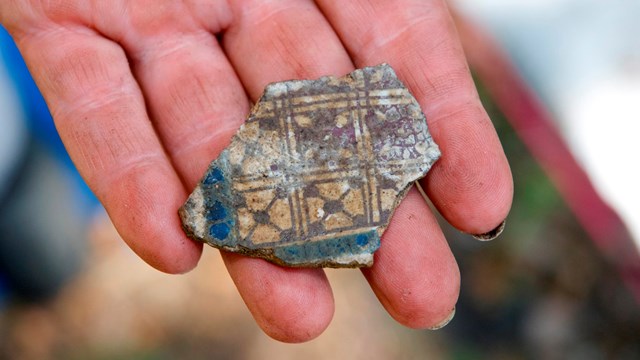
Whatever village occupation once may have existed upon this area, erosion of over a hundred years of intensive cotton cropping has obliterated every vestige of village features, leaving only small and worn sherds in the plow zone." John L. Cotter, NPS Archeologist Four or five adventurers, trappers and men who have a superficial education and no regard for science, floated down the Mississippi on house boats and carried on explorations in the past. A number of large collections have been made, and perhaps twelve or fifteen thousand pieces of pottery are now in museums, in the hands of collectors and otherwise scattered throughout the country as a result of their labors. No notes, drawings, or photos accompany the specimens." Dan Morse, Archeologist, Arkansas Archeological Survey, 1983 The people of Nodina and other towns along the
Mississippi River were participants in a complex cultural tradition
characterized by sophisticated community organization, . . . the creation
of well-designed and beautiful artifacts . . . and a system of intraregional
alliances between towns and villages that surprised the de Soto expedition
with rapid and efficient mobilization of both personnel and material
goods . . . Our scientific studies of . . . their lives are far from
being completed, and . . . should inspire further investigations of
their impressive culture." Mary Lucas Powell, University
of Kentucky Museum of Anthropology |
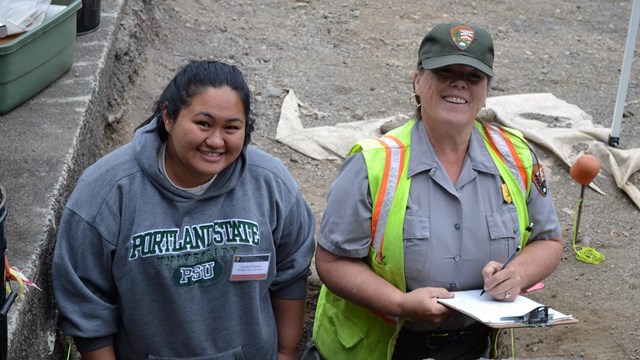
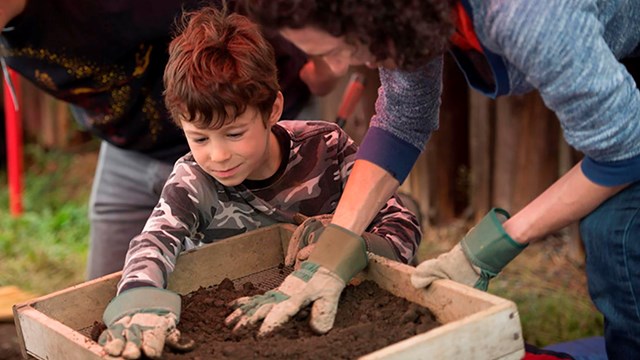
Above: Archeologists excavate a mound site in the Delta. |
|||
MJB/EJL