|
|||||||||||
|
What is archeological curation? Archeological curation is an ongoing process. It involves the making of collections and their care and management over the long term. It also involves their accessibility to a variety of users for a number of uses.
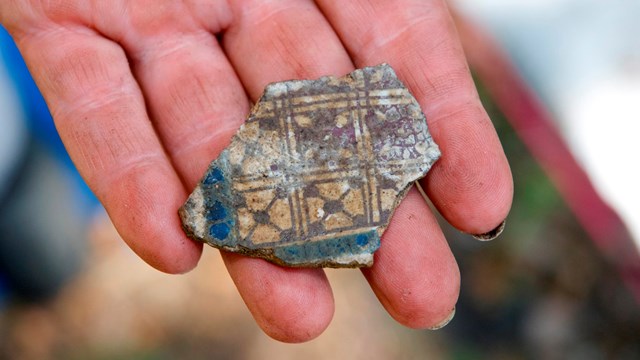
Every archeological project produces an archeological collection. A collection of material remains may result from work at a single site or from a single investigation or project that involves a number of sites. Academic research and some contracted projects may yield a collection or series of collections from work at a single site over a number of years. While many people might think of an archeological collection as only the objects or artifacts collected during an excavation or survey, other items are involved. These include:
It is important to understand that certain projects may yield an archeological collection that only consists of associated records. Such a project might be a survey during which no artifacts or specimens were recovered or no sites were found, but a contract and scope of work were written and signed, field notes were made, and a final report was written and distributed. Everyone involved in the archeological profession is responsible for curation. Many archeologists in the field do not fully understand or think about their responsibilities to the collections that they unearth, especially after they complete analysis. Instead, they make assumptions that repositories, such as museums, are responsible with little or no interaction from archeologists. Also, some federal or state agencies, contract archeology firms, and universities do not always understand or take full responsibility for the care and management of their collections. These responsibilities may be legally, ethically, or professionally mandated, which is discussed further in the next section.
|
|
||||||||
MJB/EJL