Archeology for Interpreters > 4. What Do Archeologists Do?
What happens to a site after it's discovered?
Public education and site preservation
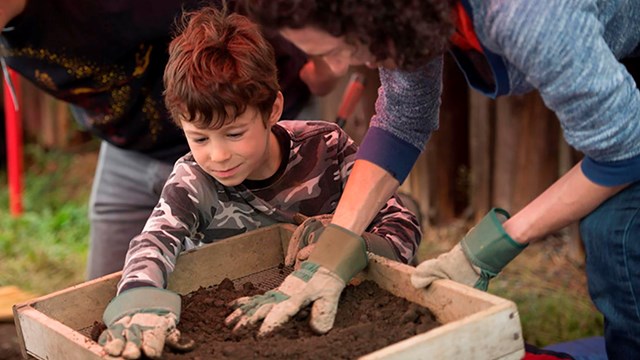
Public education programs and interpretation promote archeological resource protection. (Gail Brown, University of Maryland)
Public education and site interpretation complement the treatment and preservation of archeological resources.
Public education and interpretation promote archeological resource protection. Through these treatments the public is made aware of the value of archeological resources and the penalties for destroying them. Public involvement through site stewardship programs, volunteerism, classroom activities, archeology weeks or months and many other venues heighten public awareness of and responsibility toward archeological resources.
Such activities help the NPS to protect archeological resources by increasing the public's concern for them. A stewardship ethic means that the public may avoid inappropriate activities and report issues to NPS staff as they arise.
Fun fact
The NPS has a web site where you can find many of ways to Explore, Learn, and Participate in archeology.Case study
Bureau of Land Management Learning Landscape for Teachers web site includes links to several archeology and history classroom lesson plans and activities. Among these is Intrigue of the Past, an educational activity guide. One online version, Intrigue of the Past: North Carolina's First Peoples, exemplifies the numerous lessons which provide hands-on ways to teach most of the major aspects of archeology to fourth through twelfth grade students.
Another Bureau of Land Management educational project—developed in partnership with Montana State University—is Project Archaeology, which uses archeology to foster understanding of past and present cultures, improve social studies and science education, and to demonstrate the value of our archeological legacy.
For your information
Telling
the Stories: Planning Effective Interpretive Programs for Properties
Listed in the National Register of Historic Places
This National Register Bulletin, rich with case studies, offers
valuable information for individuals and institutions working
to convey the meaning of historic places to the public.
Teaching
with Historic Places, The National Register of Historic Places
Teaching with Historic Places has developed more than seventy-five
classroom-ready lesson plans that together cover major themes
of American history, including archeology. Most of these are
now available on the Web. Highly recommended.
NPS Technical Briefs on Archeology and Public Education