|
|||||||||||
|
Mean
ceramic dating
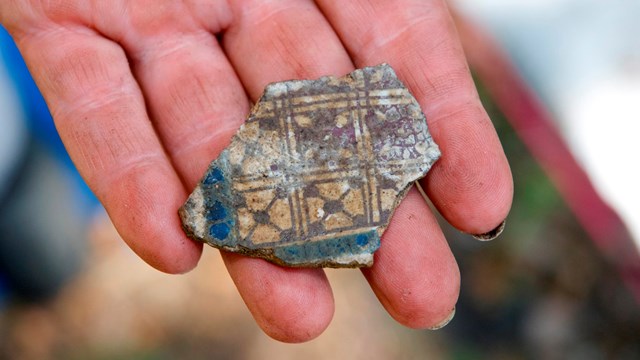
This dating technique is used in historic archeology to date sites based on the average age of recovered ceramics. European pottery manufacturers kept records on the ceramics they produced from the late sixteenth century onward. Therefore, archeologists know the start and end dates of manufacture for over one hundred pottery types that were used in America. Many manufacturers identified their work by pressing, painting, or using decals containing their name on the ceramic's surface. If an archeologist recovers a sherd containing one of these makers' marks, she or he may identify the ceramic's origin and date of manufacture. During artifact analysis, the archeologist counts the fragments of each type of ceramic from a site. He or she then determines the mean manufacturing date for each type-the midpoint in the period when it was known to have been made. The mean dates are assigned importance according to the quantity of each pottery type at the site. An average of the mean dates is taken, and the date that results should approximate the middle period when the ceramics were deposited (Deetz 1996:25). Between approximately 1765 and 1840 European ceramics manufacture changed rapidly. The predominant ceramics types introduced to the American market included creamware, pearlware, and whiteware-in that order. The dates of manufacture for these ceramics are documented, making this period optimal for dating ceramics.
|
|
|||||||||||||||||||||||||||||||||||||
MJB/MDC