|
|
Introduction
|

Cliff
Palace at Mesa Verde National Park is preserved through cultural
resource management. (NPS)
|
|
Cultural
resources constitute a unique medium through which all
people, regardless of background, can see themselves and the rest
of the world from a different point of view. Access to cultural resources
means that people can learn not only about their own immediate ancestors
but about other traditions as well. Such an exchange offers every
American a place of importance in the history of our country as well
as an opportunity to meet others and be met in a spirit of mutual
tolerance, appreciation, and respect.
A primary responsibility
of the National Park Service is to identify, protect, and share the
cultural resources under its jurisdiction. The work inherent in this
endeavor is varied and challenging. First, there must be systematic,
open-minded study by historians and scientists to locate resources
and to discover or substantiate their significance. Second, considerable
thought must be given to the problem of simultaneously protecting
park resources and making them available to the public. Third, appropriate
treatment programs and protective measures must be put into effect
(NPS 1997).
Cultural resource
management involves:
- research (systematic study) to identify, evaluate, document, register,
and establish the significance condition, and history of cultural
resources
- planning (decision making) to ensure that this information is well
integrated into management processes for making decisions and setting
priorities; and
- stewardship (taking action) under which planning decisions are carried
out and resources are preserved, protected, and interpreted to the
public (NPS 1997).
Systematic
study
Research
for identification, evaluation, documentation, and full understanding
and interpretation of cultural resources is essential to informed
decision-making for park planning and operations, including maintenance
and visitor services. Park managers can use the NPS Archeological
Sites Information Management System (ASMIS) database to record and
access key cultural resource information.

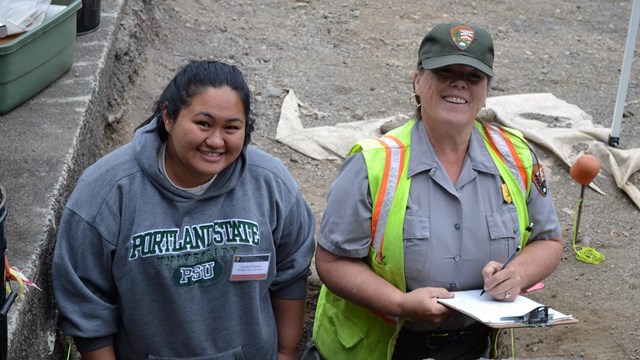
Archeologists
excavating along the side of the Lemon House in Pennsylvania's
Allegheny Portage Railroad National Historic Site. (NPS) |
|
Decision
making
Among other
things, effective cultural resource management serves to
- integrate cultural resource concerns into other park planning and
management processes
- avoid or minimize adverse effects on cultural resources
- provide information for interpretation and public understanding,
and
- identify the most appropriate uses for cultural resources and determine
their ultimate treatment (preservation, rehabilitation, restoration,
etc.), through processes that include involvement by groups with traditional
cultural or religious ties to park resources.
Taking
action
In reaching
decisions about resource treatment, preservation should always receive
first consideration. Decisions about cultural resources should be
based on awareness of long-range preservation goals and the interests
and concerns of traditionally associated groups. From the planning
document, specific actions are implemented to insure the long-term
preservation of the resource.
|
|
Home
1.
Introduction
2.
What is Archeology?
3.
What are Archeological Resources?
4.
What do Archeologists Do?
5.
How do Archeologists Figure Out How Old Things Are?
6.
What are Our Personal and Professional Responsibilities?
7. What are Issues of Sensitivity?
8.
Cultural Resource Management (CRM)
Introduction
Federal
legislation
State,
tribal and local laws and policies
NPS
policies
Other
resources
Suggested
reading
Links
to additional resources
Print
this chapter
9.
Use What You Know: Highlighted Case Study
10.
Additional Resources
Glossary
Course Certificate
Credits
Table
of Contents
|
 |