Introduction
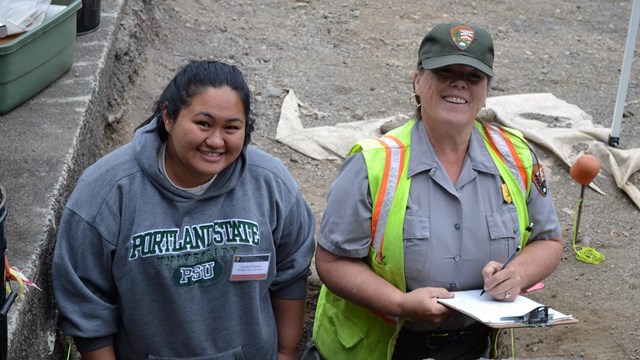
Archeologists speak with visitors at Harpers Ferry National Historic Park. (Paul A. Shackel, University of Maryland)
An effective interpreter provides visitors with accurate information in an engaging and entertaining way, is sensitive to their needs, and inspires them to take a personal interest in a resource. Interpretation involves far more than storytelling-it requires a set of skills that an interpreter learns and practices and constantly evaluates, updates, and adjusts.
Archeologists can learn a lot from what interpreters do. Archeologists as a whole are fairly new to public interpretation and outreach, yet in some ways public interpretation is not a huge leap for archeologists to make. Archeologists can find wider applications for their work and reach a broader, non-professional audience by acquiring skills in public outreach through interpretation.
In many ways archeologists are in a prime position to be interpreters. Archeologists know that sites and artifacts need context to derive meaning from them. They realize that their translation of the materials into narrative reports relates to larger questions we have today about how people lived in the past. Archeologists, of course, are aware that the interpretation of the past is full of pitfalls and biases. They understand what goes into creating a story about cultural resources. They may, though Section 106 compliance or ARPA cases, know about the use of that information and the story to make an argument for a particular point of view or to encourage appropriate maintenance of a resource. In these ways, the interpretive process in archeology isn’t too different from the tangibles, intangibles, and universal concepts used by interpreters.
Case Study
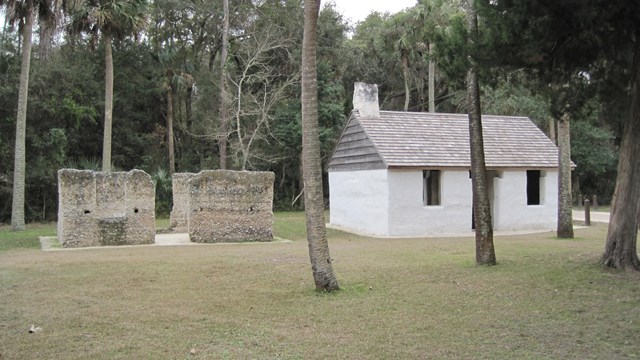
Extensive archeology has been conducted in Manassas National Battlefield documenting the African American story at Manassas. Exhibit panels in the main visitor center entitled, “The Institution of Slavery” and “The Unresolved Question of Slavery” talk about the historical context, but exhibits online fill in archeological contributions.
Manassas National Battlefield
The main site for the park provides visiting information, programs,
and histories of the park.
African
American Households
Archeology uncovered information about enslaved and free African-Americans
who were a part of the community on the battlefield. Studying the artifacts
and different social histories of two free African-American sites, the
Nash and Robinson House sites, provides evidence that the African-American
community included diverse families who used different methods for defining
their identity in this area of Virginia.
Lost,
Tossed, and Found
Using photographs, illustrations, and maps, this exhibit focuses on
the African-American experience, in slavery and freedom, in the immediate
vicinity of Manassas National Battlefield Park. Archeological survey
and excavations at the battlefield resulted in the discovery of structural
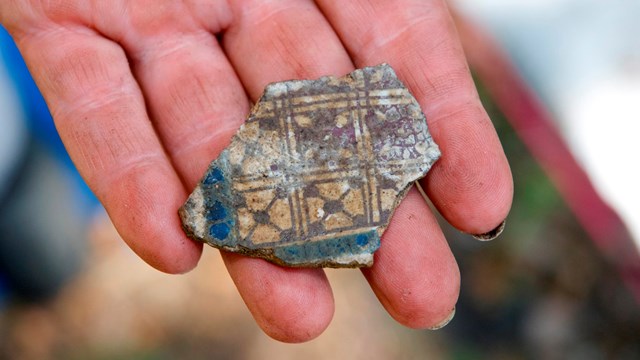
remains and a diversity of artifacts associated with nineteenth-century
African-American life.
The Robinson House
One of the major stories investigated by archeologists was that of a
free black man, James Robinson. He and his family lived on the battlefield
and their property suffered damage from the fighting.
Archeologists reached out to Robinson’s descendants to deepen
their understanding of the site. The family members contributed maps,
memories, and family history. Their perspectives mingled with archeological
evidence and historical research to create a richer interpretation of
the site than history or archeology alone could provide. The interpretive
materials and programs, as a result, draw on the personal meaning and
relevance of the site to the family as a starting point for the public
to understand the possible relationships between modern groups and the
past.
What Are Interpreters’ Roles?
Interpreters wear many hats and fill many roles within a park. Their work includes:
- On-site programs with families, school groups, scouts, religious organizations, or avocational enthusiasts
- Off-site programs in schools, for local organizations, etc.
- Contribution to planning
- Taking part in special events
Park managers are constantly figuring out what to manage, how, and what to prioritize. Interpreters inform these decisions by knowing the significant places within a park for effectively transmitting its meanings to the public. Their front-line position in the public eye means that they can tell administrators about visitors’ positive reactions to particularly successful elements of a park, or advise on those elements that need work.
Archeologists who step into the interpretation arena of park operations gain insight on public use of and reactions to the resources. They can speak with greater confidence on the broad implications of archeological contributions. But archeologists who interpret also take part in an ongoing dialogue about the presentation of the past to the public. They, as a result, embark in a different way on the management and future of resources by inspiring public stewardship.
How Do Interpreters Interact with the Public?
Most interpreters are inclined to the work. They combine their knowledge, enthusiasm, and people skills to tell stories. Some interpreters are fundamentally gifted and intuitively transform what seems to be mundane information into meaningful and engaging presentations. As valuable as natural ability is, interpretive products and services are more powerful with the disciplined application of the tools of the profession.
Personal Services
Personal interpretive services are those in which staff interact with visitors. Personal interpretive services are the basis of each park's interpretive program, since they are often the most effective means of stimulating visitor understanding and appreciation of park values, providing information and orientation, and helping to ensure resource protection and visitor safety. Personal interpretive services are powerful forms of interpretation because of their flexibility and person-to-person interaction. A long tradition of personal interpretive services exists in the national park system, as represented by visitor centers with staffed orientation/ information desks, staffed exhibits, staffed museums, and staffed audiovisual programs; guided walks, talks, and tours; fixed-point interpretation; Junior Ranger programs; and campfire programs.
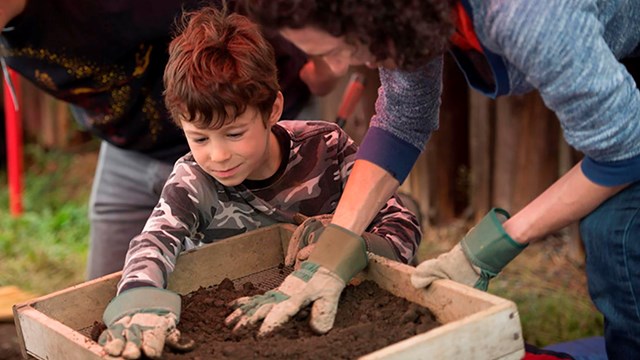
Goldpanning is an example of a personal service. (Whiskeytown NRA)
A growing percentage of visitors come to national parks with clearly defined learning objectives. Whether a fifth grade class, an Elderhostel program, or a scout group, they desire a ranger-led program on- or off-site to fit into a structured plan for learning. In essence, these visitors have a curriculum. All interpreters must be able to serve the needs of these audiences by integrating their interpretive services with the learner's curriculum. A curriculum-based interpretive program connects the educational objectives of the group with the park's resources through a variety of personal services, nonpersonal services and media, outreach and heritage education services, and interpretation for special populations. The management and interpretive plans and documents for each park establish a balance of interpretive services based upon criteria such as level of visitor use, the nature of the park resources, park management goals, and related factors. Various interpretive methods, including personal services, publications, exhibits, and audiovisual presentations, may be used to provide visitors with relevant information before their visits and to ensure quality experiences once they are in parks.
Visitor enjoyment and understanding of park resources may be enhanced by living history programs, living farms, period demonstrations, interpretive demonstrations, programs utilizing the creative and performing arts, arts and crafts, explanations and demonstrations of recreational and leisure-time skills, and other innovative activities when appropriate.
Involvement Techniques
Interpretative techniques facilitate the links between material culture and intangible resources and meanings. All parks have tangible resources such as physical features, artifacts, and buildings, as well as intangible resources including past events, culture, systems, ideas, and values. All effective interpretation links tangible resources to intangible resources in order to reveal meanings. Some intangible resources can be used in a tangible way. Archeology provides many means by which an interpreter can link intangible resources like past people, their social practices, and their ideas to tangible resources-the material culture they left behind.
Remember, however, that the vehicle for the message goes a long way to impressing the interpretation on your audience!
Passive involvement techniques promote attentiveness, thinking, feeling/emotional involvement, and passive sensory involvement (watching and hearing).
Word pictures, storytelling, relating concepts to visitor experiences, variation of voice and volume, role playing/dramatic interpretation, rhetorical or thought-provoking questions, demonstration, quotations/historical accounts, body language (expressions, gestures, props, costumes, visual aids), challenges/incentives, thematic connections, forecasting, and even silence.
Active involvement promotes physical action and movement, looking (as opposed to watching), active listening (as opposed to hearing), and other sensory involvement (tasting, smelling, touching):
Demonstrations with visitor participation, questions requiring a verbal answer, problem-solving, games, scavenger hunts, props that visitors may handle, assignments (i.e. listing, looking/finding, counting, writing, making, drawing), sensory suggestions (i.e. smelling, tasting, touching, active listening), team activities/assignments, brainstorming.
Many of these methods can deliver the all-important links of tangibles and intangibles into interpretive opportunities:
Stories, explanations, examples, presentation of evidence, quotes, metaphors, analogies, activities, sequences of questions, discussions, descriptions, demonstrations, comparisons, illustrations.
Archeologists as interpreters may work in many different settings, including the classic excavation and monitoring one. When they work on site, archeological staff function as a living display about resource management and the value of resources. This is a great opportunity, but also a challenge, because they have to get technical work done as well as communicate with the visitors. Sometimes the visitors might not realize they are park staff.
Fun Fact
Visitation statistics suggest a huge potential for visitors to learn about the field in national parks with archeology prominently represented. The 2002 Park Visitation Report recorded 406,385 park visits to Mesa Verde National Park, 742,016 to Lowell National Historical Park and 15,592 to Monocacy National Battlefield. The total visitation for the National Park System that year was 421,279,444. Comparison of these figures indicates that national parks offer an outstanding opportunity for the public to become better educated about archeological work.
The ca. 1851 Worthington Farmhouse at Monocacy National Battlefield, Frederick, Maryland (NPS)
Nonpersonal Services and Media
This exhibit about the Lowry Pueblo is an example of a nonpersonal service. (Anasazi Heritage Center, BLM)
Nonpersonal interpretive services are those that do not require the presence of staff. When personal services are not the best alternative for providing visitor information, orientation, or an understanding of park resources, other means of interpretation are considered appropriate. These may include park brochures and other publications, exhibits, web sites, audiovisual presentations, and radio information systems. Many of these, especially the park web site, are used before a visitor arrives at a park so he or she already knows some useful information. An interpreter needs to know what materials are available to the public before they arrive so he or she can play off that information in useful ways. Even when personal services are used, these additional means of interpretation may be used to augment and enhance visitor enjoyment and appreciation of park resources. Nonpersonal interpretive services offer strong advantages in that they maintain a consistent quality of presentation over time and they can reach large audiences.
Outreach, Environmental and Heritage Education Services
Outreach includes interpretive and educational services that take place beyond park boundaries. These services are used to disseminate park and resource information and interpretation beyond park boundaries. Outreach services usually supplement in-park interpretive programs and may include traveling programs, park web sites, and mobile exhibitions. Environmental education in the national park system traditionally deals with natural history and natural resources, such as ecosystems or geologic features, and the human activities associated with them. Heritage education deals with historical and cultural resources, such as cultural landscapes or historic buildings, and the human activities associated with them. Environmental education and heritage education services provide information and assistance to local school students and teachers, organized groups, and educational institutions that wish to use park resources in their curricula.
Interpreting for Special Populations
The National Park Service seeks to ensure, to the greatest extent possible, that disabled people receive the same interpretive opportunities as nondisabled people. Interpretive programs meet guidelines outlined in the NPS publication Interpretation for Disabled Visitors in the National Park System. Efforts are made to ensure that interpretive programs, recreational activities, concession-operated and privately sponsored activities, publications, and other informational materials meet the needs of children, senior citizens, international visitors, and the disadvantaged. Foreign-language translations of park publications are provided in those parks visited by large numbers of foreign visitors.
Many parks have developed web sites describing their archeological projects. Consider these various ways of reaching the public:
- Aztec Ruins National Monument has a reconstructed great kiva, based on archeological excavations conducted in the 1920s. The Monument has also published the Aztec Ruins National Monument Teacher's Guide.
- Petroglyph National Monument has published a teacher's guide with lesson plans on archeology and archeological interpretation as part of the Parks as Classrooms program. This program encourages National Parks to work with schools to use National Parks as laboratories to enhance existing curriculum by exposing children to what the NPS protects and preserves. The Monument also began a pilot project with a local elementary school to test the feasibility of conducting simulated archeological excavations as part of the school's curriculum.
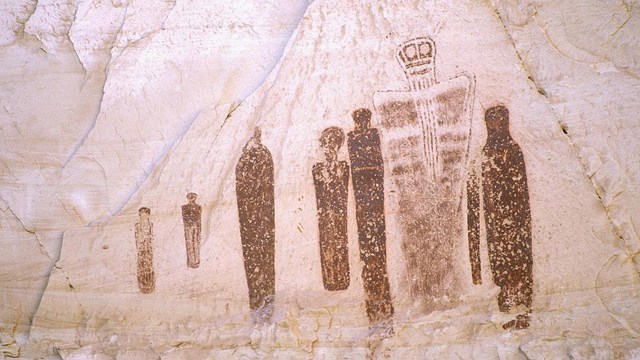
- Dinosaur National Monument archeological interpretation includes signed interpretive trails featuring rock art and rock shelters, an auto tour about rock art, and signs interpreting other prehistoric and historic archeological resources. The Monument staff works with river tour companies to explain the archeology of the Monument and etiquette for visiting archeological sites so that river guides have knowledge to interpret the Monument's archeology to their clients.
- At Little Bighorn National Monument, park managers have used archeological information to revise and expand their oral and written interpretations. They also have devoted a significant amount of exhibit and bookstore space to archeology, and visitors may view a video about archeological investigations in the park.
- Tuzigoot National Monument has partially reconstructed a site that visitors may walk through. Replicated within the visitor center is a "typical" Sinaguan room and a series of exhibits on Sinaguan material cultural (without NAGPRA sensitive material).
- At Dry Tortugas National Park, diving visitors may use an underwater map of a shipwreck to identify wreck parts and learn about the site.
- At Cuyahoga Valley National Recreation Area the 10,000+ year history of human occupation of the valley is interpreted in the park's Canal Visitor Center in a permanent display that relies heavily on archeological exhibitry (video, artifacts, interpretive paintings, time lines, etc.). Archeological data helped architects determine the configuration for a large porch on an 1835 store restored as a visitor center. The park staff interprets excavations and conducts an innovative program focusing on archeological education and interpretation with children.
- Arches and Canyonlands National Parks and Natural Bridges National Monument have an intensive archeological interpretation program consisting of guided walks and waysides that interpret archeology. The parks utilize small boxes containing information about the sites and notebooks where visitors can leave comments. This informal means of communicating with visitors encourages public feedback and reduces graffiti.
- The Visitor Center at Colorado's Curecanti National Recreation Area contains a permanent display dealing with the prehistory of the area that is primarily based on the archeological work conducted in the park.
- Minuteman National Historic Park has had a long tradition of archeological study and interpretation of historic structures present on the battlefield landscape on April 19, 1775. A booklet about the park's archeological resources enables visitors to tour these stabilized sites.
For Your Information
Enhancing Public Education
This page on the Archeology and Ethnography web site provides links
to publications and other resources that discuss the role of public
outreach in parks with archeological resources. It provides information
for professionals about the role of archeological interpretation and
the potential value to the public.
Society for Historical Archaeology
SHA promotes scholarly research and the dissemination of knowledge concerning
historical archeology. The society is specifically concerned with the
identification, excavation, interpretation, and conservation of sites
and materials on land and underwater.
Society for American Archaeology
SAA focuses on four areas within archeology education: academic programs,
curriculum development, professional development / continuing education,
and public education. The educational
materials available from the SAA were developed by the Public
Education Committee as resources for teachers.
American Anthropological Association
Links to classroom and professional resources for teaching geography,
history, and social studies with anthropology and archeology. Includes
links to internet resources, classroom exercises, publications, organizations,
and museums and exhibits.
Archaeological Institute of America
The Archaeological Institute of America endeavors to create a vivid
and informed public interest in the cultures and civilizations of the
past, supports archaeological research, fosters the sound professional
practice of archeology, advocates the preservation of the world's archeological
heritage, and represents the discipline in the wider world.
Case Study
Accessibility in Big
Bend National Park
Archeological sites and materials are not always easy for everyone to
visit. This web site provides information about program and facilities
accessibility for disabled visitors.
Fun Fact
Interpreters find that interpreting history on the place where it actually happened to be a powerful interpretive technique. Visitors tend to absorb the impact of history better on site. Consider these NPS archeological contributions begun in the 1950s and 1960s:
Archeologists determined the exact location and size of George Washington’s Fort Necessity, built during the French and Indian War, in southwestern Pennsylvania. The site enables interpreters to talk about the confrontation at Fort Necessity in the summer of 1754 as the opening battle of the war fought by England and France for control of the North American continent. It was also the opening episode of a worldwide struggle known in North America as the French and Indian War and elsewhere as the Seven Years' War.
Archeological studies at Fort McHenry National Monument and Historic Shrine located the base of a flagpole from which the Star-Spangled Banner flew during the bombardment of Baltimore by the British in the War of 1812. A walking tour takes visitors around the site to impress the significance of the events that took place.
Use What You Know: Assess Your Knowledge (#3 of 10)
|
|
References
Portions of this chapter were adapted from:
- Ellick, Carol J.
- 2000 Against the Clock: Introducing Archaeology in Time-Limited Situations. In The Archaeology Education Handbook: Sharing the Past with Kids, pp. 183-191. AltaMira Press, Walnut Creek, CA.
- Little, Barbara J.
- 1998 Considering the Context of Historical Archaeology for Museum Interpretation. In The Public Historian, Vol. 20, No. 4 pp. 111-117. Regents of the University of California and the National Council on Public History.
- National Park Service
- 1997 Cultural Resources Management Guide, Release No. 5. National Park Service, Washington, D.C.
- National Park Service
- 1963 Archeological Programs of the National Park Service. Pamphlet.
- NPS Training Manager for Interpretation, Education, and Cooperating Associations (editor)
- 1998 Module 101: Fulfilling the NPS Mission: The Process of Interpretation. National Park Service.
- Ramos, Maria and Davis Duganne
- 2000 Exploring Public Perceptions and Attitudes about Archaeology. Harris Interactive for the Society for American Archaeology, Washington, D.C.
Additional Resources
Click here for additional readings and links for Chapter 3: What Do Interpreters Do?
![[NPS Arrowhead]](../IMAGES/Arrow.jpg)