|
|
Why
does NPS interpret archeology?
The
stewardship of America's archeological heritage is a well established
policy and
function of the federal government. Interagency cooperation and partnerships
are fundamental to this mission. Archeological resources-sites, collections,
and records-are unique and fragile. They must be used wisely and protected
for future generations.
|

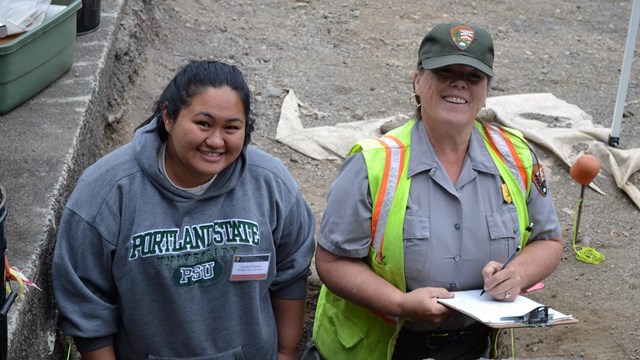
Archeology
interpretation at Fort Vancouver National Historic Site (NPS)
|
|
Through programs
that preserve, protect, conserve, and educate the public regarding
archeological resources the National Park Service preserves over 63,000
archeological sites, as well as huge archeological collections
from scientific investigations of those sites. Interpreting archeological
resources helps meet this part of the NPS mission by:
- Perpetuating
and representing the archeological heritage of the nation uniquely
reflected in national park units
- Ensuring the
natural, cultural, and recreational heritage reflected in the national
park units is available and accessible to everyone
- Providing visitor
experiences that strengthen the recognition, understanding, enjoyment,
and preservation of the nation's archeological resources
- Creating the
opportunity for audiences to ascribe meanings to archeological resources,
leading to concern for the protection of those resources. Such
revelation is the seed of archeological resource stewardship (NPS
1997b:2)
FUN FACT
Archeology
is happening all over the nation!
Research in the Parks links to
web sites describing NPS archeology projects.
Highly recommended. (4/30/01)
|
|
FOR YOUR INFORMATION
The
Public Interpretation Initiative
This
article outlines the purposes and direction of the Public Interpretation
Initiative, a public outreach program initiated and coordinated
by the NPS Southeast Archeological Center. (4/30/01)
|
National
Strategy for the Federal Archeology Program
In
1991 the Secretary of the Interior identified
areas of special emphasis for federal agencies with archeological
programs. This 1998 update of the National Strategy renews our effort
to pursue these actions.
Preserve
and Protect Archeological Sites in Place
- Identify, evaluate, and document sites
- Increase
our understanding of the past and improve preservation through well-designed
research
- Assess and document threats to sites and monitor their condition
- Prevent or slow deterioration of sites by stabilization
and other means
- Fight looting with public awareness programs and effective legal
strategies among archeologists, law enforcement officers, and public
prosecutors
Conserve
Archeological Collections and Records
- Locate collections and records, assess their condition, and conserve
appropriately
- Identify actions needed to ensure long-term care of and access to
collections and records
- Undertake, facilitate, and promote research using collections and
records to better understand the past
Utilize
and Share Archeological Research Results
- Synthesize research results, particularly gray literature, to advance
scientific knowledge, further preservation, and better inform the
public
- Facilitate use of archeological databases by managers and researchers
- Develop data standards to better share research results
Increase
Public Education and Participation in Archeology
- Establish
education programs as a regular agency function
- Interpret archeological research for the public in a way that is
accurate and understandable
- Consider the views of diverse cultural groups when interpreting
the past
- Engage the public in archeology through professionally directed
volunteer programs
The National
Strategy for the Federal Archeology Program reinforces the NPS commitment
to preserve and interpret American archeological resources. Work done
in each park by managers, interpreters, and archeologists ensure that
these resources will be protected and appreciated by visitors.
|
FOR YOUR INFORMATION
Federal
Archeology Program
This
web site describes the Federal archeology program's wide range
of archeological interpretation programs, collections care,
scientific investigations, protection efforts, and public education
and outreach efforts. Highly recommended. (4/30/01)
|
|
|
Home
1.
Introduction
2.
What is Archeology?
Introduction
What
is material culture?
Public
misconceptions
Archeology,
science, & people
Interactions
with the environment
Why
does NPS interpret archeology?
Stewardship
Some
NPS archeology facts
Brief
history of American archeology
Suggested
readings
Links
to additional resources
3.
What are Archeological Resources?
4.
What do Archeologists Do?
5.
How do Archeologists Figure Out How Old Things Are?
6.
What are Our Personal and Professional Responsibilities?
7. What are Issues of Sensitivity?
8.
Cultural Resource Management (CRM)
9.
Use What You Know: Highlighted Case Study
10.
Additional Resources
Glossary
Credits
Table
of Contents
|
 |