|
|||||||||
|
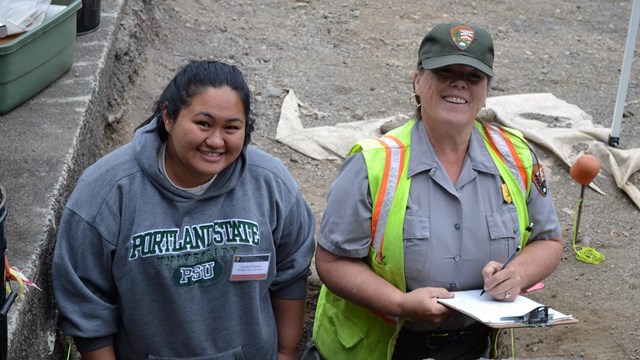
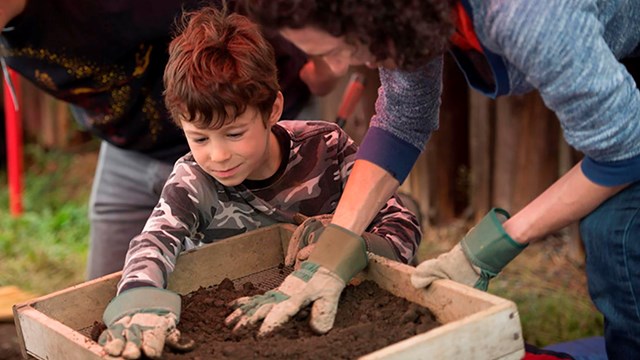
Archeologists worked at the Hooe Dependency Site for about three weeks. During initial subsurface testing, archeologists dug STPs at 25-foot intervals throughout the entire project area. When several STPs unexpectedly exposed artifacts, the archeologists dug additional STPs at closer intervals to confirm the extent of artifact deposits. When these STPs unearthed additional artifacts, the archeologists knew they had found a site. They named it the Hooe Dependency Site because, during its time of occupation, it was part of the plantation property owned by the Hooe family. The archeologists then established a grid over the site. They placed excavation units across the site to define its boundaries and identify areas where artifacts or features were concentrated. They excavated eighteen 2.5-foot x 2.5-foot units to fulfill three goals: to determine
the density and extent of midden
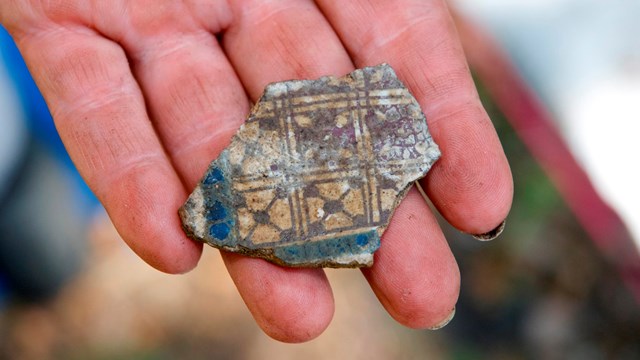
deposits at the site When archeologists and qualified volunteers conducted a metal detector survey to better define the site's boundaries they identified three metal artifact clusters. The first cluster lay in the area where STPs and excavations were placed and contained artifacts most likely associated with the Hooe Dependency. The second cluster lay to the north and contained artifacts related to activities during the Civil War. The third cluster lay south of the Hooe Dependency Site and contained similar Civil War-period military artifacts. Through STPs, excavation units, and metal detector "hits" archeologists recovered over 700 artifacts from the Hooe Dependency Site. The artifact assemblage included nails, glass fragments, ceramic sherds, animal bones, and oyster shells. In the field archeologists carefully placed artifacts in labeled bags. Later in the lab the archeologists cleaned, identified and catalogued the artifacts.
|
|
|||||||||||
MJB/MDC