|
|
Relative
dating
Horizon
markers and TPQ dating
A
horizon involves ties and uniformity
across space at a single point in time (Ashmore and Sharer 1996:41).
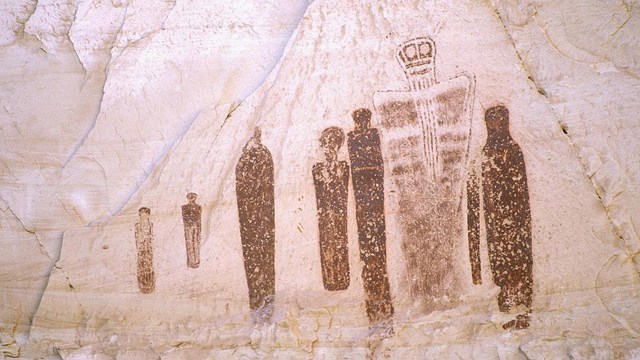
In archeology, a horizon is a pattern characterized by widespread
distribution of a complex of cultural traits that lasts a relatively
short time. Events that might create the pattern of a horizon include
a rapid military conquest or an effective religious mission. Examples
from prehistory include the distribution of artifacts typical of the
Inca in Peru, widely spread as a result of that people's known efficiency
in conquest and empire building (Deetz 1996:64). In contrast, an archeological
tradition is a persistent
pattern of cultural traits in a restricted geographical area. Traditions
not only suggest a strong degree of conservatism, but a stable pattern
of permanent settlement that allows such developments to take place
relatively undisturbed (Deetz 1996:64)
Terminus
post quem dating, often referred to as TPQ dating, is defined
as the date after which a stratum, feature, or artifact must have
been deposited. When several artifacts are recovered from a single
stratum, the TPQ date corresponds with the first possible date that
the latest-occurring artifact could have made its way into the ground.
|
TRY IT YOURSELF
What's
the TPQ Date?
You
have excavated a plantation kitchen site. Artifacts you have
recovered from one stratum include English tableware, cutlery,
wine bottle glass, windowpane, nails, bone, and tobacco pipes.
You can date several of the artifacts:
- Creamware ceramic sherds date to after 1762 when creamware
was first manufactured
- One wine bottle seal is embossed with "C PINCKNEY 1766"
- A 1722 English coin
- A Spanish eight reales coin dating from 1746-1788
Based on the known dates of the artifacts listed above, what
is the TPQ date of the stratum?
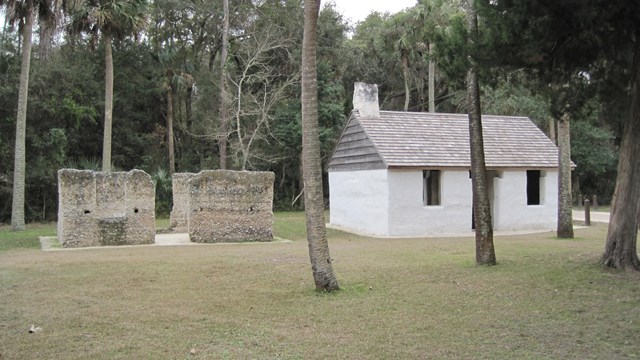
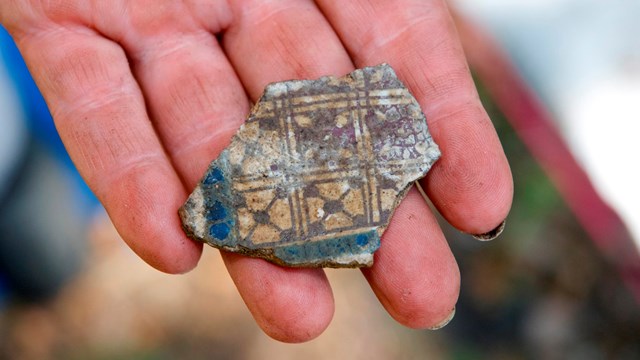
These
and many other artifacts were recovered from the Charles
Pinckney National Historic Site
|
|
|
 |
Home
1.
Introduction
2.
What is Archeology?
3.
What are Archeological Resources?
4.
What do Archeologists Do?
5.
How do Archeologists Figure Out How Old Things Are?
Introduction
Relative
dating
Geologic
dating
Stratigraphy
Seriation
Cross-dating
Horizon
markers and TPQ dating
Absolute
dating
Artifacts
as time markers
Suggested
reading
Links
to additional resources
6.
What are Our Personal and Professional Responsibilities?
7. What are Issues of Sensitivity?
8.
Cultural Resource Management (CRM)
9.
Use What You Know: Highlighted Case Study
10.
Additional Resources
Glossary
Course Certificate
Credits
Table
of Contents
|
 |