|
|
Additional
case studies
|
CASE
STUDY
More
than Digging: Archeology Education at Fort Frederica National
Monument
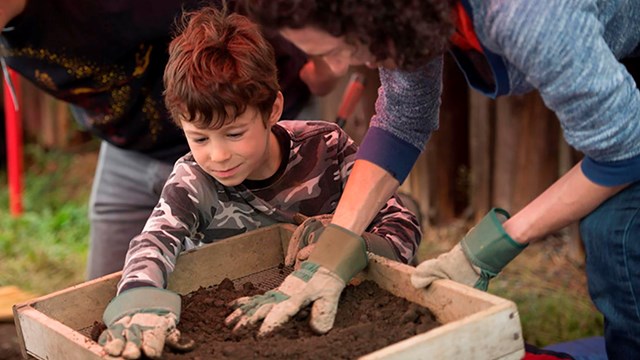
In the spring of 1995, Fort Frederica and Oglethorpe Point Elementary
School began a unique program to teach archeology to 4th and
5th grade classes.
Following several weeks of in-class sessions, the students are
allowed to dig at an actual site located on Ft. Frederica. The
artifacts are taken back to the school, where the students perform
post-dig activities such as identification, curation, and cataloging.
A classroom has been dedicated and equipped as an archeology
laboratory.
Although the program is limited to Glynn County schools as this
time, any teacher may get a copy of the curriculum guide by
contacting the Chief Ranger, Ft. Frederica.
|
|
CASE
STUDY
Public
Archeology Program at Petersburg National Battlefield
This web site illustrates how, in an effort to share information
with the public, and to increase awareness of archeology within
the National Park Service, archeologists with the University
of Maryland initiated a public archeology program during the
Federal picket line excavation at Petersburg National Battlefield.
|
 |
 |
USE
WHAT YOU KNOW: ASSESS YOUR KNOWLEDGE (#9 of 9)
-
Now that you know more about what archeology is and how archeologists
work, how might you integrate what you've learned into a talk for
adults, children, elderly, or other special audiences?
-
What questions do you have about archeology that this distance learning
resource did not address?
-
How can archeological work within the NPS region of your park enhance
interpretation at your park?
-
How can you integrate archeological information into your interpretive
programs?
|
|
|
|
Home
1.
Introduction
2.
What is Archeology?
3.
What are Archeological Resources?
4.
What do Archeologists Do?
5.
How do Archeologists Figure Out How Old Things Are?
6.
What are Our Personal and Professional Responsibilities?
7. What are Issues of Sensitivity?
8.
Cultural Resource Management (CRM)
9.
Use What You Know: Highlighted Case Study
Introduction
Project
background
Why
should we even care about this site?
What
does the law have to do with this project?
Why
did Archeologists decide to dig there?
What
did the Archeologists actually do?
What
do broken dishes, rusty nails and oyster shells really tell us about
the people who lived at this site?
What
happens next?
Additional
case studies
References
Links
to additional resources
10.
Additional Resources
Glossary
Course Certificate
Credits
Table
of Contents
|
 |