|
ParkWise >
Teachers > Perspectives
The Value of Wilderness: Culture, Science and Law
   NPS Photos from left to right: Tour bus at Denali National Park,
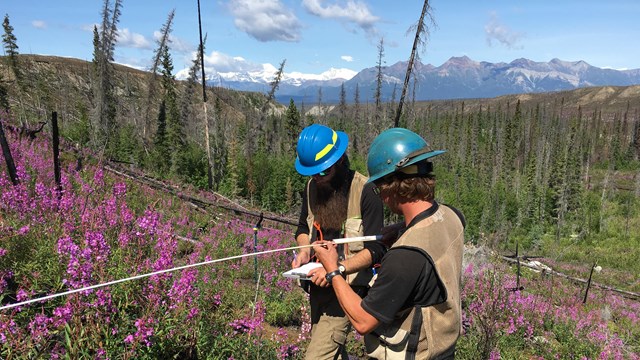
a national park researcher, two bicyclists enjoy the beauty of Denali.
The 2004-2005
school year marked the 40th anniversary of the Wilderness Act (1964) and the
25th anniversary of the Alaska National Interest Lands Conservation Act
(ANILCA, 1980). These landmark legislations have had a major impact on
wilderness and its use across America, particularly in Alaska. These acts, plus
current legislation and policy, will continue to influence land use,
conservation and preservation for many years to come.
The Value of
Wilderness: Culture, Science and Law -- about wilderness lands in Alaska's
national parks -- guides students as they gain the awareness and understanding
to frame opinions on the value of wilderness. Then, using these insights,
students become part of the continuing debate.
Perspectives Units:
Concepts of Wilderness - How do you
define wilderness? In this activity, students will explore their
personal definition of wilderness and, then, assign a value to it. They will
consider the opinions of their classmates and professionals whose task it is to
preserve wilderness lands or develop resources for consumption, such as
timber.
Legal Webquest -
Officials at Denali National Park and
Preserve must consider a bewildering array of legal rules and regulations
concerning wilderness. In this Webquest, students will investigate and then
apply specific laws and other official regulations to evaluate a proposal for
the development of Denali's backcountry, just as the managers of the park must
do.
Culture Webquest - Students will
take on the roles of the people who live and work within Gates of the Arctic
National Park or the surrounding communities. These people represent many
cultures - Athabaskan, Inupiat, Nunamiut, Euro-American. Some are students,
teachers, park administrators, miners, hunters or guides. All of them have
different viewpoints and understandings when they hear the word
wilderness.
Science Webquest - In 1999, the
National Park Service issued an Action Plan to substantially improve how it
manages the natural resources under its care, a plan that calls for
substantially increasing the role of science. Students will examine the
importance of "doing science" to the continued well-being of our natural
wilderness areas and their "precious cargo."
Commitment to Wilderness - The students
have learned about the United States' wilderness lands; explored the history of
the wilderness movement; investigated the laws that govern it; and, they have
listened to the opinions of their fellow citizens on its value. Now, they will
examine their commitment to personal positions on the value of wilderness to
them.
Final Activity -
Students will evaluate a proposal by
EarthScope scientists who want to place install monuments of the Plate Boundary
Observatory (PBOs) in or near wilderness lands in Alaska, as one method of
tracking and learning more about earthquake and volcano activity in the U.S.
and will make a recommendation to the parks service.
|