Inventory and Monitoring
The Latest from the Field
- Arctic: Advances in Tracking Collared Animals
- Central: Peregrine Falcon Cam
- Southeast: Marine Contaminants Report
- Southwest: 2012 Field Season Highlights (PDF)
- Alaska Inventory and Monitoring Program homepage
- Outreach Materials: Alaska Inventory and Monitoring
- National Inventory and Monitoring Program
Additional Links
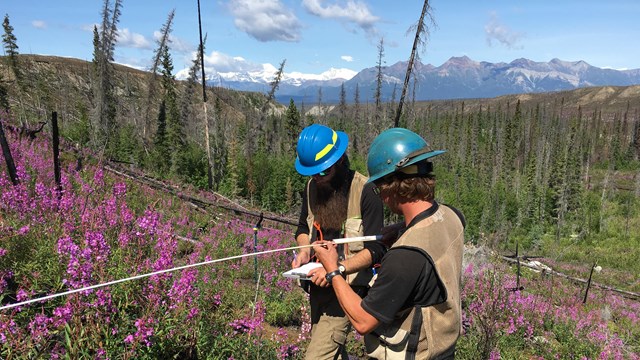
The Inventory and Monitoring Program is organized into networks based on biogeographic regions. For each park within Alaska, the I&M Program conducts twelve natural resource inventories. These inventories provide baseline information from which additional monitoring activities are conducted. Long-term monitoring efforts are focused on carefully selected resources, called "vital signs" by the I&M program to adequately reflect their importance to the overall ecosystem health, that increase overall understanding of natural resources and systems in parks and inform park managers of the status and trends of those resources.
2013 Monitoring Updates
2012 Monitoring Updates
Inventory and Monitoring Summaries: Alaska-wide
Monitoring Summaries: Arctic Network
Monitoring Summaries: Central Alaska Network
Monitoring Summaries: Southeast Alaska Network
Monitoring Summaries: Southwest Alaska Network
Monitoring Summaries: Climate Change Response

Arctic Network
Bering Land Bridge, Gates of the Arctic, Cape Krusenstern, Kobuk Valley, and Noatak.

Central Alaska Network
Denali National Park, Wrangell-St. Elias National Park, and Yukon-Charley Rivers National Preserve.

Southeast Alaska Network
The marine wilderness of Glacier Bay National Park and the historical jewels of Kolndike Gold Rush and Sitka National Historical Parks.

Southwest Alaska Network
Alagnak Wild River, Aniakchak National Monument, Katmai National Park, Kenai Fjords National Park, and Lake Clark National Park.
Connect with Us