Katmai National Park and Preserve


Katmai National Park and Preserve (KATM) is located at the head of the Alaska Peninsula approximately 290 air miles southwest of Anchorage. It includes over 4 million acres of land and water and is roughly bounded by Shelikof Strait to the east, the Lake Iliamna watershed to the north, the Bristol Bay coastal plain to the west, and the Becharof Lake watershed to the south. The area was originally established as a national monument in 1918 to preserve geological features related to the June 6, 1912 eruptions of Mt. Katmai and Novarupta volcano. The Alaska National Interest Lands Conservation Act of 1980 added land and redesignated the area as a national park and preserve. The implementing language stated that the area was "to be managed for the following purposes, among others: To protect habitats for , and populations of, fish and wildlife, including, but not limited to, high concentrations of brown/grizzly bears and their denning areas; to maintain unimpaired the water habitat for significant salmon populations; and to protect scenic, geological, cultural and recreational features."

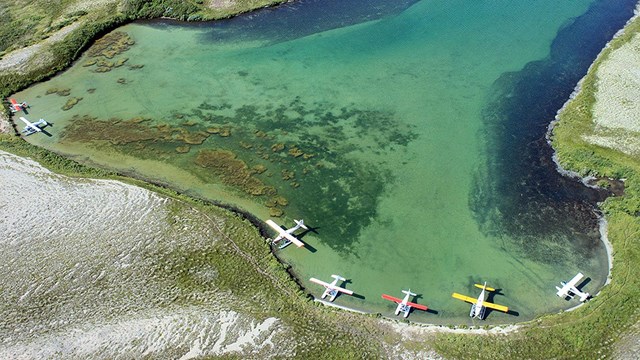
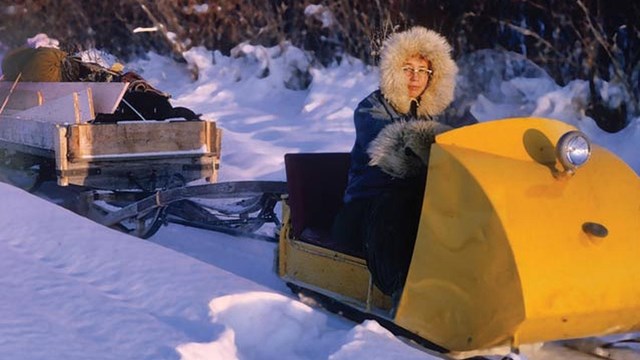
Access to the park and preserve is by aircraft (float planes generally land on Naknek Lake), and by boat or ship. Snow machines can be used in deep winter during some years when temperatures are sufficiently low to form thick ice. King Salmon is the nearest local community.

Land Ownership

Katmai National Park and Preserve encompasses 4,093,000 acres. Of that acreage, 423,720 acres are in the preserve. Within the park and preserve there are 3,426, 000 acres in designated wilderness. The boundaries encompass about 147,000 acres in non-federal ownership and about 29,000 acres that are under application by state and local groups. Major landholders include the Bristol Bay Native Corporation, Katmailand, State of Alaska, Igiugig Native Corporation, Alaska Peninsula Corporation, Paug-Vik Inc., U.S. Air Force, and the Russian Orthodox Church in America. There are several thousand acres of native allotments (approved or applied for), and other small tracts. Adjacent lands are owned/managed by the State of Alaska, Native Corporations, private landholders, BLM, and U.S. Fish and Wildlife Service. All of these groups would appear to be interested in cooperative inventory and research programs with KATM.

Environment

The past and present of Katmai is notable for its diversity. Most significantly, the park and preserve is divided into very different environments east and west of the Aleutian Range. By 10,000 BP, the glaciers covering large portions of the Alaska Peninsula had receded, and the region's main landforms and drainage systems had been established. There were long-term fluctuations in sea and lake levels during this time period. Other than minor oscillations in temperature and humidity, the regional climate has remained essentially the same since the end of the Pleistocene. Vegetation patterns have changed slowly, culminating in an influx of spruce forests during the last several centuries. Both the abundance and diversity of fish and wildlife populations have likely remained relatively constant, although fluctuations in salmon and caribou populations have taken place over time. Volcanism and tectonic events have remained a continuing process that undoubtedly has had effects on human inhabitants of the area for the last 8000 years.

KATM covers parts of three major physiographic provinces, including the Shelikof Strait coastline, the Aleutian Range, and the lake region around and north of Naknek Lake. The Bristol Bay coastal plain, with gently rolling terrain characterized by glacial outwash features, abuts the park and preserve on the west. The predominantly volcanic Aleutian Range divides the peninsula asymmetrically, with the mountains cresting inland 15 to 25 kilometers from the Pacific Coast. There are nine active or dormant volcanoes in this part of the Range. Archeological research has identified at least ten ashfalls over the last 7500 years in KATM. These provide an effective means of relative dating in archeological excavations. The Shelikof Strait coastline is a complex of narrow fjords, island and seastack bays, sandy beaches, deep river valleys, and rocky headlands, comprising a complex ecosystem that includes river drainages, marshes, beaches, intertidal zones, estuaries, coastal uplands, and islands. There are several passes connecting the lakes region and various bays providing relatively easy access to that part of the park and preserve.

The climate of the Alaska Peninsula includes maritime, continental, and transitional zones. A primary characteristic of the area's climate is its instability. Severe storms are common and usually track northeasterly out of the North Pacific along the southern edge of the Alaska Peninsula (Shelikof Strait). Katmai's weather, especially east of the Aleutian Range, features strong winds, protracted cloud cover, frequent precipitation, and fog. the western side of the Range is considerably drier.

KATM flora and fauna belong in two basic lifezones. The Arctic Zone extends from the mountain tops down to about 2000 feet in elevation, and considerably lower in some locations such as periglacial areas. This is basically an alpine tundra environment. Below the Arctic zone is the Hudsonian zone, comprising the rest of the park and preserve. Its deeper and richer soils, higher year-long temperatures, absence of snowfields, and relative freedom from gales allow it to support a great variety of plant and animal species. The terrestrial habitats range from extensive white spruce forests, groves of balsam poplar, thickets of green alder, extensive stands of grasses mixed with deciduous trees and shrubs. Also common is moist tundra, which occupies the foothills and lower elevations. Wet tundra may also be found in the low marshes of the areas. Animal populations tend to utilize many of these ecological areas.

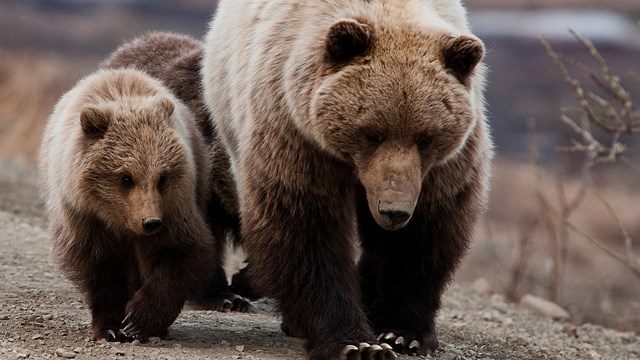
Among all this diversity, KATM is famous for its brown bears and fish populations. Bristol Bay streams, including the Naknek River, are the source of some of the world's largest salmon runs and appear to have been so for about the last 4000 years. Trophy-size game fish such as trout inhabit many of the park and preserve streams. The bear come to feed on the fish, sometimes in unusually large concentrations. There is a migratory caribou herd and it appears that in the past there was a more regular presence - enough so that hunting caribou was a regular aboriginal activity. Overall, KATM contains at least 29 species of land animals, 6 of sea mammals, 150 species of birds, and 28 of fish, as well as uncounted intertidal and coastal species.

Archeological Resources

The region that Katmai National Park and Preserves located in contains perhaps the richest prehistoric and protohistoric cultural resources in the greatest concentrations know in Alaska. The abundant and varied natural resources that existed in the region at the end of the Pleistocene and during the Holocene resulted in the development along the Pacific mainland and island coasts of the largest prehistoric populations in Alaska. A second ecological zone, the lake and riverine settings on the Bristol Bay side of the Peninsula provided prehistoric peoples with a wealth of resources that included anadromous fish and terrestrial mammals. In the park, the Brooks River Archeological District and the Takli Island Archeological District, both on the National Register of Historic Places, are only two examples of the richness of the two zones.

Currently, the park Cultural Sites Inventory lists 106 known or suspected archeological sites in the park and preserve. Of the 99 known sites, twenty-five have been recognized as nationally significant and have been placed on the National Register of Historic Places. Many of these sites are located within one of the three Archeological Districts that are in the park and preserve. The remaining sites have not been evaluated as yet. Archeological survey has been confined to the Pacific Coast and the Brooks River/Naknek areas of the park and preserve. The majority of KATM has not been inventoried - somewhat less than 5 % has been examined. A bias in the types of known sites undoubtedly exists due to this nonrepresentative approach. Potential contact, conflict, diffusion, intermixing, and population replacement between the Bering Sea (Bristol Bay) and Shelikof Strait (Pacific Coast) are themes that underlie most of Katmai prehistory. In later times, movement and interaction along the Peninsula, as well as across it, both from the mainland and the Aeutians is apparent. Understanding these relationships and shifts is key to any comprehension of the human history in KATM.

However, as a result of the archeological research carried out in Katmai National Park and Preserve since 1954, we have a good basic understanding of the sequence of prehistoric occupations in the region. The cultural sequence for the park and preserve includes representatives of all the major cultural traditions that have been identified for the Alaskan arctic environment. The two ecological zones formed by the Aleutian Range have somewhat different prehistoric cultural chronologies - reflecting Bering Sea influence on one side and Pacific coast cultural influence on the other.

The Paleoarctic tradition dates from around 9000-8000 BP on the Peninsula. It has been found at a site at the mouth of the Kvichak River and at Ugashik Lake, just outside the park boundaries. Because of its widespread distribution in Alaska and on the Peninsula, it can be expected that sites belonging to the tradition exist both in the Bristol Bay region and the Pacific Coast region.

The Northern Archaic tradition appeared in the region around 5000 BP. The earliest such assemblage in the area has been found at a site at the mouth of the Kvichak River and is found in central KATM. It is characterized by bifacial projectile points with side notches and unifacial scrapers. The assemblage has many similarities with Archaic cultures of the boreal forests to the south and east of the Arctic, and does not appear to have been immediately derived from Asian cultures. During this same time period, a separate cultural tradition existed along the Pacific Coast of the Peninsula but reached inland as far as Brooks River in the Bristol Bay region. Dumond has referred to this phase as the Brooks River Strand phase of the Kodiak tradition. Elsewhere, it is labelled the Ocean Bay I tradition. It marks the first appearance of ground slate in any quantity in assemblages in this region.

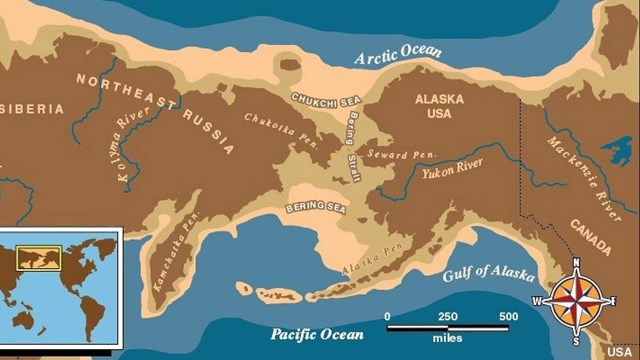
In the Bristol Bay region, the Arctic Small Tool tradition (ASTt) appears around 3800 BP and lasts until about 3100 BP. This cultural tradition, which has northeast Asian roots, appears fully-developed in Alaska and spreads from the Bering Strait area eastward to Hudson's Bay and Greenland, as well as southward to interior Alaska and the north Pacific coast. It appears that bearers of this cultural tradition immigrated to the KATM region. Some researchers have labelled these people as "Paleoeskimo" or ancestral to modern Eskimo populations, based on the persistence of certain types of lithic tool types and adaptive strategies. Others see Inupiaq and Yupik roots in later immigrants from Asia. . At the same time period, on the Pacific Coast of the Peninsula, along Shelikof Strait, an Ocean Bay II-like cultural tradition known as the Takli Birch phase was thriving. Polished or ground slate artifacts appeared in coastal KATM for the first time along with large coastal middens. The intrusive ASTt occupation of Brooks River represents a unique phase in the interior prehistory of Katmai because it is a 700-year period when Brooks River assemblages do not reflect the influence of Shelikof Strait culture. Whether this was caused by catastrophic volcanic activity or cultural barriers is not known. Presently we don't have enough information to solve this puzzle.

Following a gap or blank in the archeological record in the KATM area, Norton tradition people arrived at the Brooks River area about 2300 BP and were resident until around 1000 BP (in three distinct phases). They were the first in the area to use pottery and ground slate was more commonly used than flaked lithic tools. Numerous sites and components of sites within KATM contain evidence of Norton occupations. While related to the Arctic Small Tool tradition culture, to some researchers Norton appears to be a distinct development, marked by a shift to an economy based on coastal resources. At the same time, from around 2000 BP to 1000 BP, the Takli Beach and Takli Cottonwood cultures fluoresced on the Shelikof Strait, actively pursuing land and sea mammals and taking fish and shellfish. Once again there appear striking similarities in the cultural remains of Bristol Bay and Pacific Coast, indicating increased contact between them. Cottonwood and Beach culture were part of the widespread Kodiak tradition (called Kachemak tradition by some researchers) - centered on that island but reaching as far as the Kenai Peninsula. This important tradition is represented in the park by the Kukak Village site (XMK-006), located at the entrance of Kukak Bay. Only partially excavated, the work has contributed significantly to formulation of the cultural chronology of Shelikof Strait, especially the Kodiak and Koniag traditions.

The last major influx from the Bering Sea area into the KATM region prior to European contact was the Thule tradition. The Thule, or "Neoeskimo," people appear to have been the direct antecedents of the historic Eskimo people. According to Harritt, "developing cultural traditions of the Bering Sea region around AD 600 gave rise to the Eskimo culture that was first encountered in southern Alaska by Russian explorers around the middle of the 18th century." On the Pacific Coast, at the Kukak Village site, the Mound phase represents the Koniag tradition, the historic inhabitants of Kodiak and the Shelikof Strait region. Both groups show a strong emphasis on maritime resources, but the technology of the Thule people was equally useful for hunting and gathering on land. Gravel-tempered pottery and certain characteristic tool types appeared on the Pacific coast, on the Bristol Bay coast, and at inland sites at this time, indicating communication across the Peninsula. Many scholars hypothesize that Thule culture arrived on the Peninsula as a wave of diffusion or immigration, influencing the shift of Kodiak/Kachemak culture at the same time. Others feel that indigenous development, albeit with some influence from the north, led to the flowering of Koniag culture. In the study of the ebb and flow of different cultures and adaptations over the centuries in this area, the possible crucial role of volcanic eruptions and ash falls - as directly destructive and also as environmentally disruptive as they can be, must be part of any extended research program.

Historical Aspects

The 1912 eruption of Mt Katmai led to the establishment of Katmai National Park and Preserve and had major effects on the inhabitants of that area. However, European contact, with its disruptions had occurred much earlier. As early as 1750, Russian hunters and missionaries were using the Katmai trail. This prominent native trail joined Katmai Village, located on Katmai River near the seacoast, with the villages of Savonoski, located near Lake Naknek, and Naknek, on the shore of Bristol bay. The same trail was a popular route for American explorers and prospectors until the 1912 eruption covered much of the trail.

By 1784 Russian fur traders, seeking the valuable sea otter, had become established on both Kodiak and the Katmai Shelikof Strait coastal areas. They virtually enslaved the Koniag and other Pacific Eskimos in the fur trading operations, making them dependent upon the traders for their food, clothing, and other essentials. The Aglegmiut, who lived in the interior of the Peninsula area of KATM, were not subjugated but were part of the trading network of the Russians. Katmai Village was the main trading post of the monopolistic Russian American Company from 1799 to 1867, and the trail over Katmai Pass inland from the coast was used for trading and missionary activity. By the time of the American purchase of Alaska in 1867, much of Pacific Eskimo culture had been destroyed and the natives had become "Russianized."

After the purchase, the Alaska Commercial Company bought most of the Russian American Company holdings in the region, but were never able to establish the monopoly and hegemony of the Russians. By 1890, most of the sea otter population had been decimated and the fur trade virtually ended. Soon after the turn to the century, the trading posts were closed and the local population returned to subsistence living. Soon, though, salmon canneries were established in the area and wage labor became available. Trappers and prospectors had explored much of the Peninsula and a few had built cabins there. The establishment of the monument in 1918 closed much of the Katmai area to resettlement, hunting, fishing and gathering. Scientific exploration and tourism became major activities within the park. As KATM was expanded in 1931, 1932, and 1980, inholdings, mineral claims, subsistence and settlements became management issues. For instance, in the Bay of Islands, Naknek Lake, is Fure's Cabin. This log cabin, on the National Register of Historic Places and the List of Classified Structures, was built around 1914 by a trapper/prospector who married an Aleut and settled in the region. Overall, very little historical archeology has been done in KATM, although the potential is there. Main research themes would be frontier development, communication and transportation

Ethnographic Aspects

In late prehistoric and protohistoric times the area that is now KATM was occupied by various groups of people, all part of the Pacific Eskimo group. It seems that the entire Pacific slope of the park and preserve was occupied by Koniag people. The center of this culture was on Kodiak Island and the mainland directly across from it. Another Pacific Eskimo group, the Peninsular Eskimo, of which very little is known, apparently lived in the KATM area west of the Aleutian Range until just before the arrival of the Russians. At that time, a group of Eskimos from the Bristol Bay area, the Aglegmiut, were pushing into the Nushagak area and the shores of Bristol Bay, displacing the former inhabitants. Under Russian hegemony this movement continued and was completed. The former occupants, the Peninsular Eskimo, probably spoke Yupik, but their dialect remains unknown at present. As recently as 1953, natives who prior to the 1912 eruption had lived at Savonoski, a village on the upper Naknek drainage, still maintained that they were a different people from the Aglegmiut who resided at the mouth of the river on Bristol Bay. There is some indication that a small group of Aleuts were located in a small enclave at the mouth of the Ugashik River. In addition, the Athabaskan people were pushing down the Alaska Peninsula from the Lake Clark area.

The questions and problems of the movement and diffusion of cultures up and down the Peninsula would be a prime research question for ethnographic and archeological investigation. In fact, very little archeological research has been done on numerous late prehistoric and protohistoric sites in the park. If combined with ethnographic and oral history work, this is potentially one of the richest of the parks in cultural resources.

Discussion

It seems that a great deal of archeological work has been done in KATM, but that is not actually the case. Most of the work has been concentrated in one or two major site areas. In other words, most of the park and preserve is terra incognito from an archeological resources point of view. As in most of Alaska's parks, a major, long-term inventory and evaluation program is needed to provide the basic archeological resources information for managing the unit.

BIBLIOGRAPHY


Return to the Prehistory of Alaska Homepage


More general information on this National Park and Preserve is available at

KATM


Questions, Comments, and Suggestions - please send email to: ken_schoenberg@nps.gov