Glacier Bay National Park and Preserve (GLBA) is in the panhandle of southeast Alaska. The center of the park is approximately 90 miles northwest of Juneau and approximately 600 miles southeast of Anchorage. The primary features that define the perimeter of this unit are the Gulf of Alaska to the west, the Chilkat Mountain Range to the east, Cross Sound and Icy Strait to the south, and the St. Elias Mountains and Alsek River to the north. Glacier Bay National Monument was established in 1925 by presidential proclamation in order to protect "a number of tidewater glaciers ... in a magnificent setting of lofty peaks ...; a great variety of forest covering consisting of mature areas, bodies of youthful trees which have become established since the retreat of the ice which should be preserved in absolutely natural condition, and great stretches now bare that will become forested in the course of the next century; a unique opportunity for the scientific study of glacial behavior and of resulting movements and developments of flora and fauna and of certain valuable relics of interglacial forests; historic interest, having been visited by explorers and scientists since the early voyages of Vancouver in 1794 who left valuable records of such visits and explorations." Another proclamation added additional land to the monument in 1939. The Alaska National Interest Lands Conservation Act of 1980 changed the designation to national park and added a preserve to the unit.
Land Ownership
GLBA contains 3,283,000 acres of which 57,000 acres are in the preserve. Over 2,670,000 acres have been designated as Wilderness. There are two mining claim groups, totalling about 400 acres, within the park and there are approximately 3000 acres in Alaska Native allotment claims within the boundaries. Several other small private tracts also exist within the park and preserve.
Environment
The park is characterized by snowcapped mountain ranges rising over 15,000 feet, coastal beaches with protected coves, deep fjords, 15 tidewater glaciers, coastal and estuarine waters, freshwater lakes, and a mosaic of plant communities and animal populations ranging from "pioneer species" in areas recently exposed by receding glaciers to climax communities in older coastal and alpine ecosystems. There are essentially three climatic zones: the outer coast along the Gulf of Alaska has milder temperatures and more precipitation but less snowfall; upper Glacier Bay is much colder and snowier; and lower Glacier Bay is subject to heavy precipitation year-round. Glacier Bay proper has 920 miles of shoreline. Dense thickets of Sitka alder and devil's club confine foot travel to the shoreline except in those areas recently exposed from ice cover. Thus, the typical shoreline consists of a rocky tidal area backed by dense shrubby vegetation or steep mountain slopes. The Glacier Bay fjord complex forms a Y-shaped bay up to 15 miles wide and 63 miles long and provides marine access to many types of vessels. GLBA contains hundreds of miles of waterways, channels, bays, and inlets that provide access to its forested coves, rocky beaches, and glaciated inlets. The park and preserve reflect a history of valleys filled with ice that has alternately retreated and advanced in response to climatic fluctuations. The earliest recorded observations by La Perousse (1786) and Vancouver (1794) show the presence of glaciers at the mouth of Glacier Bay at Icy Strait. John Muir in 1879 recorded a retreat 32 miles up bay to a point at the mouth of Muir Inlet. Since then, the ice has retreated another 25 miles. Current research indicate that some glaciers within the Fairweather Range are advancing while those in the Chilkat Range are retreating.
The panhandle of southeast Alaska is an uplift zone with rising mountain ranges. This continuing uplift is affecting the environs of Glacier Bay. The region is subject to frequent earthquake activity and its effects. As part of the Pacific "Rim of Fire" volcanic activity occurs nearby but there are no active volcanoes within the park and preserve. As a result of these factors, the Glacier Bay environment is undergoing rapid change. The terrestrial ecosystems shift their loci to go with the fluctuations.
Four main land ecosystems are found in and around the park and preserve: wet tundra, coastal western hemlock/Sitka spruce forest, alpine tundra, and glaciers and icefields. Three major marine ecosystems have been identified in and around the park and preserve: continental shelf, wave-beaten coasts, and fjord estuaries. The active tectonic environment of this region has probably affected site preservation and the archeological record negatively. For instance, evidence has been found that a 1600 foot high tsunami (from the effects of a massive earthquake-induced landslide), splashed through Lituya Bay. Subsistence resources that would have been relevant to prehistoric occupants of the area are found in all the ecosystems - land and marine. However, it is likely that the major focus would have been on exploiting the resources of the marine ecosystems, as did the late prehistoric and historic Tlingit .
Archeological Resources
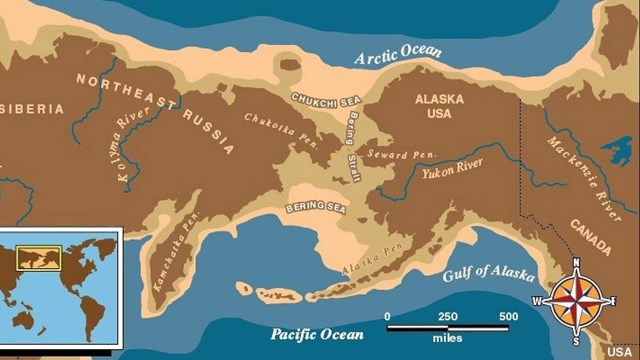
GLBA is within the Northwest Coast cultural area of the NPS Alaska region. The first signs of human occupation of the Glacier Bay region appear approximately 10,000 years age, when the land was recovering from the massive Pleistocene glacial stages. On nearby Baranof Island, the lowest component of the Hidden falls site has been dated to about 9000 BP. At Ground Hog Bay, just outside and southeast of the park boundary, Ackerman discovered a prehistoric site with artifacts radiocarbon dated at around 10,000 BP. The early component at both of these sites are similar assemblages characterized by microblades and microcores, but noteworthy because of the lack of a bifacial tool industry. A microblade and microcore component was dated to 8200 BP in a shell midden at Locality I of Chuck Lake on Heceta Island. The Ground Hog Bay II site was found on a coastal terrace that apparently was unglaciated throughout the Holocene. However, since the earliest component was deeply buried, the possibility does exist that such sites may occur in areas that have undergone Holocene glaciation which did not affect the buried site. It is interesting to note that a coastal-marine subsistence pattern would have been the only one possible at this early Holocene time period. Since Baranof Island has been separated from the mainland since early geologic time, the manufacture and use of boats by these early people has been demonstrated. Chuck Lake, Ground Hog Bay and Hidden Falls have demonstrated human presence in southeast Alaska during the entire Holocene. The early components lend support to the hypothesis that one of the major routes of entry to North America was by way of Beringia, down the Pacific coast to western Canada and the western United States, and possibly all the way down to Central America or South America. The lack of a bifacial tool industry is also seen in the early cultures of the coast of British Columbia while the microcores suggest ties to the Paleoarctic tradition to the north.
Two of these archeological sites indicate that the region continued to be occupied during the Holocene, though there are gaps in the record (which could be due to lack of data/sites rather than abandonment). At the Hidden Falls site on Baranof Island, the second prehistoric component has been dated and shows an occupation that spans a 1400 year period between 3200 and 4600 BP. This component, characterized by a replacement of flaked stone with ground and polished slate, closely resembles in technology and age one from Coffman Cove on Prince of Wales Island. So close is the affinity between them that one researcher has suggested an intensive trading relationship or cultural identity between them. Further afield, similarities can be seen with Ocean Bay II culture on Kodiak Island and with the Takli Birch phase on the Pacific coast of the Alaska Peninsula. To the south, similarities can be seen with the Locarno Beach phase of the southern coast of British Columbia. Other sites in the same area also show similar affinities. This has been interpreted as there having been a transitional phase that was leading to the later classic Northwest Coast culture that was extant in historic times.
At Ground Hog Bay, a component dating around 2000 BP, towards the end of the Hypsithermal (thermal maximum climatic fluctuation) and the beginning of the Little Ice Age, there is evidence of a house, microlithic tools and heavy woodworking tools. The upper component (III) at Hidden Falls shows that an occupation was present from 3000 to 1400 BP and, along with a number of other sites, represents the Developmental Northwest Coast Stage. Following this stage which lasted until protohistoric times, we see evidence of the type of culture that was seen in historic times on the Northwest Coast.
It should be noted that the potential for finding archeological sites in GLBA is actually increasing. The retreating glaciers uncover ground that might contain buried sites and the uplifting of the coast is bringing more such sites into view. In addition, the archeologists of the neighboring Tongass National Forest, which has an active cultural resources inventory program, have demonstrated that sites are more common in this environment, both coastal and forested, than previously believed.
Ethnographic Aspects
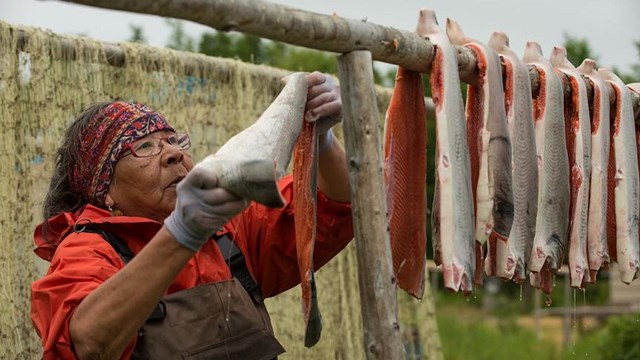
Beginning about 200 years ago, there is abundant archeological evidence for the occupation and use of this region by Northwest Coast peoples, which has continued into the present day. Whether Haida, Tlingit or Eyak cannot be determined directly from the archeological evidence. Most of the 60 or so sites within the park/preserve relate to late protohistoric or historic times and are generally identifiable as Tlingit or Euroamerican. Major settlements or permanent villages existed in 1880 at or near Dry Bay, Excursion Inlet, Point Couverden and the Port Frederick area (where Hoonah is now). Dundas Bay contains a Tlingit cemetery and there are a few native allotments within the park/preserve (there would probably be a lot more if the early establishment of a national forest and then a monument hadn't precluded such selections). The protohistoric pattern of life in the area revolved around small permanent or semi-permanent winter villages as the hub. A seasonal hunting, gathering and fishing pattern was dominant, involving leaving the winter central village to occupy recognized but fluctuating fishing and hunting camps. The reliability and abundance of salmon of which a storable surplus could be harvested, allowed the development of more complex, ranked societies with rich artistic traditions. How much of the hinterland of the park and preserve was utilized by native groups is not known since no intensive surveys have been done there.
Historical Aspects
The Russian discovery of sea otters in 1741 led to the Russian expansion into this region. In 1786, the French explorer La Perouse,arrived at Lituya Bay in two ships and contacts were made with the local Tlingits during his 26-day stay. In 1788 a Russian galleon made a brief stop in Lituya Bay and claimed it for the Russian Empire. In 1794, Vancouver explored this coast, including glacier Bay, which at that time was still choked with ice. Commercial activities increased over the next decades, including the establishment of Hudson's Bay and trading stations along the coast. With the acquisition of Russian-America by the United States in 1867, further development took place. The discovery of gold brought an influx of miners. In August 1890, a group of miners met on Willoughby Island in glacier Bay and organized the Berry mining district. Other developments included a saltery at Bartlett Cove in the late 1890s, several fox farms and the Dundas Bay cannery, started in 1890 and abandoned in 1935. These and other such developments have left us the opportunity for historical archeological work and preservation. John Muir made his first visit in 1879 and as a result of these explorations and the subsequent publicity, the monument was established in 1925. As a matter of fact, the first tourist ship entered the harbor in 1893, as gradually, Bartlett Cove became a stopping and supply point for the tourist trade, as it is today.
BIBLIOGRAPHY
Questions, Comments, and Suggestions - please send email to: ken_schoenberg@nps.gov