Denali National Park and Preserve (DENA), founded in 1917 as Mount McKinley National Park, is one of the oldest park units in the United States. Reasons for the establishing of the park were to stimulate travel to Alaska by tourists and sightseers and to preserve the area's game and natural scenery. The Alaska National Interest Lands Conservation Act of 1980, Section 202 established Denali National Preserve, redesignated Mount McKinley National Park, and significantly expanded the boundaries of the unit. The implementing language for the original park was retained and the new park additions and designated preserves were to be managed to protect and interpret the entire mountain massif, and additional scenic mountain peaks and formations; and to protect fish and wildlife populations and habitat; and to provide continued opportunities, including reasonable access for mountain climbing, mountaineering and other wilderness recreational activities. Though not specifically mentioned in the implementing language, cultural resources are part of the NPS mandate under the Organic Act and numerous other laws and regulations. In addition, in order to manage and interpret the natural environment, animal and plant communities and human impacts in these units, it is necessary to develop a diachronic perspective. Humans have been part of this environment and interactive with it for more than 11,000 years. Park and preserve resources have been utilized by at least five different Athabaskan groups over the last several hundred years.
Land Ownership
Denali National Park and Preserve encompasses slightly more than 6,000,000 acres. In the park are 4,716,000 acres of which 4,700,00 acres are federally owned. The preserve contains 1,311,00 acres of which 1,258,000 acres are in federal ownership. Approximately 2,125,000 acres are in designated wilderness status. About 83,000 acres are under application by the State of Alaska, Doyon Regional Corporation, Minchumina Natives Inc., Ahtna Regional Corporation, and Cantwell Village Corporation. Other interests include Native Allotments, Cemetery/Historical (14h1) sites, various inholdings, and over 9,000 acres of patented and unpatented mining claims.
Environment
The park and preserve lie in the interior of Alaska between Anchorage and Fairbanks. They form the geographic center of an expanse of wilderness south of the Yukon river, west of the Tanana River, and north of the Susitna River. DENA is roughly bisected on the diagonal, with a southern half comprised of McKinley, its glaciers, rivers and surrounding lesser peaks, and a northern half characterized by tundra-carpeted lowlands, hills, and flat glacial valleys drained by glacier-fed rivers, lakes, and streams.
The mountainous regions of the park and preserve are part of the Alaska Range, which extends across southern Alaska in a wide arc, with Mt. McKinley near the approximate apex of the arc. In the vicinity of Mt. McKinley , the Alaska Range forms a series of rugged, parallel, glaciated ridges rising from 6000 and 9000 feet in elevation interspersed with much higher peaks. The peaks are perennially snow and ice-covered above 6000 feet. This region is also marked by the presence of massive, active glaciers such as the Kahiltna, Ruth, Tokositna, Yentna and the Muldrow. The largest of these range from 30 to 45 miles long. Streams and rivers are braided and glacial in origin, flowing both to the north and south.
North of Mt. McKinley lie the foothills of the Alaska Range, characterized by more gentle ridges, 2000 to 4000 feet in elevation, separated by rolling lowlands. The foothills are incised by several north-flowing streams, which form steep canyons across the ridges and broader, flat valleys in the lowlands. Presently it is mostly unglaciated but there was Pleistocene glacial activity that affected the landforms. The lowland areas of the park and preserve that extend beyond the Alaska range are part of a broad depression known as the Tanana-Kuskokwim Lowland named for the two major drainages that are found there. This region was formed by outwash deposits of the glaciers and rivers of the alaska Range. In some places, the deposits are marked by moraine topography and, in others, extensive sand dunes and loess deposits are present.
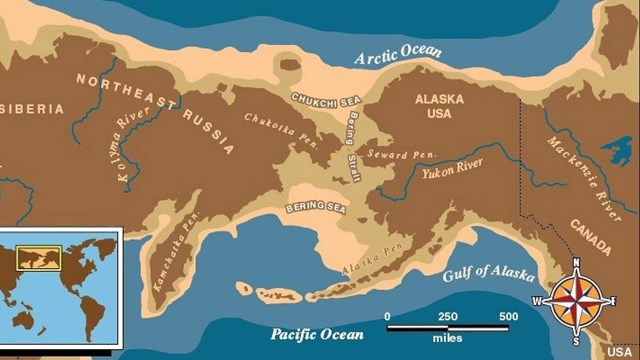
Climate has remained essentially constant since the early Holocene, which is marked by climatic warming, retreat of Pleistocene glaciers and rising sea levels. Expanding boreal forest replaced cold, dry grasslands and human populations had to adjust as what had been part of Beringia became part of interior Alaska. Today, the north and south regions of DENA are in two different climatic regions because the Alaska Range blocks the moisture from the Gulf of Alaska from moving north. Thus south of the Alaska Range the climate is a transitional maritime-continental one with more moisture, and cooler summers and warmer winter temperatures. North of the Range is a continental climate - drier, with extreme temperatures fluctuations both in summer and winter.
Vegetation is highly varied with many different econiches. Broadly characterized as dominated by boreal forest (or taiga), DENA has at least five major vegetation zones. These are, in order of rising elevation, Low Brush Bog, Bottomland Spruce-Poplar Forest, Upland Spruce-Hardwood Forest, Moist Tundra, and Alpine Tundra. The park and preserve area is home to at least 33 species of mammals, 92 species of birds, and 18 species of fish. Grizzly bear, black bear, moose, caribou, wolf, red fox, Dall sheep, wolverine, lynx and snowshoe hare are some of the major mammal populations. Once much more abundant, on both sides of the Alaska Range, salmon runs are still found in streams originating in the Kantishna Hills.
The archeological potential for the occurrence of early sites (as exemplified by the nearby Dry Creek site) in DENA is very high due to the late Pleistocene and Holocene paleoenvironment. Research in the Nenana Valley has defined a series of local glacial episodes - the Browne, the Dry Creek, the Healy, and the Riley Creek glaciations. Within the latest, the late-Pleistocene Riley Creek Glaciation, four distinct periods of glacial advance have been identified. An identifiable series of outwash plains and terraces remain of all but the earliest glacial periods. The Dry Creek terraces are the highest and the Riley Creek terraces, which are below the Healy terraces, are the lowest. The time period that appears to correlate with the earliest known human occupation of the area is that of the Riley creek glaciation. Some of the terraces have deep deposits of loess on them. They provide an excellent medium for archeological and paleontological preservation (as at the Dry Creek site).
Archeological Resources
An excellent archeological Overview and assessment (Griffin 1990) provides a thorough review of our current knowledge and the status of the archeological resources in DENA. As of 1990 there were 187 recorded cultural sites in the park and preserve. Eighty-four of the sites are prehistoric or protohistoric. Twenty of the prehistoric sites are isolated artifacts found on the ground surface. Another 53 sites were also surface-only lithic scatters. Only 11 of the known prehistoric sites have subsurface cultural materials and those are mostly very shallow. Deep, stratified deposits, such as that found at Dry Creek which is just north of the park boundary, are undoubtedly present in the park and preserve but have not yet been discovered. DENA does have a diverse and extensive curatorial collection of prehistoric (and historic) items. However, the collection needs more organization and research.
Another category of archeological site that is important in DENA is that of historical archeology sites. There are 104 recorded historical archeological sites in DENA (as of 1990) of which 51 are mining related sites. In general, historical archeology has been relatively neglected in Alaska and DENA. The NPS Cultural Resources Mining Inventory and Monitoring program has developed a database of such resources as well as a contextual framework for such resources. However, a major and expanded effort to include this category of historic archeological sites needs to made.
Additionally there are ethnographic sites, such as Geese House, that need to be included in the archeological universe for research in this park and preserve. The Denali area was used historically by the Koyukon, Dena'ina, Ahtna, Kolchan, and Tanana Athabaskan Indians. Griffin has pointed out that one of the main problems with the current inventory of known cultural sites in DENA is the inadequacy and inconsistency of the site records as well as the loss over the years of much of the data.
Paleontological, geological and archeological research has revealed that during much of the Pleistocene the environment of the North Alaska Range was dramatically different than it has been for the last few thousand years. Much of the Interior remained ice-free and vast areas supported a dry, treeless grassland, termed the "mammoth steppe" after the now extinct wooly mammoth that once roamed the region along with many other late Pleistocene species. Between 13,500 and 11,000 years ago the grasslands had begun to shrink as woody shrub plants appeared. Around 10,000 years ago, the climate had become warmer and moister with shrub tundra becoming prevalent and trees appearing and spreading rapidly. This trend continued until boreal forest had extended throughout the Alaska Range by 3500 BP. There were also concomitant changes in animal populations as modern populations and communities appeared.
DENA is part of the Interior cultural zone of the NPS Alska region. A brief overview of the cultural history of DENA, based on archeological research statewide as well as in the Interior, reveals that this area has been inhabited by humans with many different cultures and adaptations for thousands of years. Important sites such as Lake Minchumina, Carlo Creek, Healy Lake, Dry Creek and other Nenana Valley sites, Broken Mammoth and Swan Point, and the Tangle Lakes district border DENA on all sides. A National Register property in the park is the Teklanika site, which, based on the lithic technology, West has interpreted as 10,000 or more years old. [Other research has indicated an age around 3500 years old. This site exemplifies some of the interpretive difficulties with West's proposed Denali Tradition]. The archeological sequences in the Interior mirror the general sequence in the state but there have been exciting new sites found here that make this region one of the most interesting and potentially significant archeological areas in Alaska.
For the past 25 years, the earliest archeological culture in Alaska has been identified as the American (or Siberian-American) Paleoarctic Tradition. Recently, however, discoveries at the Nenana Valley archeological sites just northeast of the park, have led to the hypothesis that another group of people was also extant at around 11,000 BP in the Denali area. The Nenana Complex, as it has been called, lacks the microblades and microcores that characterize the Paleoarctic tradition assemblages. While not yet firmly dated or delimited, Component I, which represents the Nenana Complex at the Dry Creek site, stratigraphically underlies Component II, the Paleoarctic tradition assemblage there. It has recently been hypothesized that the Nenana Complex represents occupations by Paleoindian groups linked to the Clovis Fluted Point groups of the continental U.S. The newly analyzed material from the Mesa Site north of the Brooks Range has also been interpreted as having Paleoindian similarities and the existence of a Northern Paleoindian Tradition has been suggested. Contained within this hypothesis is the assumption that the bearers of this tradition were "Amerind" populations, not Arctic or Eskimo groups as many see the Paleoarctic peoples. Also, as of 1994 no cultural antecedent for this hypothesized tradition has been found in Siberia or Northeast Asia.
Paleoarctic Tradition (11,000-8000 BP) assemblages have been found on both sides of the Bering Sea. Within the broad and geographically widespread Paleoarctic tradition, researchers have defined regional variants. Most notable for Interior Alaska is the Denali Complex, as seen in Component II at Dry Creek and the Chindadn Complex from the multicomponent Village site at Healy Lake. The Dry Creek assemblage has been radiocarbon dated to approximately 10,000 BP and the Chindadn complex to about 11,000 BP. The Denali complex was originally formulated on the basis of artifacts from four Interior archeological sites - the Campus Site at UAF, the Donnelly Ridge Site at Paxson and the two Teklanika sites in DENA. Such assemblages have been dated between 12,000 and 8000 BP. However, recent research has come up with dates in the 3000 BP range for the Campus Site. This suggests the possibility that the Denali complex represents two or more cultural units instead of a single, lengthy cultural complex that changed over time. The Teklanika sites are currently being reevaluated and dated by the NPS in hopes of resolving this controversy.
Another geographically widespread archeological tradition in Alaska is the Northern Archaic tradition, which is well-represented in the area of the park and preserve. Originally, the arrival of this cultural manifestation was linked to the spread of the boreal forest northward at this time period and it was seen as originating in the Archaic cultures of the southern boreal forests of North America, either by diffusion or migration. One interesting fact about the Northern Archaic tradition is that there appears to have been two facies of it - those with characteristic Northern Archaic assemblages without microblades (Onion Portage, Component IV at Dry Creek) and those with both (Kurupa Lake, Tuktu, Lake Minchumina). The mixed assemblages suggest the possibility that there was first migration and then cultural exchange and adaptation between the resident Paleoarctic people and the newly arrived group from the south and east. This would be especially noteworthy if the Northern Archaic represents an "Indian" group and the Paleoarctic an Arctic/ northeast Asian people. Important Northern Archaic sites in the DENA area are the Healy Lake Village site with a notched point and microblade assemblage, the Minchumina tradition at Lake Minchumina which is also mixed, Component II at the Butte Lake site in the Alaska Range which is a mixed assemblage radiocarbon dated at 5000 BP, and the non-microblade assemblage of Component IV at Dry Creek.
While not commonly included in discussions of Interior Alaskan chronology, the coastal-based and arctic-oriented Arctic Small Tool tradition, which runs from 4000 BP to 1500 BP if the later Norton and Ipiutak stages are included, has been identified at a few Interior sites. The Ipiutak stage, dated at approximately 1400 BP shows up as an apparently intrusive occupation at Lake Minchumina, just west of the preserve.
The last prehistoric tradition that has been defined for the Interior is the Athabaskan Tradition which dates from 1500 BP to historic times. There is some scholarly debate over just how far back in time the Athabaskan tradition can be traced. How the tradition is conceptualized seems to determine one's position on the controversy. If the reference is to the definitive ancestral populations of the historic and modern Athabaskans who speak one of the dialects of Athabaskan and are ethnically identified with the historic inhabitants of the Interior and boreal forest regions of Alaska, then a shallow time depth (1500 BP) is the preferred position. If a more general definition is used, one that includes an "Amerind" Beringian population that migrated into Alaska from northeast Asia and later developed into Athabaskans, then an earlier date of about 11,000 BP is accepted. The latter group sees the Denali Complex or the Northern Archaic tradition as the root prehistoric cultures the modern Athabaskans. The Healy Lake Village and Garden sites are often cited as evidence for an Athabaskan tradition stretching back to 11,000 BP.
In general, the evidence for a later Athabaskan tradition is considered stronger and more reasonable. In this interpretation the Athabaskan tradition refers to the ethnographically identified Athabaskan cultural pattern that followed the Northern Archaic tradition; this usage is distinct from the concept of a prehistoric ethnic group from which modern-day Athabaskans developed. Since one important characteristic of historic Athabaskan groups was cultural diversity, flexibility and local specialization in land use and subsistence, the "Athabaskan cultural pattern" is hard to isolate and difficult to trace in the archeological record. The more recent the site, the more definitive the identification of the cultural pattern. A general statement of the pattern would include evidence of a trade network (obsidian and copper); a greater reliance on bone and antler tools than on finely worked lithic tools; decorative items such as beads, buttons and quills; the use of tchi thos or boulder-spall scrapers; unilaterally barbed bone points; bone gaming pieces; caribou tibia fleshers; and the geometric decoration of bone and antler items.
While few positively Athabaskan archeological sites of any age have been located and excavated several more recent sites have yielded important information. A protohistoric Athabaskan component was excavated at MMK-004 at Lake Minchumina. Other well-known Athabaskan tradition archeological sites that are not as close to DENA are GUL-077 near Gulkana, Dakah De'nin's Village near Chitina, Dixthada Village in the upper Tanana Valley, and two sites along the Gulkana River. GUL-077 has been dated approximately 500 to 1000 BP and seems to have been occupied sporadically as a camping area over several centuries. Like Dixthada and Dakah De'nin's Village, GUL-077 is possibly connected culturally and technologically with the Ahtna, the historic inhabitants of the area. As is obvious from this brief description, the Athabaskan tradition deserves a great deal more research, especially when intercalated with ethnographic research.
Historical Aspects
As Griffin (1990) states "Without a well-defined research program for historical archeology, an important category of DENA's archeological resources has been [and will continue to be] overlooked." Most historical sites have archeological values in that the physical remains contain information about the human activity that occurred at that site that can only be elucidated by archeological methodology. The information thus produced can be very valuable in the determination of significance, management, preservation and interpretation of historic sites. Since DENA contains known historic sites with at least 104 of them already recorded, this area of research needs incorporation in inventory and research plans. The Cultural Resources Mining Inventory and Monitoring program is a good example of this type of effort.
Even after Bering's voyages to the Aleutians and Prince William Sound in 1741, it was almost a century before active exploration began in the Interior. However, the influence of Euroamerican contact, in the form of trade and possibly disease had reached the Interior prior to actual exploration. By the late 1880's a few prospectors, explorers and traders had visited the Interior and several of them noted Mt McKinley, which was named by prospector W.A. Dickey in 1896. With the advent of the 1898 gold rush, the U.S. government took a more active role in the exploration and governing of the territory. U.S.G.S. and U.S. Army surveyors and explorers arrived in the DENA region.
The first extensive exploration of DENA occurred during a 1902 U.S.G.S. expedition led by Alfred Brooks. As news of the grandeur of Mt McKinley spread, efforts to scale the peak began and intensified. Both of the peaks were climbed by 1913. Recently, one of the base camps used by the successful 1913 Karstens, Stuck, and Harper team was located and recorded as an historic site (MMK-094).
At the same time that the mountain climbing efforts grew, the gold fever also led to an influx of Euroamericans. Gold had been discovered in 1903 in the Kantishna Hills by members of the unsuccessful Wickersham Mt. McKinley climbing team. This led to the short but vigorous Kantishna Gold Rush of 1905-1906. By 1907 most of the miners had left the area but a small number remained and active mining has continued until the present day.
The Alaska Road Commission, organized in 1905, built and maintained roads and trails (often following aboriginal trail systems) in the area. The ARC was active within present DENA boundaries. Construction of the Denali Park road was begun in 1923 and completed into Kantishna by the late 1930's. The Alaska Railroad line from Seward to Fairbanks was begun in 1915 and completed in 1923. Maurice Moreno became the first permanent resident of the park when he built a roadhouse in the McKinley Park Station in the early days of the railroad construction. His grave and the remains of the roadhouse have been recorded as sites (DENA-81-005 and HEA-059). River and air transportation also developed by the early 1900's. One route, by canoe to the Kuskokwim River from the Kantishna River by way of a portage at Lake Minchumina had been pioneered by native groups.
Mt McKinley National Park was established in 1917, largely through the efforts of Charles Sheldon. He was a well-known big game hunter and naturalist whose first trip into Kantishna was in 1906. He saw that the game populations, especially that of the Dall sheep, were being seriously impacted by hunting to feed the prospectors and construction crews. The first Superintendent was appointed in 1921. He was Harry Karstens, successful McKinley climber and a friend of Sheldon.
Ethnographic Aspects
A recent native place names study of the Kantishna Drainage in DENA (Gudgel-Holmes 1991) found a rich legacy of information and use of this part of DENA. It is obvious that the same type of research would reveal the same for most of the park's area.The region was historically important to at least five Athabaskan groups. It remains significant in the minds and lives of former residents, some of whom return seasonally to pursue subsistence activities. The five groups, each speaking a different Athabaskan language, were the Lower Tanana, the Upper Kuskokwim (Kolchan), the Koyukon, the Ahtna, and the Dena'ina Athabaskans. The Lower Tanana and the Upper Kuskokwim languages were mutually intelligible and are believed to have been at one time two dialects of the same language before they were separated by the incursion of Koyukon between them in the mid-1800s.
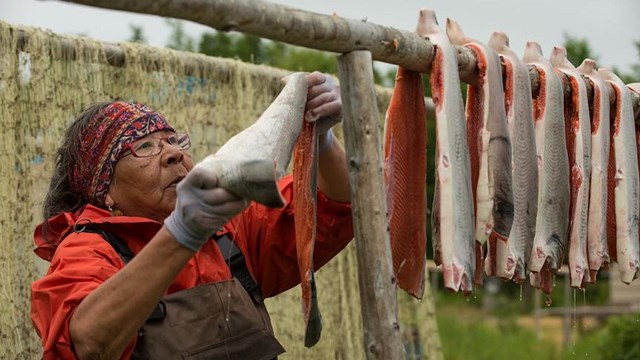
Northern Athabaskans inhabited the boreal forest and were considered primarily large game hunters, with salmon being a dominant feature of their seasonal round when available. Socially, Athabaskans lived in small groups of related people and recognized their descent through the maternal line. Semi-permanent villages, consisting of many dwellings, each shared by several families, formed the primary winter settlement; villages for the more sedentary groups, where salmon played a major role in the economy, had larger populations. Other types of settlements consisted of seasonally-used hunting and fishing camps, and single-use kill sites.
Mobility was a trait that characterized all of the Athabaskan groups' use of the land. In addition to their usual wide ranging activities within their home territory for subsistence activities, they were continuously expanding or coalescing their use area as the pressures of adjacent groups or resources dictated. Rarely were territorial boundaries sharply defined, at least not for long. Within the various main groups, numerous bands formed and reformed in various seasons and locations.
Discussion
As the Overview and Assessment points out, major needs for this park and preserve are a database management system to make sense out of and preserve the existing data on the archeological resources of DENA. Research on late prehistoric and protohistoric sites, linked to ethnohistoric research, is also needed as these relatively ephemeral sites are disappearing. In addition, historic archeologigy, especially with the extensive record of mining in the park and preserve, should be part of any cultural resources program. Overall, there is a need for a continuing inventory and evaluation program in this park and preserve, as the new finds and interpretations of the Nenana Complex and the Northern Paleoindian tradition show.
BIBLIOGRAPHY
Questions, Comments, and Suggestions - please send email to: ken_schoenberg@nps.gov