Aniakchak National Monument and Preserve


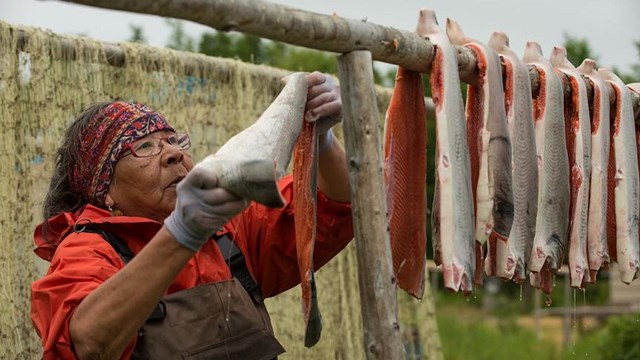
The Alaska National interest Lands Conservation Act of 1980 created Aniakchak National Monument and Preserve. The act directs that they..." be managed for the following purposes, among others: To maintain the caldera and its associated volcanic features and landscape, including the Aniakchak River and other lakes and streams, in their natural state; to study, interpret, and assure continuation of the natural process of biological succession; to protect habitat for, and populations of, fish and wildlife, including, but not limited to, brown/grizzly bears, moose, caribou, sea lions, seals, and other marine mammals, geese, swans and other waterfowl and in a manner consistent with the foregoing, to interpret geological and biological processes for visitors. Subsistence uses by local residents shall be permitted in accordance with the provisions of this act."

Although cultural resources are not directly cited in the implementing language, they are part of the NPS management mandate under the Organic Act and numerous other laws and regulations. In addition, in order to properly manage and interpret the natural environment, animal populations and plant communities of these units it is necessary to develop a diachronic perspective. Humans have been part of this environment and interactive with it for at least 8000 years. The continuation of subsistence utilization of Aniakchak resources into the present is just part of a long history of such uses. A basic inventory and evaluation of the archaeological resources of Aniakchak will provide essential information about human presence and activity over the centuries.

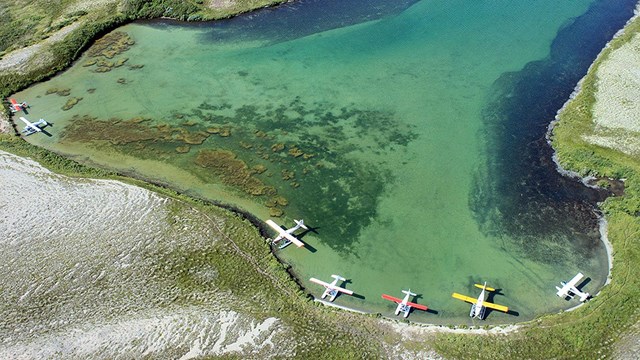
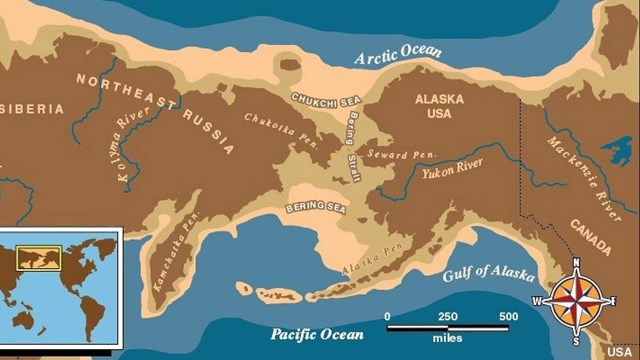
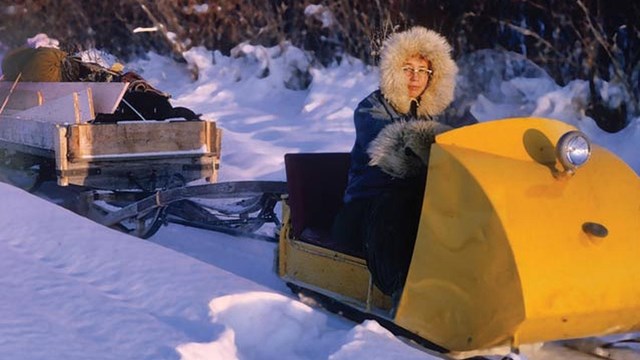
Aniakchak National Monument and Preserve is located near the middle of the Alaska Peninsula in southwestern Alaska. Its southeastern boundary is the Gulf of Alaska, about 100 miles southwest of the Kodiak Island archipelago. On the northeast and southwest, the unit shares a boundary with the Alaska Peninsula National Wildlife Refuge. The western boundary borders the Bristol Bay lowlands. Only the northeastern boundary follows a drainage line, while the others run along township, range and section divisions that are not clearly discernable from the ground. The monument and preserve are not accessible by road but are accessible by plane, helicopter or boat. In the winter some snowmachine trails are open. The nearest airstrip is several miles outside the boundary with no road to the unit. There are also no port facilities so boat access is by way of beach landings.

Land Ownership

Of the total of 603,000 acres, all the land in the monument is federally owned (137,000 acres) except for one native allotment (60 acres). Within the preserve of 465,000 acres, 400,000 are federal land. There are about 11,000 acres in the preserve that are owned by the state of Alaska and various Alaska native groups, including 2 native allotments. In addition, about 53,000 acres in the Preserve have been selected under Alaska Native Claims Settlement Act by the state and by Native organizations but have not yet been conveyed.

Environment

Four major landscape types can be distinguished in Aniakchak: the rugged coastline ; the Aleutian range, whose volcanic peaks rise over 7,000 ft; the river valley zone, where rivers, ponds, and marshes are found in long northwest-trending glacially-carved valleys; and the volcanic area of the Aniakchak Caldera, dominated by evidence of recent volcanic activity.

During the Quaternary period, volcanoes in and near Aniakchak have been active, with the dominant volcanic center at Aniakchak Volcano. Ancestral Aniakchak Volcano underwent a catastrophic explosive eruption about 3400 years BP, blanketing much of the surrounding countryside with thick, fast-moving pyroclastic flows. Eruptions continued after the Aniakchak Caldera was formed. Concurrent with the volcanic activity was a series of glacial advances that carved the landscape and deposited thick sequences of till and other glacial debris. During times of glacial maximums, ice sheets extended from the Aleutian Range well out into Bristol Bay. Changes in sea level during this period produced near-shore marine deposits in the lowlands.
There are also four physiographic zones within Aniakchak National Monument and Preserve:

The Aniakchak coast, which is in the Ocean-Coastal zone, stretches for approximately 52 miles along the Pacific Ocean. The coast is rugged with precipitous cliffs, offshore reefs, and islands. Three sheer-faced peninsulas jut into the ocean creating three bays which are completely or partially within the preserve. Aniakchak and Amber Bays are large, exposed bays with wide cinder-covered beaches. Kejulik Bay is more protected, narrower, and has sandy, cinder beaches. Tidal forces are generally moderate. The Aniakchak River flows into the ocean in Aniakchak Bay. Here, ancient beach lines parallel the modern beach for several hundred feet. Behind the beach lies a large lagoon. Each of the other bays have streams emptying into them.

The Upland zone, which parallels the Pacific coastline, is formed by the Aleutian Range. Mountain peaks rarely exceed 2,500 meters in height. The mountains are interrupted by a wide saddle at the headwaters of the Meshik River that eventually flows into the Aniakchak river.

The River Valley zone is found in the eastern and western river valleys, which are very dissimilar. In the east, the rivers,such as the Aniakchak River, cut through the Aleutian mountains and ashfields. Topography is relatively abrupt and post-eruption riparian vegetation is beginning to develop. The western river valleys, such as the Meshik, are older and the topography has less relief. They tend to be heavily vegetated with extensive wetlands.

The Aniakchak volcano is considered a separate zone - the Volcanic zone. The caldera was formed by a catastrophic event 3400 years ago. The outer mountain and rim are characterized by tilted rock strata, cliffs, and huge ash-covered buttresses. the caldera averages 6 miles in diameter and encompasses about 30 square miles. The caldera floor is approximately 1,100 feet above sea level. The rim of the caldera is higher and more jagged on the eastern side.

Tundra and dense shrubs are the most prominent plant communities in the preserve. Wet tundra is found in the River Valley zone in some drainages and in the Ocean-Coastal zone near the Aniakchak Lagoon. Ponds and lakes dot the area and sedges and grasses are the dominant species. Other species include crowberry, avens, heaths, herbaceous willow, and some dwarf birch and willow. Moist tundra is found predominately in the River Valley zone and the Ocean-Coastal zone. These tundra meadows are dominated by sedges with scattered willows and birch. There is a balsam-poplar stand in the Cinder River drainage. Shrub thickets are found in the River Valley zone and the Ocean-Coastal zone, and are presently invading the Upland zone. Thickets of alder and willow line most of the river and stream valleys of both the Pacific and Bristol Bay drainages. Alpine tundra vegetates most Upland mountain slopes and parts of the Volcanic zone. The predominant species include avens, low heath shrubs, prostrate willows, and dwarf herbs. Non-vascular plants are also an important part of these vegetation communities.

Brown bears, moose, caribou, red fox, wolverine, beaver, river otter, shorttail weasel, mink, lynx, porcupine, tundra hare, arctic ground squirrel, terrestrial birds, waterfowl, clams, freshwater fish, five varieties of anadromous fish, stellar sea lions, harbor seals, and sea otters inhabit the Aniakchak area.

Archeological Resources

The prehistory of these units is practically unknown. Almost no archeological inventory has been done on these lands. Our knowledge of the area is based on extrapolation from surrounding areas in which archeological research has been done. Even though Aniakchak is in the Southwest Alaska and Pacific cultural zone, Aniakchak appears to be in a transitional positional between two cultural areas, the Aleutians and the Alaska Peninsula, both of which have long cultural sequences.

The Aleutian archipelago, which lies west of Aniakchak, has been occupied for at least 8000 years. The oldest site is the Anangula Blade site, on a small island located at the northern edge of Nikolski Bay, Umnak island. This core and blade site, deeply buried and sealed beneath layers of volcanic ash, lacks implements exhibiting bifacial retouch. This assemblage has been linked to the Paleoarctic tradition that was widespread in Alaska at this time. The deeply buried nature of this site indicates that Aniakchak has the potential for similar sites.

The second cultural period that has been defined is the Aleut tradition, dating from about 4000 BP to historical times. It is marked by a lack of continuity with the Anangula period. One interesting feature of this period is that there appears to have been a population replacement at some time during the period. Dolichocephalic people were replaced by brachycephalic ones. Yet despite that the cultural development in this region appears to have been smooth and continuous.

The easternmost sites of the Aleutian midden tradition, and thus the closest to Aniakchak have been found at Izembek Lagoon and, even closer, the Port Moller Hot Springs site. At this site, a typologically Aleutian occupation spanned the time from before 3000 BP until almost contact.

Port Moller is about 125 miles to the west of Aniakchak. On the other hand, no more than 100 miles to the east of Aniakchak lies Katmai National Park and Preserve. Within Katmai the major sites at Ugashik, Naknek and Takli Island are located. These sites, with a long history of investigation and excavation, are the type sites for the Alaska Peninsula cultural chronology. However, the Alaska Peninsula has two major physiographic zones - the Bristol Bay area on one side of the central spine of mountains and the Pacific coastal region on the other (note that a similar division occurs in Aniakchak). One archeological tradition common to both regions is the Paleoarctic tradition which dates from 9000 - 8000 BP on the Peninsula. The later Northern Archaic tradition appeared in the Bristol Bay region around 5000 BP. This tradition, which differs strongly from the preceding one, probably had different origins. At the about the same time, a separate cultural tradition emerged along the Pacific Coast of the Peninsula, eventually reaching as far as the Brooks River on the Bristol Bay side. Dumond has referred to this phase as the Brooks River Strand phase of the Kodiak tradition. Elsewhere around the Gulf of Alaska, this wide-spread tradition has been labeled the Ocean Bay I tradition. It is marked by the first appearance of ground slate for tools and weapons in any quantity in the general region. A regional variant, the Old Islander culture of Chirikof Island, shows up around 4100 BP. Chirikof Island is located in the Pacific Ocean about 75 kilometers southwest of Kodiak Island and about 75 kilometers southeast of ANIA. Its closest neighbor on the Peninsula is ANIA, and thus its prehistory could shed some light on that of ANIA.

In the Bristol Bay region, the Arctic Small Tool tradition (ASTt) appears around 3800 BP and lasts until 3100 BP. . It seems to represent the actual migration of people adapted mainly to life in the arctic southward. On the Pacific Coast side, an Ocean Bay II- like cultural tradition, known as the Takli Birch phase, was in full swing contemporaneously with the AST tradition of the Brooks River.

Beginning around 2300 BP with Norton and later, at 600 AD, from Thule, we see strong influences on the Peninisula and on the Pacific maritime cultures from the Eskimo cultures of the Bering Sea and the Arctic. Chirikof Island was only sporadically occupuied until around 2300 BP, when a group moved there, apparently from the Alaska Peninsula. According to Clark (1990), Chirikof Island, at this and later times, can be interpreted as a outlier of a culture subarea located along the largely uninvestigated south-central part of the Alaska Peninsula. the technology combines, Norton, Aleutian, and Alaska Peninsula flaked stone forms with Kodiak-style ground slate implements. Since the Izembek Phase (1050 AD) on the outer Peninsula in historic Aleut territory also shows characteristics of this regional co-tradition, it is possible to postulate a shifting Eskimo-Aleut cultural boundary in this area of the Peninsula. Whether this represents a linguistic and ethnic group different from those of the upper Peninsula and Kodiak/Kachemak areas or rather a continuous cultural isocline that changes over time is a major research domain for future work in this area.

Both the Aleutian and Peninsula cultural chronology are important in considering the prehistory of the area in and around Aniakchak National Monument and Preserve because it appears to have been an important cultural transition zone in which cultures, people, influences and adaptations shifted back and forth through prehistoric and historic times. The very volcanic nature of this area actually contributes to the potential for significant sites because the repeated layers of ash would have sealed cultural sites. These layers of ash also make it possible to date cultural layers in a site precisely, while at the same time providing good paleoenvironmental data. The ebb and flow of peoples and cultures, whether the area was part of the southern coast of Beringia or part of a peninsula and archipelago, is of major interest.

Currently, the park Archeological Resources Inventory lists only one known archeological site, a village site (SUT-001). It has not been extensively tested. However, it is known, at a minimum, that there is an historic component because some oral history is on record about the site and its historic inhabitants. It is a significant site and has been listed on the National Register of Historic Places. Several other possible sites were reported as a result of the brief survey after the Exxon Valdez oil spill.

Historical Aspects

The voyage of Vitus Bering in 1725 and that of Alexei Chirikoff in 1741 marked the beginning of sustained Russian interest in and exploitation of Alaska. Furs that the explorers brought back attracted the immediate attention of the traders of the Kamchatka Peninsula. Soon thereafter, fur-seekers were sending expeditions to the Aleutians and along the coasts of the Alaska mainland. In 1784, G. I. Shelikov established the first European settlement in Alaska, on Kodiak Island. Until 1804 Kodiak remained the center of Russian activity in Alaska. From there, they dominated the fur trade and expanded their control of other areas. As early as 1785, the Russians were exploring the Alaska Peninsula for the purposes of exploitation. Historians assume that Yupik-speaking people were involved in the fur trade on the Alaska Peninsula by 1790. Several trading centers developed in the Katmai area, but there is no known record of Russian use of the Aniakchak area during this early Russian period. However, in the 1800s two stores were established in the area, one on Sutwick Island near Aniakchak and one at Mitrofania, a small village south of the Chignik villages.

Soon after the United States acquired Alaska in 1867, new economic forces entered the picture. The Alaska Commercial company replaced the Russian American Company. The fur trade declined in importance as overexploitation practically eliminated the furbearers. In the mid to late 1870s, Voronovski reported the village of Sutkhum in Kujulik Bay (SUT-001) and one on Sutwik Island, within in easy bidarka travel of each other. Petrov (1881) reported two settlements in the vicinity of Chignik Bay, just southwest of Aniakchak. One was the village of Kaluiak, reported as the center of a small population of caribou hunters. The other, Mitrofania, supported a small group of Russian and Native sea otter and seal hunters. A new industry, packing salmon, appeared around 1880 on the Alaska Peninsula. Sometime later, a cannery was built in Kukak Bay. Other economic pursuits in the area included clamming, fox farming, reindeer herding, trapping and guiding. An Alaska Packers Association bunkhouse at the mouth of the Aniakchak River is all that remains of the APA fishing venture begun there in 1917. This bunkhouse has been placed on the List of Classified Structures. It is also part of the single cultural landscape that has so far been identified and nominated to the National Register of Historic Places. It includes the Alaska Packers Association bunkhouse, the adjacent archeological Native habitation sites and a relict boat.

Ethnographic Aspects

Little is known of the Aniakchak country before European contacts. Although local (Chignik area) residents often consider themselves to be of Aleut origin, linguistic research suggests Koniag (Pacific Eskimo) origins. Researchers have located the Eskimo-Aleut linguistic boundary in the Port Moller area, about 100 miles southwest of Aniakchak bay. The historic occupants of the area between Chignik and Katmai have been variously identified by scholars as Peninsula Eskimo or Pacific Eskimo. It can be noted that while a clear boundary between Eskimo and Aleut languages appears to have been established during the prehistoric period, there may be no such boundary between the material cultures of the two groups. Any assumptions about the prehistoric and early historic occupants of the Aniakchak area will require further research.

Discussion

ANIA requires all of the basic cultural resources efforts. An Archeological Overview and Assessment is essential as a first step. An Archeological Inventory and Evaluation would then naturally follow. This project or projects would take place over a number of years, covering different segments of the park and preserve. After the establishment of a data baseline, evaluation, interpretive, and site preservation programs can be developed.

BIBLIOGRAPHY


Return to the Prehistory of Alaska Homepage


More general information on this National Monument is available at

ANIA


Questions, Comments, and Suggestions, please send email to: ken_schoenberg@nps.gov