National Park Service arrowhead logo National Park Service, US Department of Interior
Visit ParkWise!Home for ParkWiseTeacher Resources Student Resources

Overview

Background

Unit Outline
Final Activity
Final Activity Assessment
Instructional Resources
National Standards

ParkWise > Teachers > Treasures > Footprints into the Past and the Future

Activity 7:
The Perfect Arctic Animal

Students learn about animal adaptations to the arctic environment.

Unit: Footprints into the Past and the Future
Guiding Question:
How do plants and animals adapt to the arctic conditions of Bering Land Bridge National Preserve?
Critical Content:
Students will know about plant and animal adaptations to the arctic environment of Bering Land Bridge National Preserve.
Grades: 4
Duration:
1 class periods
Group size: entire class
Setting: classroom and outside in winter if possible
Materials: paper, colored pencils
, crayons or markers

Objectives:

  1. Students will understand the term "arctic adaptations" and how it is significant to animals of the arctic.

  2. Students will demonstrate this by creating their own representation of an arctic animal and explaining their adaptations

Before You Begin: Review Arctic Adaptations and Canada's Polar Life

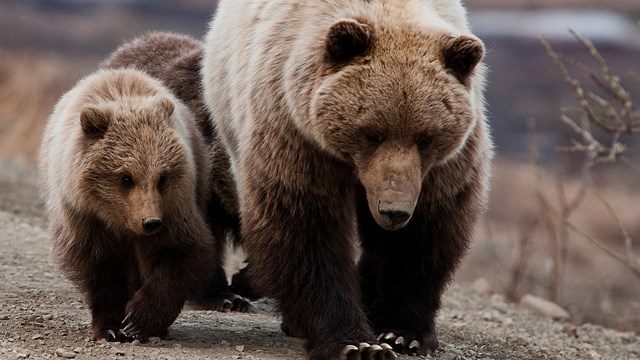
Biologists call the physical, physiological and behavioral traits that help an organism survive in a particular environment "adaptations". Organisms that live in the arctic and subarctic must have adaptations to help them survive and raise young despite the periodic extreme cold, persistent winds, short growing seasons, limited shelter, and other difficulties posed by their severe environment. Some adaptations by arctic animals are insulating feathers or fur, short appendages (legs), the ability to hibernate, and ability to travel long distances in search of food.

Procedures:

  1. Review the specific animal and plant adaptations that were discussed in "Arctic Adaptations".

  2. Tell the students to think of a plant or animal or an imaginary type of either.

  3. Have them think of at least 4 physical adaptations that would make the animal perfectly fit to live in the arctic.

  4. Students will illustrate their plant or animal with explanations of the adaptations drawn in.

  5. Display posters around the room for others to see.

Discussion Questions:

  1. What kinds of adaptations did the students come up with?

  2. In what ways did the animals the students drew look alike? In what ways did they look different?

  3. Did students "invent" any new adaptations for their animal?

Extensions:

  • Have students write a paragraph describing the specific adaptations of their animals and how they help that animal survive in arctic conditions.