National Park Service arrowhead logo National Park Service, US Department of Interior
Visit ParkWise!Home for ParkWiseTeacher Resources Student Resources
Activities
Data
Reference Library
Park Facts
Links
Maps
Photo Gallery

ParkWise > Students > Documents

Subsistence and Walrus Hunting

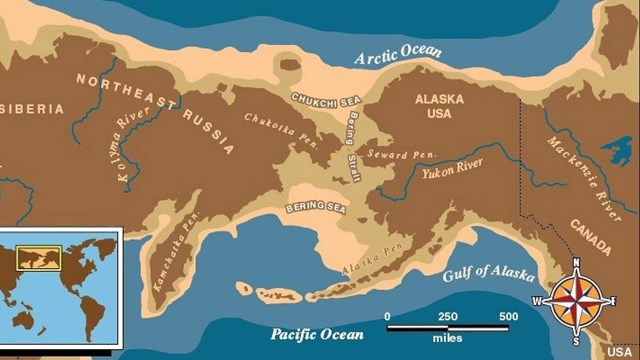
Walruses on an icy shoreSubsistence is a way of life for the Inupiaq and Yupik Eskimos of the Bering Strait Region and the Seward Peninsula. Hunting, fishing, and gathering are subsistence activities. These activities are important not only for food, but as a foundation for native traditions, values and cultural identity. This way of life has occurred for thousands of years and continues today. Native Alaskans use both traditional and modern methods for subsistence harvest. They preserve the strengths of their traditional culture, while adopting what is useful from the western world.

The pacific walrus is a good example of an animal that is harvested yearly. Walrus are hunted from most Alaska villages near where the animals occur or migrate through. Most are harvested from villages near the coast of the Bering Strait and from Saint Lawrence Island, King Island, and Little Diomede Island. Eskimos in some villages traditionally base their lifestyle on walrus. Many parts of the walrus are used for various purposes. Some traditional uses of walrus parts are: the use of the meat for food, the skins for making boat covers and house covers, the intestines are eaten and were used for rain coats, the bones for tools, the stomach for containers and drums, the hide for clothing and house covers, the meat for dog food, the fresh hide for the preservation of other foods and the ivory for useful and decorative implements. Many of these uses still occur today, for example, they depend on the meat for food, the skins for making boat covers and rope, the stomach for containers and drums, and the ivory for artistic carvings that are usually sold.

Some things have been replaced by modern items. For instance, the walrus intestine raincoats have been replaced by plastic raincoats. Other clothing made from the hide and other parts of the walrus have been replaced by store bought clothing. Homes are now made of wood and tools that were made from walrus bones are purchased. People utilize what is useful from the past and today.

A good example from Western culture of how people use an animal for many different consumptive and non-consumptive uses is the marketing of cow products. Most everyone has used some kind of cow product. There are many examples of how many parts of a cow are used: milk, dairy products, meat for consumption, hide for clothing, people eat cow stomachs (tripe) and cow tongues, leftover cow parts are used for dog food, cow manure is used for fertilizer, and steers are used for entertainment purposes in rodeos. If you compare how Alaska Native peoples use the walrus to the way most Americans use cows.

With the Eskimo Walrus Commission, each village determines how many walrus should be hunted each year, and creates an ordinance (rule) from that number. The harvest must not be wasteful: numbers killed should be limited to what can reasonably be utilized. If the population of walrus declines, a village may make a new ordinance. A new ordinance would be important because if the population of walrus declines too much, walrus could become endangered. Healthy populations of walrus and other wildlife are important, not only for the arctic environment in general, but also for native peoples who depend on animals like the walrus for food.

Additional Reference:
Hunting and Fishing of Walrus by Alaska Natives, Fact Sheet produced by the US Fish and Wildlife Service