For a state the size of Alaska, field surveys for invasive plants are critical for detecting infestations before they get out of control. Rather than randomly surveying for invasive plants, one can determine which areas should be prioritized according to the amount of human access and use that has occurred there in the past. In the National Parks, there are typically two types of invasive plant surveys performed: inventory and monitoring. The inventory is the first assessment of an area, and it provides the baseline distribution and abundance of invasive plants in an area prior to management actions. Monitoring encompasses any follow-up visits to an area that has been inventoried, and it is valuable for examining changes in invasive plant populations over time and for evaluating the effectiveness of control efforts.

Two of the most useful tools for invasive plant surveys are global positioning system (GPS) units and cameras. GPS units enable one to mark an infestation once found, so that its location is recorded for the future. Photographs are helpful for verifying the identification of a plant species or for comparing the size and density of a patch from year to year. With these tools and the ability to identify plants, anyone can help with surveys, and that help is necessary for finding new arrivals. When swiftly reported to the land owner or manager, eradication becomes much more feasible.


EPMT biologist Penny Bauder monitors dandelion
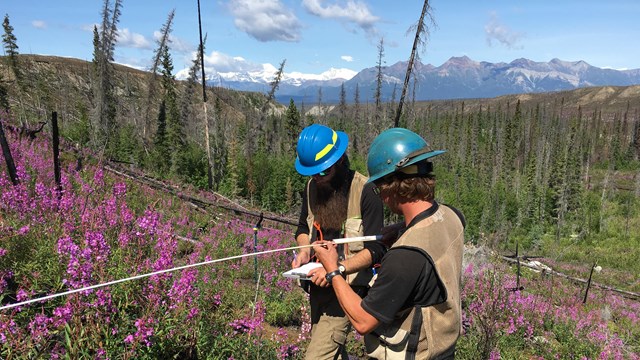
EPMT biologist Jeff Heys inventories invasive plants
EPMT biologist Jeff Heys uses a GPS unit to inventory for invasive plants in Katmai National Park and Preserve

National Park Service, Alaska Region
Exotic Plant Management Team


nps_arrowhead
Linaria vulgarisLeucanthemum vulgareTaraxacum officinalePolygonum cuspidatumImpatiens glanduliferaMelilotus albaLythrum salicaria


Surveys


ParkNet           U.S. Department of the Interior            Privacy & Disclaimer


EPMT biologist Penny Bauder monitors dandelion growing on the sod roof of Dick Proenneke's cabin in Lake Clark National Park and Preserve