National Park Service Arrowhead
 

Alaska Region


Alaska Wildland Fire Management -- Fuels Management


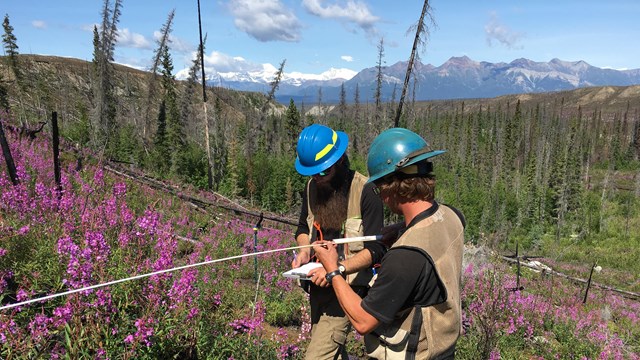
Tolkat Fuels Project, Denali National Park and Preserve, NPS PhotoAl Ames Cabin in YUCH NPS photoFox Farm in WRST NPS photo
NPS Photos

Alaska Fuels
To many people it appears that the boreal forests in arctic climates, like Alaska, will not burn. However, appearances can be deceiving. Although the forests look green and lush and rivers meander across the countryside black spruce can be extremely flammable. Black spruce can burn at any time of the year. Spruce forests have an almost mattress-like layer of moss and lichens which burns readily even shortly after it rains. Ground fuels, such as moss and lichens,can carry fire through spruce forests igniting individual or groups of trees. Torching trees generate firebrands, burning particles that drift on the wind often igniting new fires where they land. These new fires are a key element of fire growth in spruce forests.

Alaska NPS Fuel Management
Because of the flammability of the boreal forest, the National Park Service creates defensible space around park structures. This mechanical/manual treatment is not a “clear cut” fuel break, rather a thinning of vegetation to reduce fire behavior to a manageable level for firefighters. One fuel reduction project has been completed around the headquarters area of Denali National Park and Preserve. Additional projects are ongoing in other parks such as Yukon-Charley Rivers National Preserve and Wrangell-St. Elias National Park & Preserve to create defensible space around public use cabins, historic structures and cabins used by the NPS for administrative purposes.

For more information:
National Fire Plan
National Interagency Fuels Management
Firewise


Privacy & Disclaimer
Author: Karen La May
Last modified on: March 8, 2006
www.nps.gov/akso

 
Back to the Alaska Region Home Page
  Fire Management