

Twenty-four named lakes and ponds add shimmering contrast to Acadia's forested and rocky landscape. The granite that makes up so much of Acadia's landscape is a big factor in the presence of so many ponds in this location, as is the freshwater streams and watersheds that empty into the ponds. The park is home to 14 Great Ponds (natural ponds or lakes greater than 4 hectacres/10 acres) and ten smaller ponds. Lakes and ponds cover more than 7% of the park's area with maximum depths ranging from 5 ft to 150 ft. Water is LifeLife at the edges of ponds is an active one as the ponds are home to countless reptiles and amphibians as well freshwater plants. Loons, ducks, and other waterfowl can be seen feeding on the ponds or nesting at the edges and below the surface freshwater fish enjoy some of the cleanest waters in the northeast. The Great Ponds
Preserving the Pristine WatersSome of the factors that make Acadia's lakes and ponds so beautiful are also what makes them so fragile. They are freshwater holding tanks, collecting rainwater from the sky and surrounding hillsides. As a result, they collect pollutants. Scientists conduct research on and in Acadia's lakes and ponds to best inform management decisions by park staff. 
Water Resource Management
Water resources are integral to ecosystem health and function and fundamental to a variety of recreational opportunities at the park. 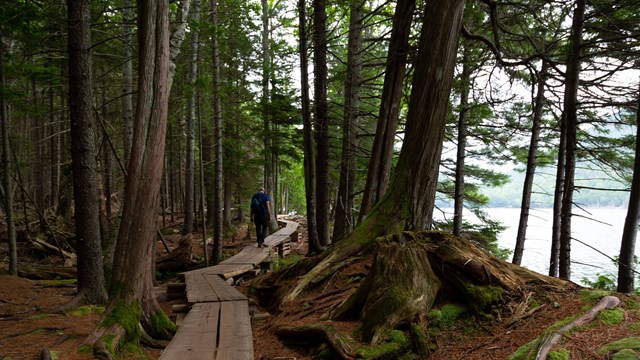
Lake and Forest Hikes
Looking for more tree coverage and views of lakes and ponds? See hikes that pass by freshwater or weave through the forest. More on Acadia's Lakes and Ponds |
Last updated: September 21, 2022